







Digital Warehouse Management: Key Features for Supply Chain Success

How digital warehouse management improves accuracy, enables real-time visibility, supports advanced technologies, and strengthens global supply chain performance
- Digital warehouse management uses technology to improve inventory precision, automate processes, and minimize human mistakes, which is critical for effective international supply chains.
- By incorporating automated tracking, advanced analytics, and integration with existing business systems, digital warehouse management solutions enable real-time inventory visibility and optimize order fulfillment.
- By investing in scalable software and reliable hardware, you not only explain the operation of your warehouse but can integrate with your enterprise resource planning or transportation management systems.
- Embracing advanced technologies like AI, IoT, digital twins, and automation can enhance operational efficiency, predictive maintenance, and overall supply chain agility.
- Implementation Challenges: Integrating digital warehouse management systems with existing supply chain infrastructure can be complex. It requires seamless system integration, stringent data security protocols, and effective change management to ensure staff adaptation and data integrity.
- By consistently measuring its performance and sustainability through KPIs, warehouses can better align with business goals, foster innovation, and minimize environmental footprint.
Digital warehouse management in supply chain refers to leveraging technology such as software and data analytics to efficiently manage inventory, optimize storage, and streamline operations.
For some companies, these are sensors and IoT devices that deliver real-time warehouse data with the goal of reducing errors and time while increasing efficiency.
With barcodes, sensors, and real-time reports, the team knows what is in stock at every moment.
To demonstrate how these tools function, the following sections dissect the primary stages and practical applications.
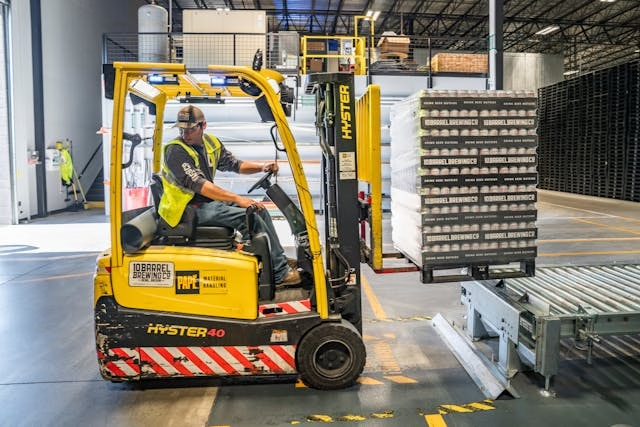
What is Digital Warehouse Management?
Digital warehouse management refers to leveraging technology to simplify and streamline warehouse operations. It injects automation, real-time data, and advanced analytics to eliminate errors and accelerate processes. At its heart, it deploys a warehouse management system (WMS) software that monitors where every product is at every given step as it arrives, is stored, picked, packed, and shipped.
Digital tools give warehouses the ability to keep pace with the rapid growth of e-commerce and evolving customer demands. This tech shift propels businesses into intelligent, demand-driven warehousing, where every action is monitored and enhanced.
1. Inventory Control
Digital warehouse management runs on automated inventory tracking systems. They employ barcodes and RFID tags to track each item. They assist in eliminating manual counting errors. This results in greater inventory precision and less lost and misplaced merchandise.
Advanced analytics have a big role in forecasting. By analyzing historical sales data and present inventory, businesses can forecast demand and prevent surplus or shortages. Thorough inventory audits backed by digital procedures assist in identifying issues and maintaining stock at optimal levels.
RFID tagging has become routine for merchandise tracking. It accelerates the flow of goods through the warehouse and assists in rapid item location, enabling teams to adapt swiftly to fluctuations in order volume.
2. Order Fulfillment
Order fulfillment receives a giant boost from digital systems. Streamlining the order processing steps reduces lag and ensures your customers receive what they want when they want it. By integrating order management systems to a WMS, companies get one system that manages everything from order receipt to final shipment.
Automation, in the form of conveyor belts and robotic pickers, makes picking and packing more efficient. This is crucial, as picking can constitute 55 percent of warehouse expenses. Tracking fulfillment metrics, such as delivery speed and accuracy, allows managers to discover how to optimize and stay ahead of demand.
3. Labor Management
Labor management tools assist businesses in pairing the appropriate individuals with appropriate tasks. By monitoring assignments and employee efficiency, supervisors know who requires assistance or additional training. This enhances efficiency and aids in reducing expenses.
Providing skills training is crucial as new technology such as smartphones and tablets becomes the norm. Around 73% of warehouse workers now utilize mobile devices and 18% use GPS technology. A healthy work culture promotes collaboration and maintains low attrition.
4. Real-time Visibility
Digital warehouse management provides everyone with real-time information about inventory and orders. Dashboards present key data so it is easy to identify problems quickly.
With mobile tech, warehouse workers and managers can check inventory or order status from anywhere in the warehouse. This real-time visibility allows teams to collaborate, make fast decisions, and keep customers informed.
5. Data Analytics
Cutting edge data analytics are employed to identify trends and visualize warehouse performance, enhancing digital warehousing capabilities. Businesses leverage this data to improve decision-making, reduce costs, and minimize waste.
Core Components of a WMS
At its heart, a digital warehouse management system (WMS) is composed of some combination of software, hardware, and integration tools. Each part has its own crucial function in everyday warehouse operations, assisting to keep cargo flowing and employees aware. These systems assist users with real-time dashboards, automation, and analytics.
With a good handle on what constitutes a WMS, businesses can select and apply the appropriate instruments for their requirements.
Software
The essence of any WMS is the software. Three main types exist: standalone WMS, cloud-based platforms, and modules inside ERP or supply chain management suites. The optimal option varies based on company objectives, cost constraints, and expansion strategies.
A good WMS software supports not only your current needs but your future growth, which is why it is imperative to select solutions that evolve and adapt as business does.
At the heart of any good WMS is real-time data tracking. Users can monitor inventory counts, order accuracy, and productivity rates live on dashboards. This is critical for rapid decision-making.
Tools to support analytics and reporting assist in identifying patterns or issues in the supply chain. For instance, a manager may use reports to identify slow-moving items or those that require sales action to reduce waste, which is common with perishables.
Integration capabilities are critical. The software must integrate easily with other business systems, like your ERP or transportation management system. This reduces manual input and minimizes error.
Hardware
Hardware is the physical connection between employees and the digital platform. Scanners, RFID readers, and mobile computers allow employees to easily capture individual item movements. Automated storage and retrieval systems (AS/RS) accelerate picking and minimize errors.
These systems commonly use IoT sensors, passive radio beacons, and RFID tags to provide real-time updates. Every square foot is precious space in most warehouses.
Automated storage assists in maximizing the value of each meter, minimizing retrieval times and increasing throughput. It is essential that all hardware interfaces with the WMS software to ensure seamless operations.
Routine device checkups and updates fuel warehouse operations. Hardware failures can bog the entire operation, so it must be maintained.
Integration
Integrating the WMS with other business systems is essential for streamlined processes. When the WMS communicates with the ERP and transport systems, it aids order tracking, billing, and shipping. Its APIs enable this, allowing disparate software to communicate and exchange information.
Compatibility checks prevent expensive mistakes. Rolling out new integrations in phases reduces risks and minimizes disruptions.
The more robust the integration, the smoother the data transfer and the cleaner the insights. Even financial analytics from the WMS can show the bigger supply chain picture and help leaders make smart choices.
The Role in Supply Chain Management
Digital warehouse management now occupies a central role in digital supply chains. It is the thread that ties supply and demand together. Warehouses aren’t solely storage facilities they influence the way products flow from production lines to consumers. Empowered by digital technologies, digital warehousing solutions assist companies in maintaining inventory, reducing errors, and accelerating product delivery. Contemporary digital systems power everything from the moment items arrive to their departure for delivery.
Digital warehouse management encourages collaboration among suppliers, distributors, and retailers by streamlining inventory visibility for all parties involved. With real-time tracking, every partner is aware of when goods arrive, how much is ready to ship, and what is running low. This transparency allows teams to coordinate forecasting and production, work around supply shortfalls, and maintain shelves.
For instance, a retailer can identify a decline in stock prematurely and collaborate with a vendor to correct it before it becomes an issue. Through integration platforms, partners can update and share documents simultaneously, eliminating cumbersome, paper-driven processes. This shift saves time and prevents errors that used to arise from lost forms or outdated information.
Information from digital warehouse systems enables companies to respond faster to shifts in the marketplace. Armed with real-time insights, teams can identify patterns, such as a surge or lull in sales, and respond quickly to capitalize on demand or minimize losses. If something new takes off, warehouse automation capabilities can signal the necessity to reorder and reschedule deliveries immediately.
When a glitch hits, like a broken machine or late shipment, alerts are sent to teams to get quick fixes. Digital systems record trends over time, assisting managers in predicting what levels of inventory make sense at various periods throughout the year. This intelligent utilization of data aids in preventing both barren shelves and mounds of unsold merchandise.
Another big win is streamlining logistics. Digital warehouse tools reduce lead times by automating the picking, packing, and shipping process. For instance, automated picking robots can accelerate the collection of goods for large orders, while AI can map out the ideal route for every shipment. These shifts reduce customer lead times and aid in controlling costs, a necessity in squeezed markets.
Digital logs eliminate the requirement of stacks of paperwork, which previously bogged things down and invited mistakes. In locations where labor is scarce or turnover is high, automation and digital checklists keep work moving and service levels consistent, even in busy seasons.
Integrating Future Technologies
They’re integrating future technologies into digital warehouse management and shaping the supply chain in the process, making operations faster, more precise, and easier to scale. The embrace of all things digital, from AI-driven analytics to IoT and digital twins, is enabling more streamlined workflows and improved visibility.
These are not mere add-ons, but rather essential moves to remain competitive as industries worldwide anticipate digital transformation to reshape supply chains over the next ten years.
Artificial Intelligence
AI is transforming warehouse operations by completing tasks that used to take hours or days. With AI-powered insights, inventory management is more precise and demand surges can be predicted, whether from trends or local events.
Machine learning assists in identifying trends in orders, allowing warehouses to load with the perfect amount and process orders more accurately. This is particularly handy for seasonal demand or unexpected shifts in customer requirements.
AI assists with machine maintenance by forecasting when machines are likely to break down, reducing downtime. More businesses are deploying chatbots to rapidly respond to customer inquiries or verify order status, streamlining the experience and allowing employees to focus on other tasks.
All these tools rely on good data, so aggregating data from around the business is crucial.
Internet of Things
IoT devices are easy to monitor what’s going on in a warehouse every minute. Sensors can monitor temperature, humidity, or a door that’s been left open and notify if something is amiss.
Tags and scanners monitor items on the fly, providing complete inventory visibility at any moment. This prevents forgotten deliveries and keeps supply chains moving.
Drones equipped with RFID or cameras could scan items on the upper shelves, places where humans might not bother, relaying the updated information back to warehouse systems immediately. The outcome is increased manageability and greater awareness, and processes run more fluidly as issues are identified and resolved rapidly.
Digital Twins
Digital twins are digital representations of a warehouse, revealing what’s occurring in real time. Operators can try out new layouts or workflows on these models prior to altering the actual space, which is cost-saving and error-avoidant.
By integrating real-time data from sensors, machine learning, and other technologies, digital twins provide an accurate picture of all processes. Teams can identify bottlenecks, experiment with remedies, and measure impact quickly.
This helps make decisions more data-driven and less risky.
Automation
Automation is transforming daily workflow. Automated picking and packing systems accelerate order fulfillment. Robots transport freight, preventing injury and fatigue among workers.
Leveraging these systems reduces errors and maintains momentum as order volumes increase. It’s obvious that a future of more automation is on the horizon.
Just a small fraction of companies intend to bypass AI and related technology in the near future. Observing the impact of these tools on employees and performance enables executives to strike the right balance between technology and personnel.
Overcoming Implementation Hurdles
Digital warehouse management systems (WMS) provide countless advantages. Implementations in a supply chain environment can face unique real-world obstacles. Integrating in-place legacy systems into a single global platform sometimes requires careful scheduling if only to minimize workflow clogs or downtime.
Most organizations discover that it takes about six months to go live, with an additional few months before their initial big gains. Integration, security, change management and resource constraints are the usual suspects.
System Integration
The initial and frequently the most intricate hurdle is ensuring the WMS integrates seamlessly with other critical business systems, including enterprise resource planning (ERP), customer relationship management (CRM), and order management software. Before selecting a new WMS, it’s important to check compatibility with existing software and hardware.
That translates into examining database schemas, network protocols, and current workflows. That’s where middleware platforms can help in instances where you can’t integrate directly, enabling disparate systems to communicate and exchange data without manual effort.
Once implemented, periodic monitoring of the integration’s performance is still required to identify and troubleshoot slowdowns or data corruption quickly. For big warehouses, it’s installing additional WI-FI points that keep data transfer frictionless and prevent latency as transactions explode.
Data Security
Securing valuable warehouse and supply chain data is a must, particularly with escalating cyber threats. Fortified security begins with encrypting data at rest and in transit. Access controls must be tight, such that only authorized users may view or modify sensitive data.
Employees require frequent education on how to identify phishing, manage strong passwords, and adhere to compliance policies. Security measures should be audited and refreshed regularly, as new threats can emerge overnight.
Cleaning up data before migrating it into the new WMS minimizes the chances of legacy errors getting carried into the system and turning into larger breaches or compliance problems.
Change Management
Even with a sound technical strategy, human elements can stall or outright stop digital upgrades in the warehouse. Human beings tend to resist new systems, either out of habit or concern about relinquishing control. A good change management plan can assist here.
That is, explicit communication about why the degree of upgrading is important and how it will help day-to-day work. Involving staff in planning, requesting feedback, and providing hands-on training all assist in reducing resistance.
Support is required for months post-rollout, not just at launch. Keeping tabs on team response as the system launches aids in identifying issues quickly and modifying training or workflows if necessary.
Measuring Success and Sustainability
To measure the success and sustainability of digital warehouse management in the supply chain is to consider both business outcomes and the impact the work has on the world around us. It’s not just about being fast or saving money. It’s about how the warehouse molds the culture, empowers employees, and aligns with the broader objectives of the company.
In today’s global marketplace, businesses require well-defined means of tracking their advancement. Many rely on KPIs and sustainability metrics to determine whether their digital tools are having an impact. These metrics enable collectives to establish credibility with collaborators and demonstrate impact in universally accessible terms.
Establish key performance indicators (KPIs) to evaluate warehouse management effectiveness.
KPIs provide an easy means of determining if a digital warehouse system is effective. The most common KPIs are order accuracy, inventory turnover, and time needed to fill orders. For instance, a warehouse may monitor its order picking error rate to ensure that digital solutions reduce errors.
Another good KPI is storage density, which reveals how much inventory fits in an allocated space. This is important for pricing and for how quickly it can be loaded or unloaded. KPIs need to align with business objectives. A company that wants fast delivery might track on-time shipments. One with many products may monitor cycle counting accuracy.
KPIs are not just figures. They steer what teams repair or optimize next.
Monitor sustainability metrics to assess the environmental impact of warehouse operations.
Monitoring sustainability is used by groups to understand their ecological impact. Typical figures include electricity, water, and waste. With digital sensors, a warehouse can monitor energy consumption in real time, identify surges, and address inefficient patterns quickly.
Water used for cleaning or cooling can be measured and monitored on a monthly basis. Waste can be separated by kind, including plastic, cardboard, and food, and goals can be set for each. Others include social figures as well, such as staff wellness or local initiatives. These indicate whether the warehouse is a good neighbor and a nice place to work.
Research connects high sustainability scores to higher profits in the long run.
Utilize analytics to identify trends and areas for continuous improvement.
Digital analytics convert raw data into actionable facts for your teams. With the help of AI, warehouses can identify stock movement patterns, anticipate inventory shortages and prepare for peak periods. Analytics can reveal if a new process conserves energy or reduces error.
For instance, if insights reveal an uptick in broken items, squads can investigate whether it connects to a recent layout or tool. As time goes on, analytics identify small tweaks that make the warehouse smarter and more adaptable.
Regularly review performance data to align warehouse goals with overall business objectives.
Checking results keeps the warehouse aligned with the company’s high-level goals. That is, aggregating KPIs and sustainability score reports at regular intervals, perhaps monthly or quarterly. Teams review the data, identify gaps, and establish next steps.
Make sure this review captures input from all levels, from workers to managers. It’s an opportunity to refresh objectives, such as increasing order accuracy or reducing waste by a certain percentage. Connecting warehouse labor to the entire business plan demonstrates value to executives, investors, and collaborators.
Conclusion
Digital warehouse management makes the supply chain work tangible and real. A quality WMS reduces shrink, accelerates pick times, and maintains data that is up-to-date and accessible. Teams notice issues quickly and swoop in with clever solutions. Tech such as AI and IoT integrates into these systems with little trouble, which opens the door for additional advantages. Change is hard, but the reward in lost time and reduced errors demonstrates genuine worth. Robust statistics support this: fewer errors, improved fill rates, and rapid dock to door transitions. To stay up, experiment with new tech, communicate with your crew, and broadcast your successes. Leave your stories or tips in the comments; your wisdom aids our evolution.
Frequently Asked Questions
What is digital warehouse management?
Digital warehouse management leverages sophisticated warehouse management systems and technology to automate and optimize warehouse operations, enhancing inventory tracking and order fulfillment in the digital supply chain.
How does a warehouse management system (WMS) benefit supply chains?
A WMS enhances warehouse efficiency by streamlining inventory management, minimizing mistakes, and expediting order fulfillment, leading to improved customer service and a more effective digital supply chain.
What are key features of a digital warehouse management system?
Highlights include live inventory monitoring, automatic picking, barcode scanning, and integration with digital warehousing systems to optimize warehousing operations.
How can future technologies improve digital warehouse management?
AI, robotics, and IoT enhance warehouse automation, improving efficiency and adaptability in warehousing operations through intelligent resource management and predictive analytics.
What challenges might businesses face when implementing digital warehouse management?
Typical issues in digital warehousing include upfront costs, staff training, and integrating new systems into older warehousing operations. With a bit of planning and support, you can break through these obstacles.
How is success measured in digital warehouse management?
Success in warehousing operations is quantified by monitoring metrics such as inventory accuracy, order fulfillment speed, and cost savings, indicating how effectively digital warehousing solutions facilitate business objectives.
Is digital warehouse management sustainable?
Digital warehousing is frequently less wasteful, less energy intensive, and better at optimizing resource utilization, facilitating more sustainable warehousing operations and addressing increasing environmental demands.