Written by Ben Eddine Ajenoui, Marketing Director at OpenCart and Founder of SEO HERO LTD, specializing in ecommerce SEO and organic growth strategies.
Social Media Marketing Strategies for Small Businesses: A Complete Guide
How Audience Research and Platform Selection Drive Real Business Growth
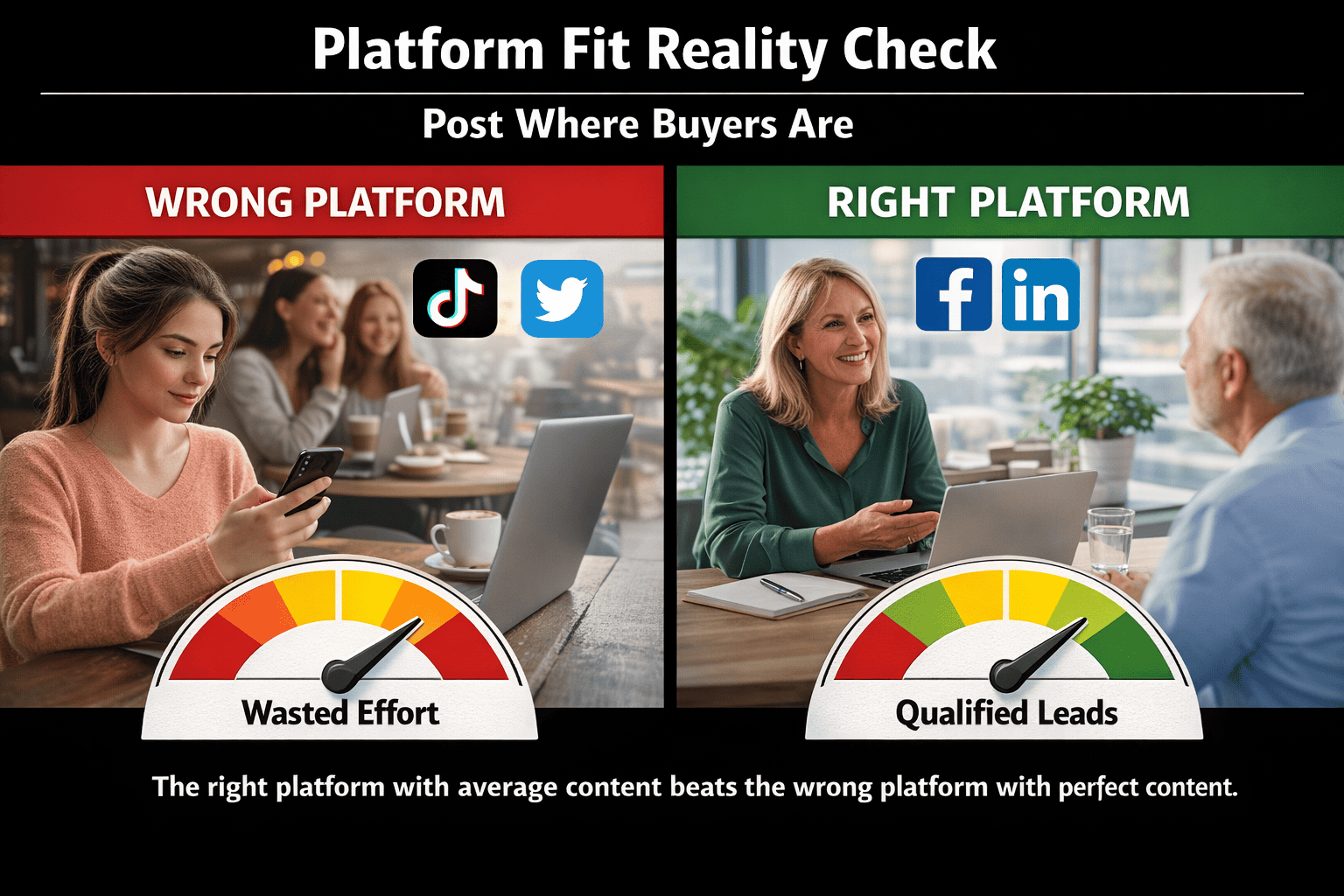
A bakery spent six months posting daily on Instagram, TikTok, and Facebook. After 180 posts and countless hours, they had 847 followers and zero sales traced to social media. The problem wasn’t effort they were posting on the wrong platforms for their audience. Their customers, mostly 45-65 year olds ordering custom cakes, spent their time in local Facebook groups, not scrolling TikTok.
This pattern repeats constantly. Small businesses copy tactics from larger companies or follow generic advice without understanding their specific audience. The result is wasted time, burned budgets, and frustration that social media “doesn’t work.”
Success requires a different approach: research who actually buys from you, identify where they spend time online, create content that addresses their specific problems, and measure what drives business results. This guide shows you how to build a social media strategy based on data and real customer behavior, not assumptions.
What Social Media Marketing Actually Involves
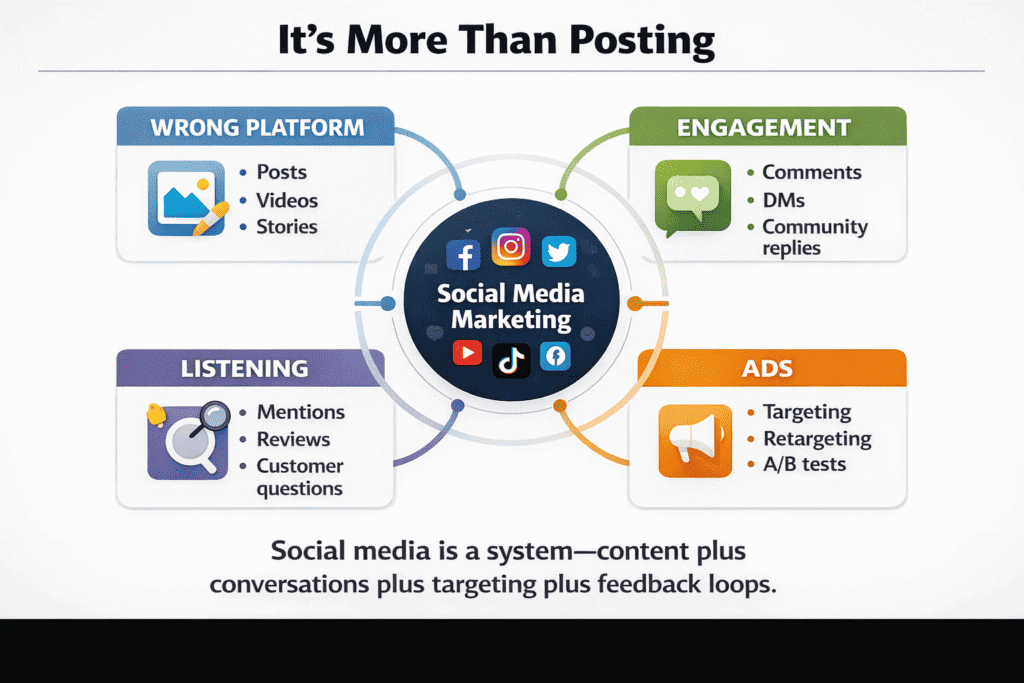
Social media marketing means using platforms like Facebook, Instagram, LinkedIn, and TikTok to reach customers, build relationships, and drive sales. For small businesses, this typically includes posting content, responding to comments and messages, running targeted ads, and monitoring what customers say about your brand.
Unlike traditional advertising that interrupts people with one-way messages, social media creates ongoing conversations. A plumbing company answers questions about emergency repairs in local groups. A boutique shows behind-the-scenes footage of new inventory arrivals. A consultant shares industry insights that demonstrate expertise.
The channels serve different purposes. Some businesses use social media primarily for brand awareness getting their name in front of potential customers. Others focus on direct sales, using platforms as digital storefronts. Many use social media for customer service, answering questions and resolving issues publicly.
Effective social media requires consistency, not perfection. A tax accountant posts tax tips every Tuesday during filing season. A gym shares member transformation stories monthly. Regular, helpful content builds trust over time. Sporadic posting when you remember or feel inspired generates little traction.
Why One-Size-Fits-All Approaches Fail Small Businesses
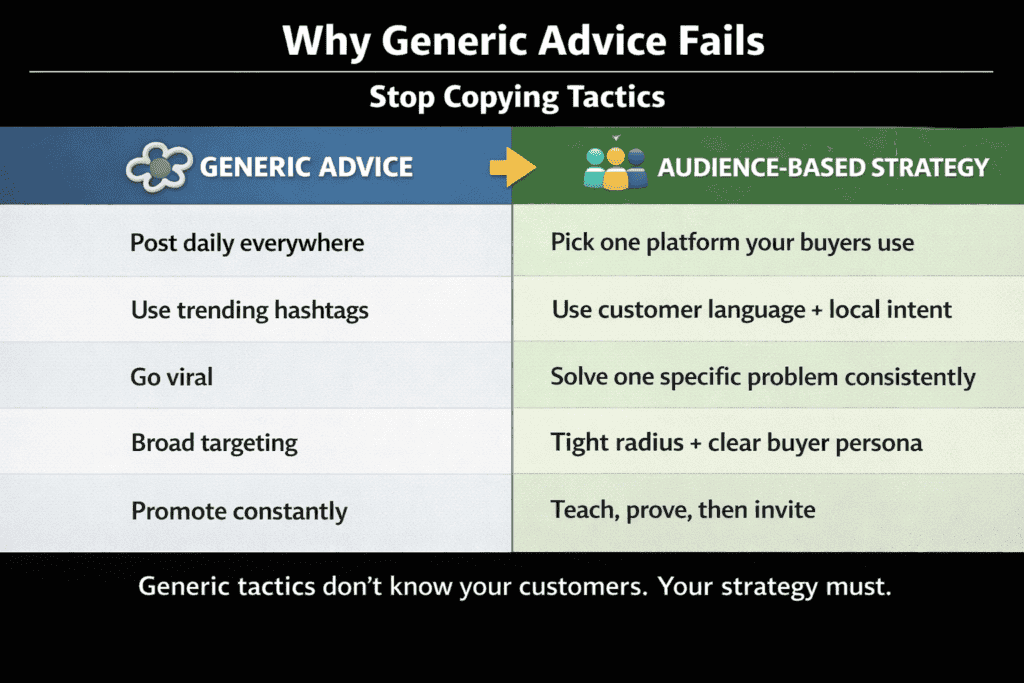
Generic marketing advice treats all businesses as identical. “Post three times daily,” “Use these 50 hashtags,” “Go viral with Reels.” This guidance ignores crucial differences: your industry, your specific customers, your competition, and your available resources.
A financial advisor following advice designed for fashion brands will fail. Their audience doesn’t want entertainment they want credible expertise on retirement planning. A local restaurant copying tactics from national chains wastes money on broad targeting when they only need to reach people within 10 miles.
Research shows people see 6,000-10,000 marketing messages daily. Standing out requires specificity. When you speak directly to the problems facing 35-year-old first-time homebuyers rather than “anyone who might need a house,” your message cuts through noise.
Generic campaigns also waste budget on disconnected tactics. Businesses run random Facebook ads one month, try Instagram influencers the next, then abandon social media entirely when nothing works. Without a coherent strategy connecting tactics to business goals, money disappears with nothing to show.
The Real Cost of Social Media Invisibility
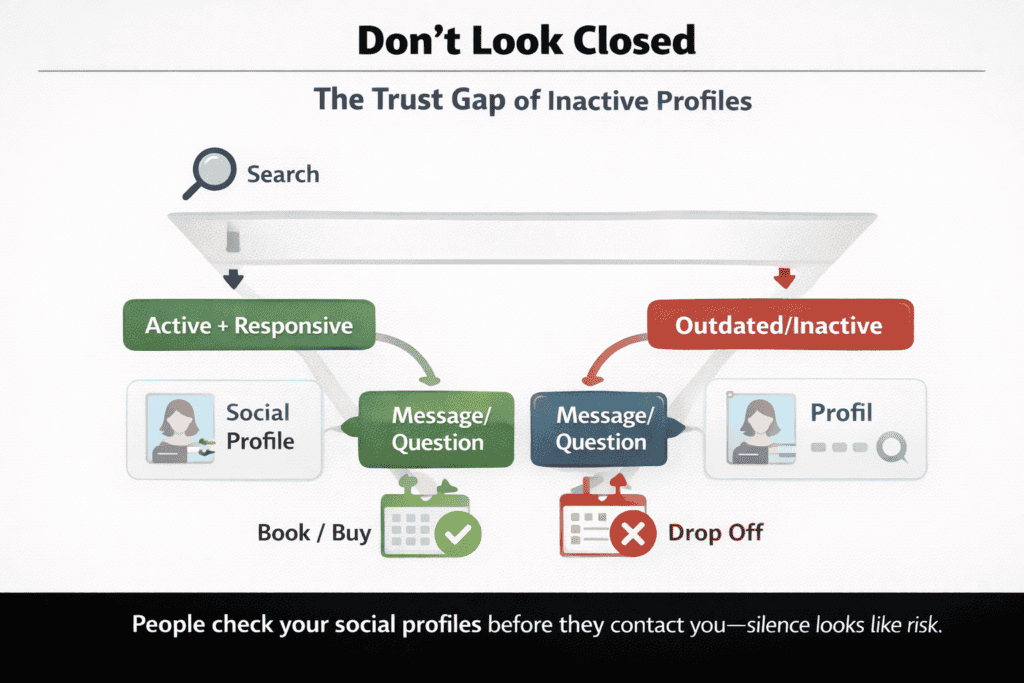
When potential customers search for businesses like yours, they check social media profiles. Empty profiles or accounts with no recent activity signal abandonment. People wonder if you’re still operating or if you don’t care about customer communication.
A study of local service businesses found that 68% of consumers won’t consider companies with outdated or inactive social media. The perception damage extends beyond lost sales it affects pricing power, referrals, and whether customers give you a chance when problems occur.
Competitors fill the void your absence creates. When people ask for recommendations in community groups, your name doesn’t come up because nobody thinks of you. When they Google your service plus your city, competitors with active social profiles appear more credible and established.
The solution isn’t posting random content hoping something works. Start with a minimum viable presence: one platform, two posts weekly, daily monitoring for comments and messages. This baseline maintains visibility while you build a proper strategy.
Why “Everyone” Is Not Your Customer
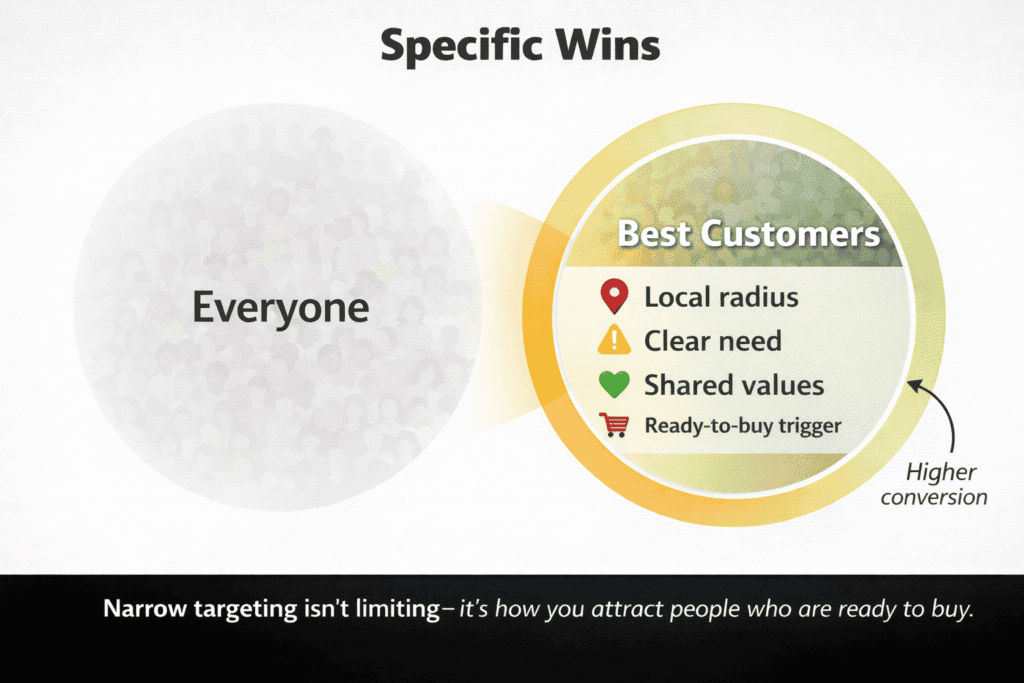
Businesses trying to appeal to everyone end up appealing to no one. When your messaging could apply to any person in any situation, it creates no emotional connection or urgency. Specificity makes marketing work.
A plant-based restaurant targeting “people who want healthy food” competes with every restaurant claiming healthy options. When they narrow to “professionals aged 28-45 who follow plant-based diets for environmental reasons,” they can create content about sustainability, share sourcing stories from local farms, and build community around shared values.
Narrow targeting improves conversion rates dramatically. Facebook ads targeting “women aged 25-65 interested in fitness” might cost $8 per click with 1% conversion. Narrowing to “women aged 35-50 who recently engaged with prenatal yoga content and live within 15 miles” could cost $3 per click with 8% conversion. The specificity attracts people actually ready to buy.
Start by identifying your best customers the ones who spend the most, refer others, and never complain about pricing. What characteristics do they share? Build your social media strategy around attracting more people like them, not trying to convince everyone that they need what you offer.
Advantages Small Businesses Have Over Large Companies
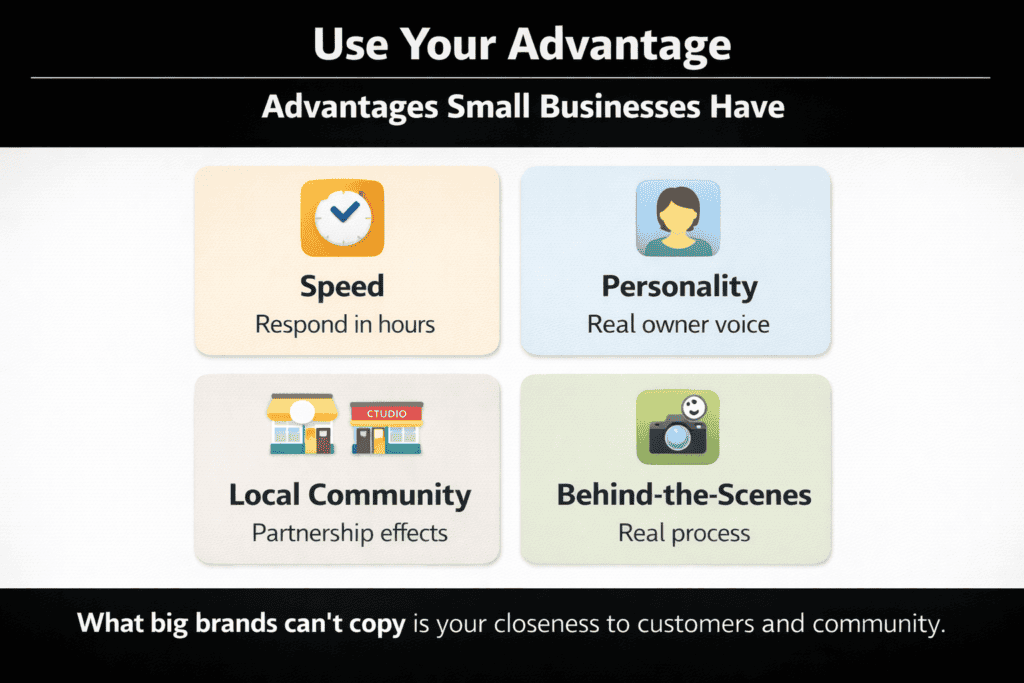
Small businesses can respond to customer comments within hours, not days. You can adjust messaging based on feedback immediately. When someone suggests a product idea or service improvement, you can implement it and announce the change. Large companies need weeks of approvals for simple social media posts.
Personality shows through more easily in small businesses. The owner’s voice, values, and quirks create authenticity that corporate accounts cannot match. A hardware store owner who posts DIY tips from his 40 years of experience builds credibility that no amount of professional copywriting can replicate.
Local connections matter enormously. Partnering with other local businesses, featuring community members, and participating in local events creates networking effects. A coffee shop that shares posts from the bookstore next door and the yoga studio down the street builds reciprocal relationships that large chains cannot access.
Behind-the-scenes content works better for small businesses because people genuinely care about your story. Showing your team, your process, or your journey creates connection. Corporate behind-the-scenes content feels manufactured because it is scripted and approved by committees.
Identifying Your Target Audience Through Data
Assumptions about your audience lead to wasted effort. You think you know who buys from you, but data often reveals surprises. A home services company assumed their customers were homeowners aged 35-55. Sales data showed 62% were actually property managers and landlords aged 45-70 making bulk purchase decisions, completely changing their marketing approach.
Start With Your Current Customer Database
Export your sales records, CRM data, or email list. Look for patterns in age ranges, locations, job titles, and purchase frequency. Sort customers by total lifetime value and examine the top 20%. What do your most valuable customers have in common?
A software company analyzed their customer list and discovered that customers with 15-30 employees renewed at 85% rates, while companies with 50+ employees renewed at only 60%. This insight changed their target market and messaging completely.
Interview your best customers. Ask how they found you, why they chose you over competitors, and what problems you solved. One accounting firm learned through interviews that clients valued their same-day response time more than price information that became central to their social media content.
Review customer service interactions and support tickets. Recurring questions reveal what confuses people, what concerns them, and what information they need before buying. Every repeated question is content waiting to be created.
Analyze What Competitors’ Audiences Do
Check competitor social media profiles. Who comments on their posts? What ages, locations, and interests show up in their follower lists? Facebook and Instagram let you see demographic breakdowns of public business pages.
Note which content gets the most engagement. If competitor how-to videos receive 10x more comments than product announcements, that signals what audiences value. Don’t copy their content learn what topics and formats resonate.
Look for underserved segments. A fitness studio analyzed local competitors and found everyone targeted women aged 20-40. They pivoted to serve men 50+ looking to improve mobility and strength, capturing a neglected demographic with 3x less competition.
Use tools like SparkToro or SimilarWeb to see where competitor audiences spend time online. These platforms reveal which websites, podcasts, and social channels your target customers actually use, not where you think they might be.
Identify Specific Problems Your Audience Faces
Understanding customer pain points guides all content creation. Mine complaints, questions, and feedback for recurring themes. When multiple customers mention the same issue, that’s a signal worth addressing.
A landscaping company reviewed two years of customer emails and found 40% of questions involved confusion about seasonal lawn care timing. They created a monthly calendar showing exactly what to do each month, which became their most-shared social media post and reduced basic questions by 70%.
Survey current customers with specific questions: What almost stopped you from buying? What would make our service more valuable? What do you still struggle with? Direct answers reveal genuine concerns, not what you assume concerns them.
Monitor social media conversations where your audience gathers. Industry Facebook groups, Reddit communities, and LinkedIn discussions show what people complain about, ask about, and care about when they’re not talking to vendors. This unfiltered feedback is invaluable.
Build Detailed Customer Personas From Real Data
Customer personas organize your research into actionable profiles. Skip generic demographics like “Sarah, 32, likes yoga.” Build specific profiles: “Marcus, 48, IT director at 200-person company, manages $400k annual budget, needs to prove ROI to CFO, frustrated by vendors who overpromise, values documentation and support responsiveness.”
Include behavioral details: where they research solutions, who influences their decisions, what objections they raise, and what triggers purchase decisions. A B2B company discovered their persona typically researched for 6-8 weeks and consulted three colleagues before buying information that shaped their entire content timeline.
Create 2-3 personas maximum. More than three becomes unmanageable and dilutes focus. Each persona should represent at least 20% of your customer base to justify the effort tailoring content for them.
Update personas quarterly based on new customer data and market changes. AI-powered analytics tools can now identify shifting patterns in customer behavior faster than manual analysis, alerting you when personas need adjustment.
Use Platform Analytics to Confirm Your Research
Facebook Page Insights shows who actually engages with your content age, gender, location, language, and active times. Compare this to your target audience. Mismatches reveal either wrong targeting or wrong platform choice.
Instagram Insights breaks down follower demographics and shows when they’re most active. A restaurant discovered their followers were most active Tuesday-Thursday at 11 AM and 6 PM exactly when people decide where to eat lunch or dinner. Posting at those times doubled engagement.
Google Analytics reveals which social platforms drive traffic to your website and which visitors convert to customers. Traffic doesn’t matter if it doesn’t convert. One business got 5,000 monthly visitors from Facebook but zero sales, while 200 LinkedIn visitors generated 15 sales. They reallocated effort accordingly.
Track content performance over 90 days minimum before drawing conclusions. One viral post or slow week skews results. Patterns emerge over months, showing which content types, posting times, and messages consistently drive engagement and conversions.
Selecting Platforms Based on Where Your Audience Actually Exists
Being on every platform guarantees mediocrity on all of them. A three-person agency tried managing Facebook, Instagram, Twitter, LinkedIn, TikTok, and Pinterest simultaneously. After eight months, they had minimal engagement everywhere and were exhausted. When they focused solely on LinkedIn, lead generation increased 340% in three months.
Platform selection determines 70% of your social media success. The right platform with average content outperforms the wrong platform with excellent content. Your audience cannot engage with amazing posts they never see.
Where Different Audiences Spend Their Time
Start by identifying where your specific customer segments already spend time daily. Tools like Google Trends show platform popularity by region and demographic. Survey current customers: “Which social media platforms do you check daily?” Direct answers beat assumptions.
Monitor where conversations about your industry happen organically. Search Reddit for your industry terms and see which subreddits discuss topics related to your business. Check Facebook Groups to find active communities. Look for LinkedIn groups where professionals in your field share insights.
A specialty coffee roaster found their customers spent time in local foodie Facebook groups and a 12,000-member specialty coffee subreddit. They focused there instead of Instagram, where coffee photos compete with millions of other posts. This narrow focus generated 80% of their social-driven sales.
Consider behavior patterns, not just demographics. Young professionals might be on Instagram, but if they’re researching B2B software purchases, they’re doing it on LinkedIn. Context matters more than age.
Understanding Platform Demographics and Behavior
Facebook users skew 30-65, with strong presence in local community groups. It works for local businesses, service providers, and companies targeting parents or homeowners. Business pages reach only 5-6% of followers organically, but community groups maintain better visibility.
Instagram attracts 18-40 year olds interested in visual content and lifestyle topics. It favors aspirational brands, photogenic products, and behind-the-scenes content. Reels currently receive 2-3x more reach than static posts, but this changes as algorithms evolve.
LinkedIn serves B2B audiences, professionals seeking career advancement, and decision-makers researching business solutions. Posts focusing on industry insights, data analysis, and professional development perform best. Sales pitches and promotional content get ignored.
TikTok reaches Gen Z and younger Millennials who prefer short, entertaining video content. Businesses need genuine personality and willingness to participate in trends. Corporate or overly polished content fails. A cleaning product company succeeded by showing satisfying before-and-after clips, not scripted advertisements.
YouTube works for detailed tutorials, product reviews, and long-form content. People actively search YouTube to learn how to do things or solve problems. A home improvement store created “how to install” videos for their top 20 products, which now generate 30% of their website traffic.
Pinterest functions as a visual search engine where people plan projects and save ideas. It works for home decor, recipes, fashion, crafts, and wedding-related businesses. Pins have long lifespans content posted six months ago still drives traffic, unlike most platforms where posts die within days.
Platform algorithms change constantly. What worked last year may not work today. Follow official platform blogs and trusted marketing analysts to stay current. When Instagram suddenly prioritized Reels in 2022, businesses that adapted maintained visibility while others saw engagement drop 60%.
Test one platform for 90 days before adding another. Master posting cadence, content formats, and audience engagement on one channel. Only expand when you’ve established consistent results and have capacity to maintain quality on multiple platforms. Spreading yourself thin across many channels produces worse results than dominating one.
| Platform | Core Age Group | Gender Split | Notable Traits |
|---|---|---|---|
| 18–34 | F:M 50:50 | Visual, lifestyle, global | |
| 25–54 | F:M 54:46 | Broad, community, local | |
| TikTok | 16–24 | F:M 60:40 | Short video, trends, youth |
| 25–45 | F:M 42:58 | B2B, careers, authority | |
| 18–44 | F:M 60:40 | Visual, creative, planning | |
| 18–49 | F:M 38:62 | News, real-time, opinions |
Matching Content Formats to Platform Expectations
Platform selection means nothing if your content format mismatches audience expectations. A consulting firm posted 5,000-word blog articles directly on Instagram they got ignored. The same content reformatted into carousel posts with key points on each slide generated 15x more engagement.
Instagram and TikTok audiences expect visual content photos, short videos, and Reels. Text-heavy posts perform poorly. A jewelry maker posting product descriptions with small photos saw 50 likes per post. When they switched to high-quality lifestyle photos showing jewelry being worn, engagement jumped to 800+ likes per post.
LinkedIn users prefer professional insights, industry analysis, and thought leadership. Inspirational quotes and memes get scrolled past. A marketing agency shifted from motivational content to case studies showing specific client results and saw comment rates increase from 2-3 per post to 25-40.
Pinterest functions as a planning tool where people save ideas for future projects. Pins need clear, descriptive titles and vertical images. A home decor store created pins titled “5 Ways to Maximize Small Bedroom Storage” with step-by-step photos. These pins drive traffic months after posting, unlike Instagram posts that die within 48 hours.
Test multiple content formats on your chosen platform. Video, single images, carousels, text posts, polls, and live streams all perform differently. Track which formats generate the most comments, saves, and shares not just likes. A fitness coach found that workout demonstration videos got 3x more saves than motivational images, signaling higher value to the audience.
Create a content calendar that balances different formats. Three product showcases weekly become monotonous. Mix in customer stories, behind-the-scenes content, educational tips, and community features. Variety maintains interest and gives you data on what resonates most.
Developing an Authentic Brand Voice That Builds Trust
Generic corporate speak destroys trust. When every business sounds identical using phrases like “we’re passionate about serving you” or “your success is our mission,” none stand out. Authentic voice comes from real personality, not marketing clichés.
A plumbing company tried sounding professional and corporate, posting “We provide quality service excellence.” Engagement was dead. When the owner started posting in his actual voice “Your toilet is leaking because that flapper valve is shot. Here’s how to tell and what it costs to fix” inquiries tripled. People respond to humans, not press releases.
Writing How Your Customers Actually Talk
Listen to how customers describe their problems during sales calls or in emails. They use specific words and phrases that formal marketing ignores. A CRM software company discovered customers said “keeping track of follow-ups” not “optimizing sales pipeline management.” Using customer language in posts increased click-through rates by 67%.
Avoid industry jargon unless your audience uses it daily. A financial advisor posting about “tax-loss harvesting strategies” confused potential clients. Reframing as “How to reduce your tax bill by selling losing investments strategically” made the concept accessible and generated 10x more questions.
Adjust tone by platform while maintaining core voice. The same business can be conversational on Instagram, professional on LinkedIn, and helpful in Facebook groups all without seeming fake. A marketing consultant shares memes on Instagram, detailed strategy posts on LinkedIn, and answers questions in Facebook groups. Different formats, same expertise.
Read posts aloud before publishing. If they sound like a robot wrote them, customers will ignore them. Natural writing includes contractions, questions, and varied sentence lengths. It sounds like a real person talking, not a brand manual.
Leading With Solutions, Not Sales Pitches
Constant promotion trains audiences to ignore you. A software company posted “Try our product!” five times weekly. Engagement approached zero. When they shifted to “Here’s how to solve [specific problem] whether you use our tool or not,” engagement increased 400% and trial signups increased 85%.
Answer the questions your sales team hears repeatedly. Every FAQ is content waiting to be created. An HVAC company received constant questions about “how often should I change my filter?” They created a post explaining filter types, change frequencies, and cost implications. That single post generated 127 service calls in three months.
Share before-and-after examples with specific details. Vague success claims lack credibility. “We helped a client” means nothing. “We reduced a dental practice’s patient no-show rate from 22% to 6% in 90 days using automated reminders and same-day opening notifications” provides concrete proof.
Create tutorials and guides that help people whether they buy from you or not. A landscaping company posted seasonal lawn care calendars showing exactly what to do each month. Some people hired them for the work. Others did it themselves but remembered the company when they needed services they couldn’t handle alone.
Highlighting What Makes Your Business Different
Differentiation cannot be generic. “Quality service” and “customer satisfaction” describe every business. Specifics matter. A bookstore owner posted about organizing her store by mood and theme rather than genre because of her dyslexia. This unusual approach resonated with customers who felt overwhelmed by traditional organization, increasing foot traffic 35%.
Share your constraints and quirks, not just strengths. A three-person design agency posts about being small: “We only take 5 clients at a time so each gets full attention. That means sometimes we have a waitlist.” This limitation became a selling point exclusivity signals value.
Feature customer stories that reveal your niche. A bike shop specializing in adaptive bikes for people with disabilities shared customer transformation stories. This attracted their ideal audience while differentiating from general bike retailers competing only on price.
Build community around shared values, not just transactions. An eco-friendly cleaning product company created a Facebook group about reducing household waste. Members share tips, ask questions, and support each other’s efforts. The company participates but doesn’t constantly promote yet 40% of group members have purchased products.
Combining Organic Growth With Strategic Paid Advertising
Relying solely on organic reach means slow growth and algorithm dependency. Facebook shows your posts to only 5-6% of followers organically. Depending only on paid ads means constant spending with no relationship building. The combination creates sustainable growth.
Building Relationships Through Consistent Organic Content
Daily engagement turns followers into community members. Respond to every comment within 24 hours. Ask questions that prompt discussion. A pet supply store asks followers to share photos of their pets using products. This user-generated content provides social proof and keeps the community active.
Live videos and Q&A sessions create real-time connection. A financial advisor hosts monthly “Ask Me Anything” sessions on Instagram Live. Questions range from basic budgeting to complex investment strategies. These sessions position him as approachable and knowledgeable, generating 5-8 consultation bookings monthly.
Share behind-the-scenes content that humanizes your business. A small manufacturing company posts videos showing their production process, quality control checks, and team members. Customers comment that seeing the care taken justifies higher prices compared to mass-produced alternatives.
Create branded hashtags that customers can use to share their experiences. A coffee shop’s #MyMorningBrewMoment hashtag has 2,400+ posts from customers. The shop reposts favorites, giving customers recognition while generating authentic content.
Using Paid Ads to Reach New Audiences With Precision
Start by promoting your best-performing organic content. If a post generated 200 comments and 500 shares organically, it clearly resonates. Spending $100-200 to boost that post to similar audiences often delivers 5-10x return because you’re amplifying proven content.
Target specific behaviors, not just demographics. A yoga studio targeted women 25-50 interested in wellness results were mediocre. When they narrowed to women 35-50 who engaged with prenatal content and lived within 10 miles, cost per lead dropped from $12 to $3 and conversion rate increased from 2% to 14%.
Retarget website visitors who didn’t convert. Someone who viewed your pricing page but didn’t buy shows clear interest. A B2B software company retargeted pricing page visitors with case studies showing ROI calculations. This increased trial signups 67% for $400 monthly ad spend.
Test multiple ad variations simultaneously. Run 3-5 versions with different images, headlines, or calls-to-action. A home services company tested five variations and found that ads featuring actual customers (with permission) outperformed stock photos by 320%. One winning ad template now guides all their creative.
Set minimum budgets of $10-15 daily for testing. Lower budgets don’t generate enough data to identify patterns. After 30 days and $300-450 spent, you’ll have clear data on which audiences, messages, and creative elements work best.
How Organic and Paid Strategies Reinforce Each Other
Use organic content to test messages before spending on ads. Post three different angles on a topic organically. Whichever gets the most engagement becomes your ad creative. This testing costs nothing and prevents wasting budget on messages that don’t resonate.
Paid ads bring new people who then engage with organic content. Someone sees your ad, visits your profile, and follows if your organic content looks valuable. A restaurant runs ads promoting a new menu but maintains daily organic posts showing food prep, staff stories, and customer reviews. The combination converts ad viewers into long-term followers.
Analyze paid ad data to inform organic strategy. If ads targeting “small business owners struggling with cash flow” generate 3x more clicks than “business owners needing accounting help,” use that specific language in organic posts too. Paid testing reveals what messages work fastest.
Strong organic presence reduces paid advertising costs. Accounts with high engagement rates receive better ad placement and lower costs per click. Facebook and Instagram reward accounts that audiences genuinely interact with. One business reduced their cost per click from $2.40 to $1.10 after six months of building organic engagement.
Tracking Metrics That Connect to Actual Business Results
Follower count and post likes feel good but don’t pay bills. A restaurant had 15,000 Instagram followers but averaged 40 customers weekly. When they tracked which posts led to actual reservations using Google Analytics and UTM parameters, they discovered Instagram drove only 3% of new customers while Google brought 52%. They reallocated time accordingly.
Focusing on Actionable Metrics Over Vanity Numbers
Track metrics that connect to revenue: website clicks from social media, form submissions, phone calls, appointment bookings, and completed purchases. A financial advisor tracks consultation requests, not likes. A plumber tracks service call inquiries, not follower growth.
Engagement rate matters more than total engagement. A post with 50 likes from 500 followers (10% rate) outperforms 200 likes from 10,000 followers (2% rate). Higher rates signal content that genuinely resonates with an interested audience, not just passing scrollers.
Save rate indicates high-value content. When people save your posts for later reference, it signals useful information worth keeping. A productivity coach noticed saved posts generated 5x more coaching inquiries than posts with similar like counts. She now focuses on creating save-worthy content.
Direct message volume shows genuine interest. Someone messaging with questions demonstrates higher intent than someone who liked a post. An interior designer receives 20-30 DMs monthly from her posts. She converts 40% of those conversations into paid consultations far more valuable than 10,000 passive followers.
Calculating Return on Investment From Social Media
Calculate total monthly investment including ad spend and time. If you spend $300 on ads plus 25 hours of your time (valued at $40/hour = $1,000), your total investment is $1,300. Track how many customers came from social media that month and their total purchase value.
Use UTM parameters on all links you share. These tracking codes show exactly which social posts drive website traffic, which pages visitors view, and whether they convert. A consulting firm discovered LinkedIn posts generated 4x more qualified leads than Instagram despite lower engagement numbers.
Ask new customers how they found you during onboarding. Many businesses discover significant social media impact that analytics miss. A bookkeeper found 35% of new clients mentioned seeing her LinkedIn posts even though they came through referrals the posts built credibility that closed deals.
Compare customer acquisition cost across channels. If social media costs $150 per customer while Google Ads costs $80, you have clear data for resource allocation. However, consider customer lifetime value too—social media customers often have higher retention because they feel connected to your brand.
Making Data-Driven Adjustments to Strategy
Review analytics monthly and adjust strategy quarterly. Daily monitoring causes reactive decisions based on normal fluctuations. Monthly reviews reveal trends. Quarterly adjustments give strategies time to work before pivoting.
A/B test one variable at a time. Changing posting time, content type, and platform simultaneously makes it impossible to know what caused results. A marketing agency tested posting times for 30 days keeping content consistent, then tested content types for 30 days keeping time consistent. This isolated variables clearly.
Double down on what works, kill what doesn’t. When video tutorials drive 70% of inquiries while inspirational quotes drive 3%, create more tutorials. Personal preferences don’t matter data does. A founder loved posting motivational quotes but data showed zero leads from them. Switching to case studies increased leads 5x.
AI-powered analytics tools now identify patterns faster than manual analysis. These platforms analyze thousands of data points to predict optimal posting times, suggest high-performing content topics, and flag underperforming campaigns automatically. One business using predictive analytics increased engagement by 45% by following AI-suggested posting schedules.
Stay flexible as platforms evolve. Instagram’s 2023 algorithm shift favored Reels over static posts. Businesses that adapted maintained visibility. Those clinging to photo-only strategies saw engagement drop 40-60%. Monitor platform announcements and industry news to anticipate changes before they impact you.
Implementing Your Social Media Strategy Effectively
Plans fail without consistent execution. A brilliant strategy posted sporadically delivers no results. A simple strategy executed consistently beats complexity attempted randomly.
Start with one platform and master it before expanding. A solo consultant focused entirely on LinkedIn, posting twice weekly for six months. This generated 2,500 engaged followers and 3-5 qualified leads monthly. Only after proving the channel worked did he add a weekly LinkedIn article.
Batch content creation to maintain consistency without burnout. Dedicate one day monthly to creating all social media content. A financial advisor spends four hours on the first Monday of each month writing posts, taking photos, and scheduling content for 30 days. This prevents daily stress of figuring out what to post.
Use scheduling tools like Buffer, Hootsuite, or Later to automate publishing. But monitor notifications twice daily to respond to comments and messages. Automation handles distribution; humans handle relationships. A home services company schedules posts but assigns someone to check notifications at 11 AM and 4 PM daily.
Accept that social media takes 6-12 months to show significant results. Businesses quitting after two months never reach the point where compound growth accelerates. A physical therapy clinic saw minimal results for five months, then referrals suddenly increased as their content library grew and search visibility improved.
Document what works in a simple playbook. When a post type succeeds, note the format, topic, and approach so you can replicate it. An e-commerce store maintains a spreadsheet of their 20 best-performing posts with notes on why each worked. They reference this when creating new content.
Common Questions About Social Media Marketing
What is the biggest mistake small businesses make with social media?
Trying to be on every platform simultaneously. This spreads resources too thin and prevents mastering any channel. Focus on one platform where your customers spend time, build a consistent presence there, then expand only after proving success.
How do I find my target audience on social media?
Start with your current customer database. Analyze who buys from you their age, location, industry, and common characteristics. Survey them about which platforms they use daily. Use platform analytics to see who already engages with your content. This data reveals your real audience, not who you wish it was.
Which social media platform should my business use?
The platform depends entirely on your specific audience and business type. B2B services typically perform better on LinkedIn. Visual products work well on Instagram or Pinterest. Local service businesses often find customers in Facebook community groups. Test where your customers actually spend time rather than following generic advice.
How can I make my business stand out on social media?
Lead with specific solutions to real problems, not generic promotional messages. Share behind-the-scenes content showing your actual process and personality. Use customer language, not corporate jargon. Highlight what makes you genuinely different your constraints, quirks, or unique approach rather than claiming generic qualities like “quality service.”
What’s the difference between organic posts and paid ads?
Organic posts reach your existing followers for free but have limited reach due to platform algorithms. Facebook shows organic posts to only 5-6% of followers. Paid ads cost money but let you target specific audiences beyond your followers and reach many more people quickly. Most successful businesses use both organic to build relationships, paid to accelerate growth.
How do I know if social media marketing is working?
Track metrics connected to business goals: website traffic from social media, leads generated, consultation requests, or sales attributed to social channels. Use UTM parameters to trace which specific posts drive results. Calculate customer acquisition cost and compare it to customer lifetime value. Ignore vanity metrics like follower count focus on revenue impact.
Why should I balance organic and paid social media strategies?
Organic content builds trust and relationships over time but grows slowly. Paid advertising reaches new audiences quickly but requires ongoing spending. Using both creates sustainable growth organic builds the foundation while paid accelerates results. Businesses using only one approach either grow too slowly (organic only) or spend too much (paid only).
Moving Forward With Your Social Media Strategy
Social media success for small businesses comes from understanding your specific audience, choosing appropriate platforms, creating helpful content, and measuring what actually drives business results. Cookie-cutter advice fails because every business faces different challenges, serves different customers, and has different resources.
Start simple. Pick one platform where your customers spend time. Post twice weekly with content that solves real problems. Respond to every comment. Track which posts lead to inquiries or sales. Adjust based on results, not feelings.
Give your strategy 6-12 months before judging effectiveness. Most businesses see minimal results initially, then growth accelerates as content accumulates and algorithms recognize consistent quality. Patience combined with data-driven adjustments separates businesses that succeed from those that quit too early.
The businesses thriving on social media share common traits: they know their audience through data not assumptions, they choose platforms strategically, they create content that helps rather than just promotes, they’re honest about their strengths and limitations, and they adjust based on what numbers tell them. Follow these principles adapted to your specific situation, and social media becomes a reliable customer acquisition channel rather than a time-wasting distraction.