WooCommerce: What It Is, How It Works, and What It Costs
If you already run a WordPress website, or you want one, adding a shop to it is a common next step. The question is how to sell products without moving to a separate platform and rebuilding everything. WooCommerce answers that as it is a plugin not like Opencart which is a complete ecommerce store. The Woocommerce plugin is a free plugin that turns a WordPress site into an online store. This page explains what WooCommerce is, how store owners actually use it, what it really costs once you add hosting and extensions, and where it falls short.
What WooCommerce Is
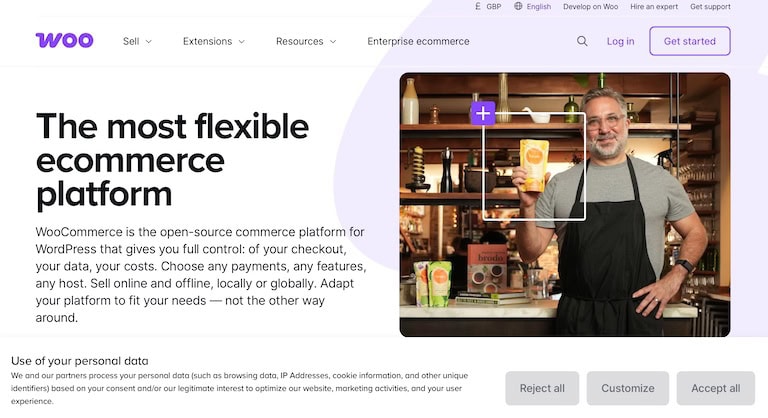
WooCommerce is a free, open-source plugin that adds shop features to WordPress. Once installed, it gives your WordPress site product pages, a cart, a checkout, payment handling, shipping and tax settings, order management, and customer accounts. It doesn’t work on its own. You need a WordPress site first, and WooCommerce sits on top of it.
Because it runs on WordPress, it powers a large slice of the web. As of 2026, WooCommerce runs on roughly 6.5 million stores and processes an estimated $30 to $35 billion in sales a year. Its share of the ecommerce platform market sits somewhere around 20 to 33 percent depending on how it’s measured, which makes it one of the most-used options anywhere.
How People Use It
The starting point is a WordPress site on your own hosting. You install the WooCommerce plugin from the WordPress dashboard, then a setup wizard walks you through currency, payments, shipping, and tax. After that, you add products with prices, images, stock counts, and categories. WooCommerce handles physical goods, digital downloads, and product variations like size or color.
From there, the WordPress dashboard is where you run the store. You process orders, update stock, manage customers, apply coupons, and check sales reports. Because it lives inside WordPress, your shop and your content sit in one place, which is why content-driven stores and blogs tend to pick it. You write posts and sell products from the same admin.
What WooCommerce Costs
The plugin is free, but a working store is not. Your costs come from hosting, a domain, a theme, and extensions, and they vary widely with your choices.
- Hosting. WooCommerce needs its own web hosting, roughly $10 to $120 a month depending on how much traffic you get and how fast you want the site to load.
- Domain. A domain name runs about $12 to $20 a year.
- Theme. Many themes are free. Paid ones are usually a one-time or yearly cost.
- Extensions. These add features the core doesn’t include. Popular ones like WooCommerce Subscriptions ($199/year) or Bookings ($249/year) are priced per year, and most premium extensions land between $40 and $250.
A basic store can start at a few hundred dollars a year. A larger store with several paid extensions can run $2,000 or more a year. You also pay the card-processing fees set by whatever payment gateway you connect, such as Stripe or PayPal. WooCommerce itself takes no cut of your sales.
Extensions and Plugins
WooCommerce covers the basics, and its extension library fills the rest. There are extensions for subscriptions, bookings, memberships, and much more, plus the entire WordPress plugin library for things like SEO and caching. Tools like Yoast SEO and Rank Math are common additions.
The catch is plugin dependency. Building a full store often means stacking several plugins, and too many can slow the site down or clash with each other. It’s worth keeping the list lean and testing changes before they go live.
SEO and Content
This is where WooCommerce stands apart. Because it runs on WordPress, it inherits WordPress’s mature blogging engine, clean URLs, and SEO plugins. If your plan is to pull in customers through articles, guides, and search traffic, that content sits right alongside your online shop. For brands that sell through content rather than ads, this is often the deciding factor.
Where WooCommerce Falls Short
WooCommerce is not the easiest path for everyone. Because you self-host, you handle updates, security, backups, and site speed yourself, or you pay someone to. That takes more technical comfort than a hosted platform where those jobs are handled for you. The learning curve is steeper, especially at first.
Costs are also harder to predict. With hosting, a domain, and a stack of yearly extensions, the total moves around, and a slow host or a heavy plugin can hurt performance. None of this makes WooCommerce a poor choice, but it does mean the store is yours to maintain.
Is WooCommerce Worth It?
WooCommerce makes sense if you already use WordPress, want full control over your store, and care about content and SEO. It carries no monthly platform fee and no cut of your sales, and it can be shaped around almost any business model. The trade-offs are the upkeep, the plugin juggling, and costs that shift with your setup. For a content-driven brand or a seller who wants ownership over the whole stack, it remains one of the strongest options. For someone who wants a store that runs itself, a hosted platform will be less work.
You might be interested in reading about best ecommerce websites, or Magento vs Opencart.