10 Essential Elements of a Winning Social Media Marketing Strategy for Events
How Goal Setting, Audience Insight, and Tailored Content Shape Effective Event Marketing
Establish specific, quantifiable objectives for your approach and fine-tune them in response to results. Know your audience by developing personas, using listening tools, and interacting with potential attendees to tailor your message.
Pick the right platforms for your goals and audience. Create customized content strategies for each. Schedule your approach leading up to, during, and after using both organic and paid methods to get the most reach.
Measure success by tracking key metrics such as reach, engagement, click-through rates, and follower growth, using analytics tools for informed decisions. Create true bonds and community by inviting engagement, spreading narratives, and developing enduring relationships with your followers.
What Is an Event Social Media Marketing Strategy?
You can implement a marketing strategy as simple as this. It includes actions such as selecting appropriate channels, posting updates, and using paid ads or hashtags.
Smart plans drive ticket sales and buzz and keep people engaged before, during, and after. Read straightforward tips and practical ideas to get your next gathering more eyes and more clicks in this post.
Foundational Event Strategy Blueprint
A foundational blueprint provides a compass for all marketing efforts. It serves as a roadmap for your planning, execution, and continuous improvement by emphasizing well-defined goals, audience insights, platform selection, and comprehensive strategies.
This blueprint ensures each step aligns with the objectives and broader business requirements while leaving the approach adaptable to unforeseen shifts.
Define Goals
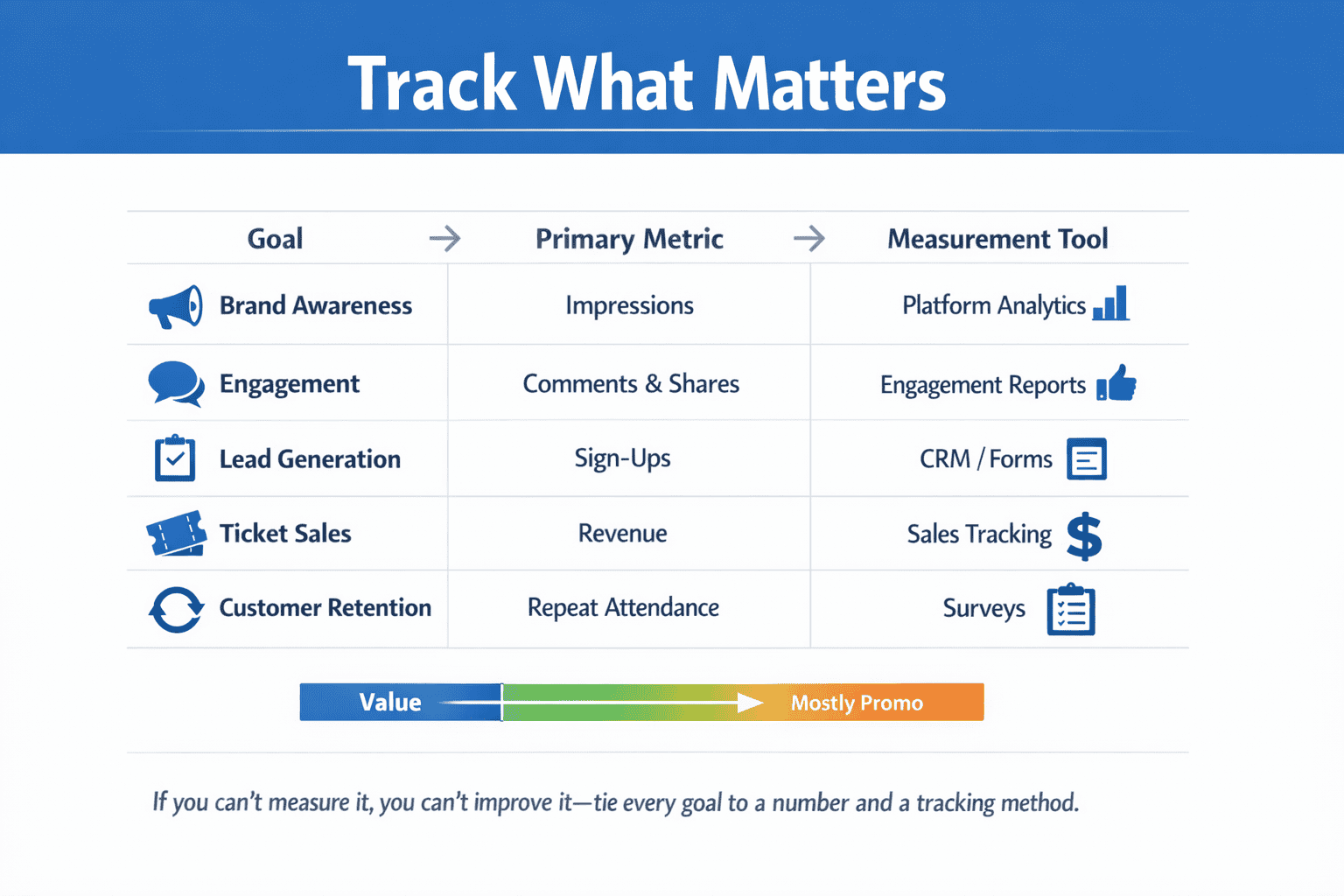
SMART goals make it simpler to monitor progress and identify what’s most effective. Objectives should connect to broader business aims, such as increasing revenue or improving customer retention. For instance, if the gathering is designed to generate brand awareness, then metrics like reach and engagement rates are critical.
| Goal Type | Example Metric | Measurement Tool |
|---|---|---|
| Brand Awareness | Number of impressions | Platform analytics |
| Engagement | Comments, shares, likes | Engagement reports |
| Lead Generation | Number of sign-ups | CRM, forms |
| Sales Conversion | Revenue from sales | Sales tracking |
| Customer Retention | Repeat attendance rate | Surveys |
Revisit your objectives frequently. Use actual numbers and input to refresh or adjust goals as things progress.
Identify Audience
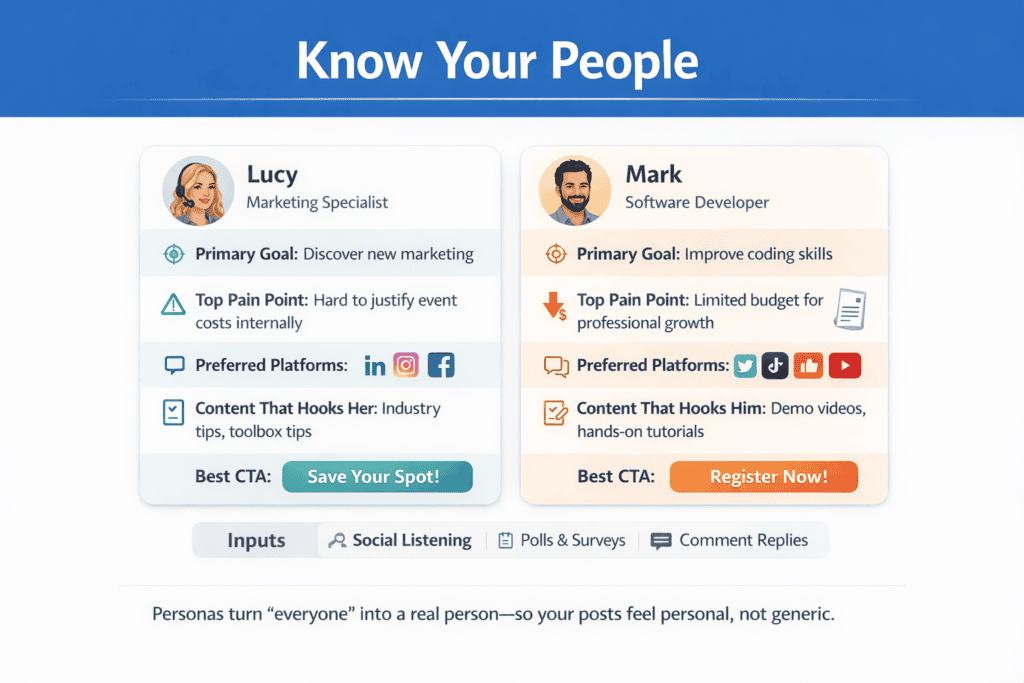
Understanding your target audience informs content and tone. Begin by defining personas, which include age, job, interests, and pain points. Listening tools, such as Brandwatch or Hootsuite Insights, help identify trends or inquiries that individuals might have regarding your topic.
Polls and surveys can indicate what potential attendees are looking for, which is useful to help you refine your plan. Split the audience by age, area, or interests. For instance, a tech gathering might batch people together by job title or experience level.
Engage your audience early by answering questions, responding to posts, or running quick polls to stay top of mind and build FOMO.
Three short steps:
- Draft at least two detailed attendee personas
- Use tools to monitor hashtags or mentions
- Ask for feedback after each update or teaser post
Select Platforms
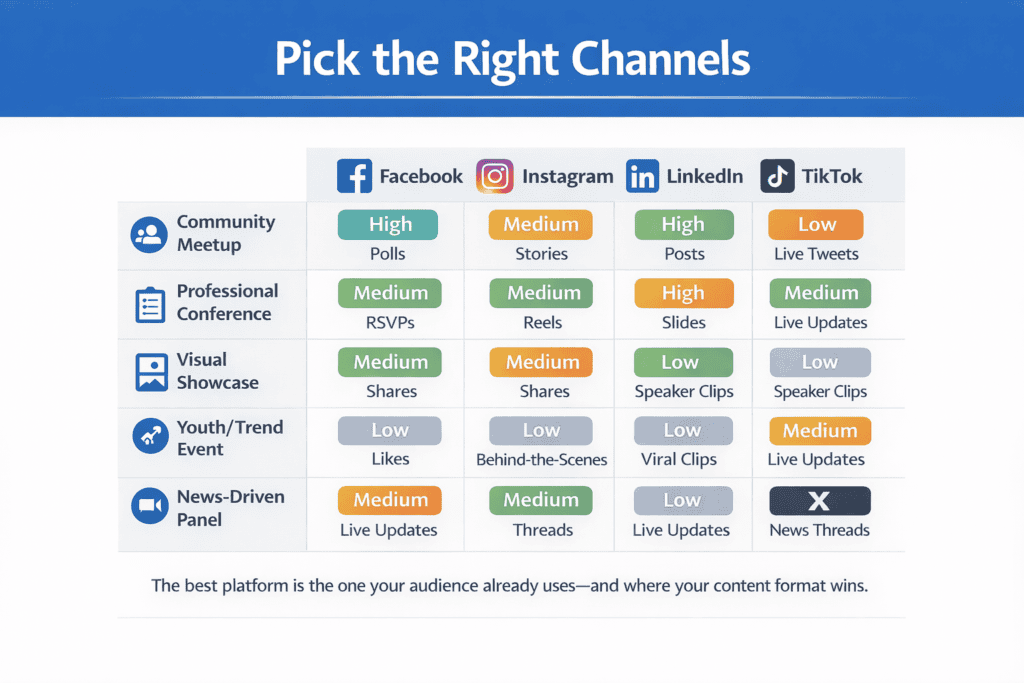
Platforms are not created equally in marketing. Selecting the appropriate ones depends on your objectives and your target audience.
| Platform | Engagement Metric | Key Demographics |
|---|---|---|
| Comments, RSVPs | 25–45, global, mixed gender | |
| Likes, shares | 18–34, urban, visual focus | |
| Shares, clicks | 30–55, professionals | |
| TikTok | Views, shares | 16–24, trend-focused |
| X (Twitter) | Retweets, mentions | 18–49, news-oriented |
For graphic gatherings, Instagram does great. LinkedIn is best for business occasions. Think about new platforms like TikTok for reach if your audience skews younger.
Have a post plan for each platform. Use short clips on TikTok, behind-the-scenes content on Instagram, and community polls on Facebook.
A strong blueprint should include:
- Clear goals and performance metrics
- Audience personas and key insights
- Platform selection and content types
- Roles and responsibilities for the team
- Calendar of posts and engagement activities
- Crisis plan for technical issues or speaker changes
The Event Social Media Marketing Plan
A smart plan constructs a virtual campfire for kindred spirits well before the occasion. Your plan is more than just posts and ads. It’s about selecting the right platforms, defining measurable objectives, and developing content that aligns with your brand.
It means staying trendy, taking a look back at what works, and making wise changes. The right combination of organic and paid strategies, along with a consistent content calendar, is key to success over time.
1. Pre-Event Phase
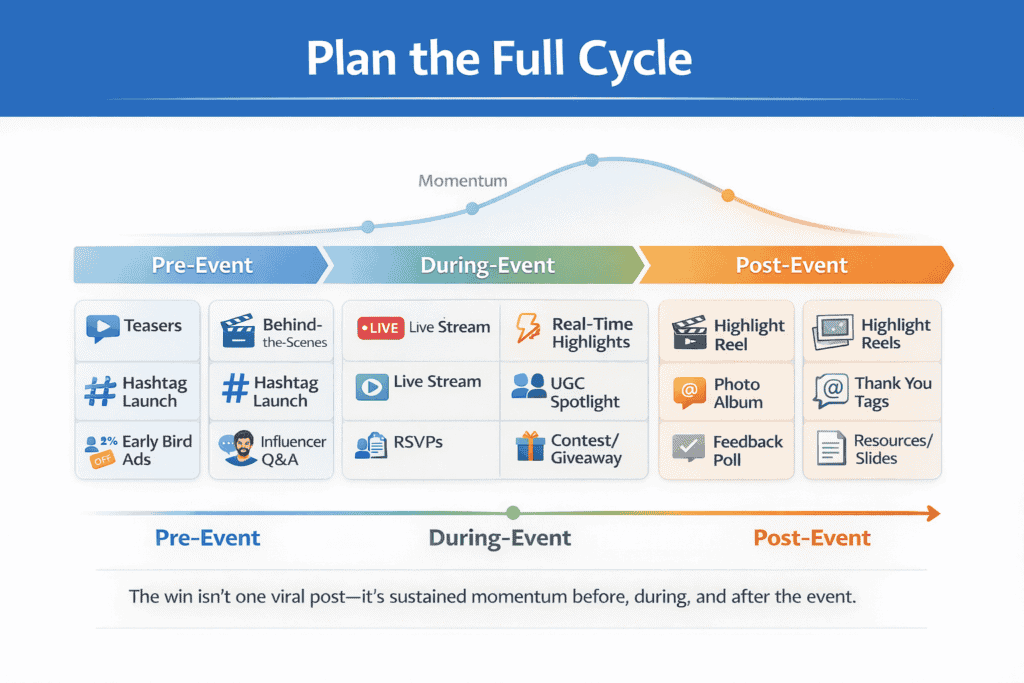
Post teases and sneak peeks, featuring short videos and behind-the-scenes photos, to incite curiosity. Go visual-first with your posts. These early posts should tease the topic, speakers, or unique activities, creating excitement among prospective attendees.
Designing an eye-catching hashtag is crucial. A distinct hashtag helps individuals locate updates, participate in the excitement, and contribute their own posts. It should be short, easy to spell, and effective across languages to encourage global participation.
Promote early adoption by incorporating the hashtag in every post and sharing it with partners and early registrants. Push early bird registration through targeted ads that highlight the value of signing up early, such as discounted prices, exclusive swag, or unique sessions.
Paid ads can extend your reach beyond organic followers, and engaging posts keep your core group interested. Collaborating with relevant influencers can be a game changer. This could involve inviting industry experts or micro-influencers who resonate with your niche.
Influencers can amplify, participate in live Q&As, or share their reasons for attending, which helps develop trust and reach.
2. During-Event Phase
Live stream key sessions or highlights. This broadcasts the gathering to remote audiences, allowing them to feel included in the action while expanding awareness. Live content attracts higher engagement rates on many platforms, especially when the coverage appears authentic and raw.
Encourage attendees to post with the unique hashtag. This not only transforms your audience into brand advocates but also provides proof and allows for wider distribution of real-time content. Highlighting the top user posts on your primary feed can maintain the community energy.
Consider hosting easy contests or giveaways. For example, offer a reward for the best photo or the most innovative hashtag use. These contests can significantly increase engagement and bring things to life for both attendees and streaming audiences.
Share highlights and rapid-fire updates throughout the day. Send out pictures, quotes, and snippets of video to keep followers who couldn’t attend in the loop, helping to maintain momentum and interest.
3. Post-Event Phase
Post highlight reels, photo albums, and memorable quotes in the days following. Use stories, short videos, and graphics to recap what occurred. This is useful content because it remains fresh for those who attended and educates those thinking about future occasions.
Gather feedback with polls or short surveys. Inquire about what worked, what didn’t, and what attendees want in the future. DMs or open comment threads can be great sources of candid feedback.
Scan through engagement data likes, shares, comments, and reach across platforms. Compare these figures to your initial objectives to determine what worked and what needs to be adjusted. A periodic audit keeps the plan fresh and focused.
Publicly thank attendees, sponsors, and partners. Tag them in posts and share their work. This acknowledgement goes a long way in maintaining a strong relationship for next time.
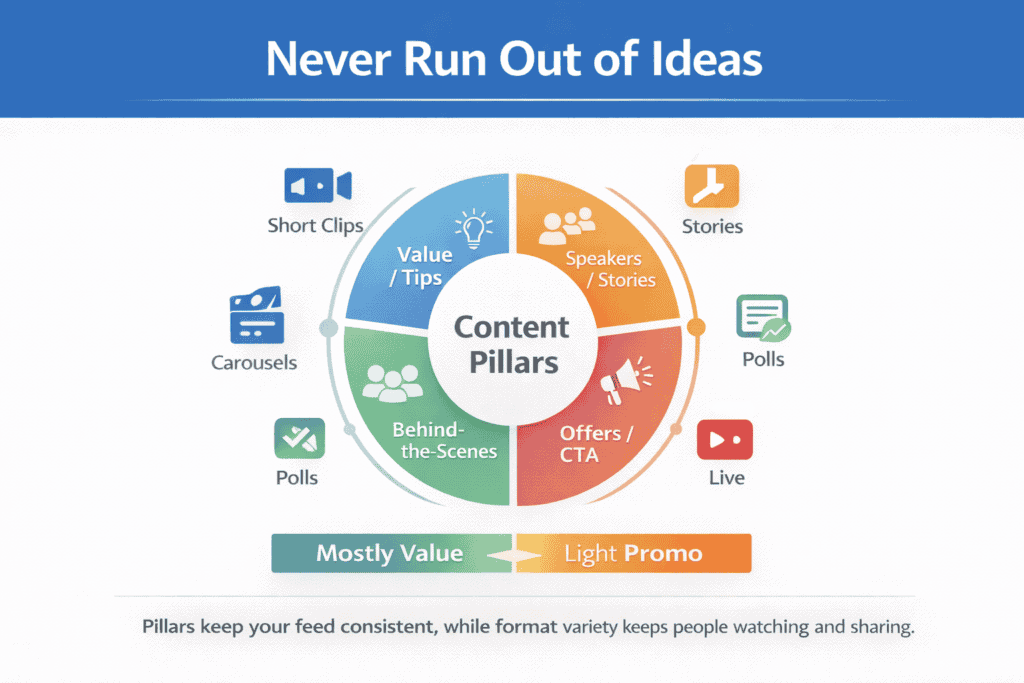
Crafting Irresistible Event Content
Powerful copy begins with a defined objective and a voice that fits your brand. Listeners hear when you’re fresh and real, and authenticity and relatability are two of the highest values people seek. When content aligns with values, engagement increases.
More than half of consumers bond with influencers whose values resonate with their own. Your clear, planned content keeps your messaging consistent and on-brand, which will make your occasion more visible in the noise of the digital world.
Content Pillars
Content pillars are the spine of your approach. They direct your attention toward themes and topics your attendees are passionate about, whether that’s sustainability, innovation, or community. By structuring your content around these pillars, you can customize your posts to reflect what’s most important to your attendees.
Try different formats for each pillar. Write blog posts, share video highlights, post pictures, or even run polls on your central topic. This blend does a great job of reaching people in different ways and prevents your feed from becoming stale.
Be consistent with your message so your brand seems reliable. Refresh your pillars frequently and keep tabs on which topics attract the most likes, comments, or shares. Pay attention to feedback and adapt as trends shift or new needs arise.
Most organizations employ data daily to inform decisions, making it simpler to detect what resonates with your audience and improve your content accordingly.
Visual Storytelling
Visuals attract immediacy, which is critical for any occasion. Over 465 million people use visual pinning sites to find ideas and shop each month, so set your images and videos to shine and tell your story loud and clear.
Share behind-the-scenes shots to humanize your gathering. Candid shots of speakers rehearsing or staff prepping help people feel connected. User-generated content such as posts from previous attendees adds authenticity and helps potential visitors get a true feel for the experience.
Experiment with formats to fit each platform. Instagram Stories are perfect for bite-sized updates, and TikTok videos can showcase entertaining moments or trends. Every piece of content is going to reach a different segment of your audience.
Compelling Copy
Compelling headlines grab attention. Deploy concise, bold statements that pull people in. Write in real language, on the audience’s terms, what they want or need. Keep your writing tight and actionable so it’s easy to scan and act upon.
Calls-to-action should be simple and direct: “Register now,” “Share your thoughts,” or “See more.” Reply to comments and messages quickly to keep people interested and demonstrate you appreciate their time.
Teach posts or tips posts can guide people to learn and decide. After all, the majority of users shop and discover trends online.
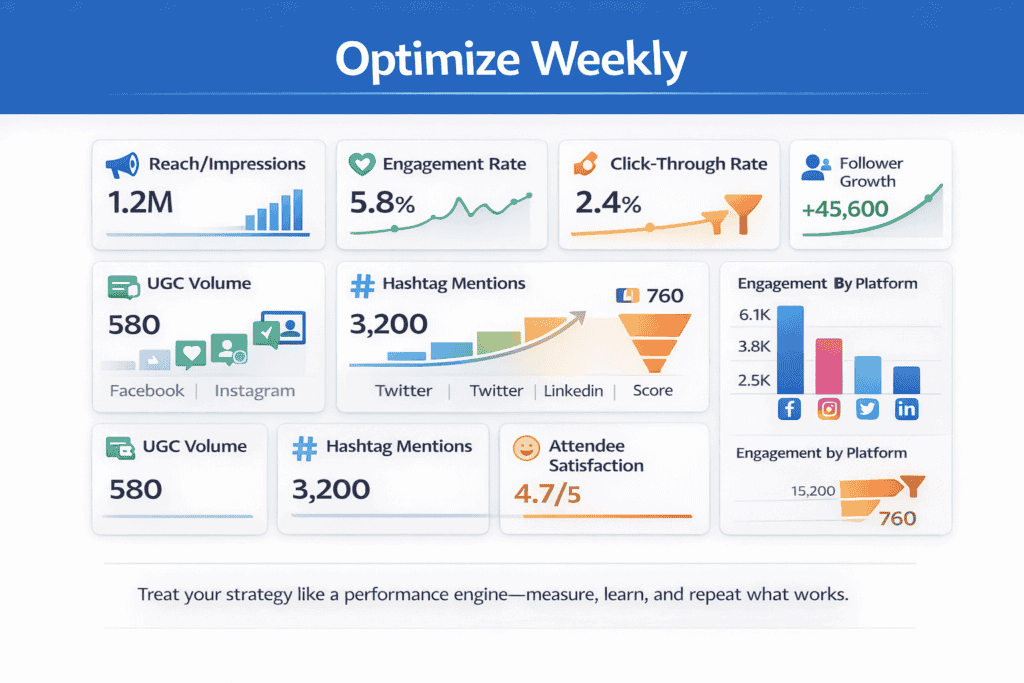
Measuring Your Event’s Success
To assess whether your marketing is effective, tracking specific, clear, and relevant metrics is essential. By establishing objectives like ‘boost registrations by 20% over last year,’ you create a benchmark for measurement. A well-rounded approach incorporates both ground-level numbers and in-depth feedback to highlight what truly matters.
The Experience Value Score (EVS) serves as a valuable tool for all types of occasions webinars, live, or hybrid offering an easy-to-understand score that captures the overall impact and value of your marketing efforts.
Key performance indicators:
- Engagement rate (likes, shares, comments)
- Conversion rate (registrations, ticket sales)
- Reach and impressions
- Follower growth
- Click-through rate
- User-generated content volume
- EVS (Experience Value Score)
- Hashtag mentions
- Attendee satisfaction and feedback
Key Metrics
Reach and impressions indicate how many people are viewing your posts. These figures provide the answer to whether your material reaches the appropriate audience. This multi-platform approach increased attendance by up to 45 percent over using only a single network.
If you want more people to hear about your gathering, cross-channel sharing is the secret.
How do you know that people care about your content? Engagement rates likes, shares, and comments provide a great feeling of interest. Occasions with strong management experience as much as 25% greater engagement and longer conversations afterward.
User-generated content, like attendee photos or quotes, delivers even stronger results, demonstrating 6.9 times more engagement than brand-only content.
Click-throughs provide insight into whether your posts inspire action. If they tap your links, they’re more likely to sign up or purchase tickets. A curve of follower growth over time is good to keep an eye on. This indicates an increasing audience for future occasions and demonstrates your content holds people’s interest.
Reporting Tools
Analytics tools, native and third-party, capture and interpret all these figures. Native tools, such as Facebook or Instagram, provide a quick glimpse of performance. More sophisticated platforms aggregate stats across multiple channels and provide one consolidated report.
Report frequently weekly or after each campaign stage. Quantify your success by showing the key numbers like engagement and conversions, and highlight what did or didn’t go well. Share this with the entire team, not just marketing.
This makes everyone see what’s making a difference and builds teamwork. Report timing can change. For big release dates or major occasions, more frequent checks catch trends early. Feedback from your audience should inform when you check the numbers.
Data Analysis
When you get the numbers, look for trends. If engagement spikes following a particular update or hashtag, make a note of what made it effective. Monitor hashtag usage. Eighty-five percent of in-event posts include pictures, videos, or quotes.
A unique hashtag lets you easily track what’s trending and who’s discussing your gathering. Understanding conversions and doing side-by-side comparisons to past campaigns is how you know you’re making progress. Did your registrations increase? Is everyone sharing more content?
Let these insights inform what content you create next and how you address your audience. Knowing that 78% of success is about knowing what attendees like or don’t like, always learn what your guests prefer.
A/B testing can help refine your approach. Test out two post types and observe which one generates more clicks or shares. Apply the winning style to future campaigns.
Beyond the Algorithm
Platforms evolve, but forging genuine connections remains constant. An effective campaign that transcends the pursuit of likes or virality can help brands reach new communities and sustain them. It’s not about the algorithm it’s about creating authentic content that builds trust and makes every participant feel special.
Human Connection
It’s rapid response to comments and questions that keeps it key. When folks connect, they seek evidence that a human hears them, not a bot. A quick, personable reply can transform a fleeting observer into a dedicated fan.
Bringing in stories from your squad or prep does the trick. A quick video of the setup crew, a pic of the first tickets sold, and a note about what went wrong last year show there are actual humans behind the occasion.
Anecdotes from previous participants contribute an additional dimension. If anyone says how it helped them learn something or connect, repost that with a thanks. User stories build faith and make your gathering seem transparent and secure.
Interactive polls, Q&As, and live streams get people talking, and music clips or past highlights work well. The 80/20 rule helps here. Aim for 80% value and just 20% promotion to keep things helpful, not pushy.
Community Building
One old-fashioned board or forum provides folks somewhere to chat pre- and post-conference. Use Facebook Groups or even a private Discord server. Share advice, organize meetups, or simply discuss what’s ahead.
Virtual Q&As with speakers or panelists provide the community with direct access to experts, strengthening the feeling of connection. Not everyone will post, but reward those who do by re-sharing their content or publicly thanking them.
Provide easy requests, such as requesting the top image from last year’s gathering. It makes people feel connected. If someone posts an inventive recap or insightful review, highlight it. Over time, these little acts create loyalty and transform attendees into participants.
Lasting Impact
Concentrate on those moments that cling to your attendees. It could be a nice welcome message, a post-event behind-the-scenes video, or a highlight reel with music. Short clips are suitable for TikTok or Instagram Reels.
Longer stories or interviews work well on YouTube or Facebook. After the gathering, follow up with messages and resource sharing, such as slides or bonus interviews. Maintain the conversation in your circle with check-ins or topic starters.
Data helps too. Take a glance over previous posts to identify patterns, like which day or hour garners more views. Try both broad and niche hashtags to extend your reach, and experiment frequently to find what’s effective.
Developing these bonds requires trial, patience, and attention, yet the benefit is a sustained culture that multiplies season to season.
Amplifying Your Event’s Reach
Growing your presence requires more than a single post it demands a comprehensive approach. Influencer marketing, the right partnerships, and paid advertising can hit the big stage. Tracking results and showing behind-the-scenes moments all help drive real engagement.
Influencer Marketing
Start with a checklist: define your theme, list your target audience traits, and look for influencers who match both. Prioritize those with demonstrated engagement, not just massive followings. For instance, a tech gathering might collaborate with a creator who specializes in candid product reviews or hands-on tutorials.
Work with influencers to develop authentic, in-their-style content, such as behind-the-scenes videos, speedy Q&As, and sneak peeks, with an emphasis on under-60-second videos for the most impact. Have influencers broadcast their live experience via live videos or stories. That way, remote followers feel like they’re part of things and it becomes more immediate.
Watch hashtag reach, click rates, and comment sentiment to determine engagement levels. Define objectives and provide engaging material, such as polls or ‘ask me anything’ to make promotion more of a dialogue. Genuine content tends to attract three times the engagement of inauthentic posts.
Strategic Partnerships
Identify brands or organizations that align with your values and target a comparable audience. Contact them with a concise pitch on how you can both benefit, like co-hosted webinars or joint giveaways. Collaborating can lead to combined marketing budgets, which can extend reach without extending spend.
Engage in cross-promotional campaigns, such as co-branded teaser videos, behind-the-scenes footage of venue makeovers, or ‘meet the teams’ content. Vary your content types to keep things interesting.
Track sign-ups, co-branded campaign engagement, and referral traffic to measure results. Evaluate if partnership-powered posts generate more discussion or faster growth. A good partner can multiply your reach and provide new distribution channels to a broader, targeted audience.
Paid Advertising
First, reserve 15 to 25 percent of your marketing budget for paid promotion. Select channels accordingly use Instagram for younger demographics or LinkedIn for professionals. Experiment with carousel ads, quick clips, and live countdowns to determine what generates the most clicks or sign-ups.
Check ad metrics every day, including cost per result, engagement rates, and audience growth velocity. Modify your targeting based on insights, focusing on segments most interested in your promotions. A/B testing can help fine-tune creatives and pause ads that aren’t performing well.
Combining paid ads with organic methods can significantly boost registration by as much as 37%. This approach ensures you maximize your reach and effectiveness in engaging prospective attendees.
Wrapping Up
Marketing keeps clean by sticking to fundamentals. Tell buzz-worthy stories. Draw eyes with short clips, clear photos, and live updates. Monitor likes, shares, and saves to identify what resonates with your audience.
Try polls or easy contests to increase the chatter. Make posts short and punchy. Reach compounds with tags, shares, and partner collaboration. Make it real show faces, scenes, and reality, not staged. Mix up posts to keep feeds fresh.
If you want to see real growth and reach, keep trying new things. Keep an open mind to what works. For those prepared to increase buzz, select a tip from above and give it a go. Small steps pile up quickly.
Frequently Asked Questions
What is an event social media marketing strategy?
An effective approach reaches your audience, drives engagement, and boosts attendance by sharing relevant content across various channels before, during, and after.
Why is content important for event marketing on social media?
Awesome content gets noticed, shared, and educates your audience, creating buzz that leads to greater turnout and exposure.
How do I measure the success of my event on social media?
Monitor metrics such as impressions and engagement rates, including clicks, shares, and attendee feedback, to refine your approach.
Which social media platforms are best for event promotion?
Choose channels where your specific audience engages, such as Facebook, Instagram, LinkedIn, and X (formerly Twitter), to boost engagement.
How can I increase my event’s reach on social media?
Use hashtags, partner with influencers, and motivate attendees to post for increased exposure through compelling photos and polls.
What makes event content irresistible on social media?
Use striking images, clear CTAs, and live coverage. Share behind-the-scenes moments and spotlight speakers.
How can I improve engagement beyond the social media algorithm?
Foster two-way conversations and engage by replying to comments. Posting interactive content such as polls or Q&A sessions drives long-term engagement.