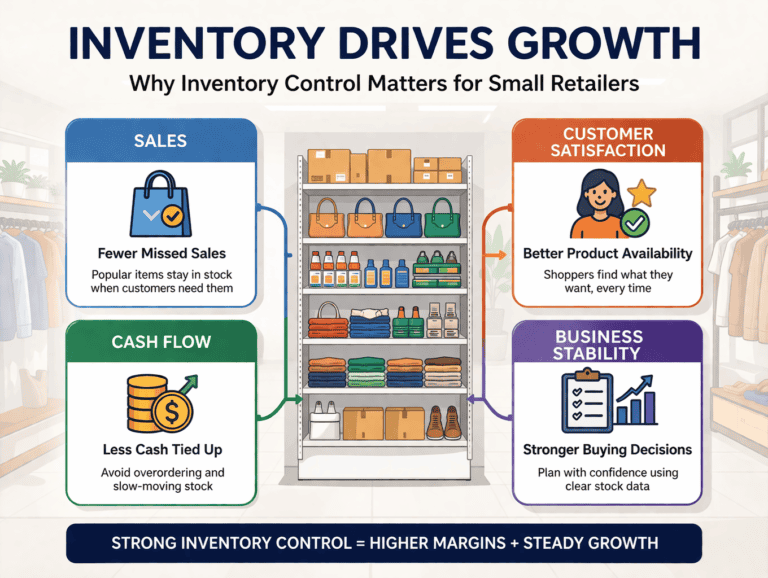
Inventory management plays a direct role in whether a small retail business stays efficient, profitable, and prepared for growth. It is not only about knowing how many products are sitting on the shelf. It is about making sure the right items are available at the right time without tying up too much cash in slow-moving stock. When inventory is managed well, a retailer can reduce waste, avoid missed sales, improve customer satisfaction, and make better purchasing decisions.
For small retailers, even minor stock mistakes can create bigger problems. Running out of a popular item can lead to lost revenue and disappointed customers, while overordering can leave the business stuck with products that do not sell quickly enough. Strong inventory management helps create balance. It gives the business clearer control over stock levels, product movement, supplier timing, and day-to-day operations.
The most successful small retailers usually treat inventory as a core business function rather than a background task. With the right habits, simple systems, and regular stock reviews, inventory management becomes a practical way to protect margins and support steady success.
Why inventory management matters more than ever for small retail businesses
Inventory management matters more than ever because small retailers have less space for waste, fewer chances to recover from mistakes, and more pressure to keep customers satisfied. When a fast-selling product goes out of stock, the business can lose immediate sales and weaken trust at the same time. When too much stock is ordered, cash gets tied up in products that are not moving, which can slow down the whole business.
For small retail businesses, inventory is not just a back-office task. It affects cash flow, product availability, customer experience, and day-to-day decision-making. A simple stock issue can quickly turn into a larger problem if shelves are empty, deliveries are delayed, or slow-moving products take up too much room.
Strong inventory management gives small retailers more control. It helps them understand what sells, what does not, when to reorder, and where money is being wasted. In a competitive market, that kind of control can make the difference between a shop that stays reactive and one that grows with confidence.

How to track stock accurately without making the process too complicated
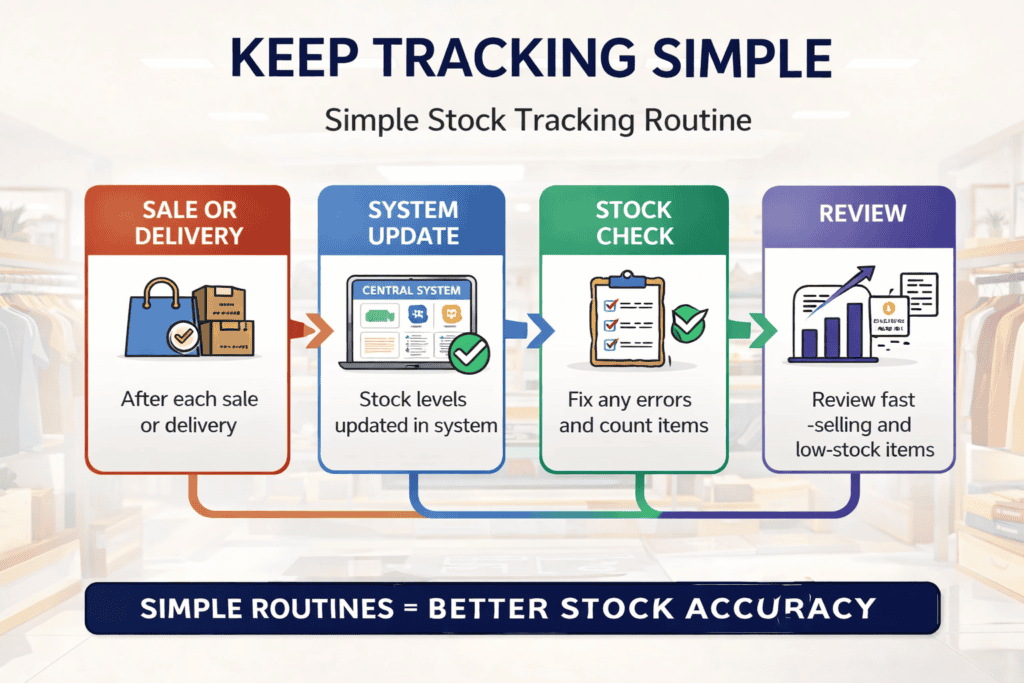
Small retailers do not need an overly complex system to track stock accurately. What matters most is consistency. A simple process that is followed every day is far more useful than a complicated setup that staff ignore or struggle to maintain. Good stock tracking should help the business stay clear on what is selling, what needs replacing, and where mistakes are happening.
The best approach is to keep stock movement updated as close to real time as possible. That means every sale, return, delivery, and adjustment should be recorded properly. When updates are delayed or skipped, stock numbers quickly become unreliable, and decisions become harder to trust.
A practical stock tracking process usually includes:
-
using one central system instead of separate notes, spreadsheets, and memory
-
updating stock levels after every sale, return, or new delivery
-
giving each product and variation a clear name or SKU
-
checking physical stock regularly to catch errors early
-
keeping damaged, missing, or returned items recorded separately
-
reviewing fast-selling and low-stock items more often than slower lines
For small businesses, simple routines often work best. A weekly stock check, clear product labels, and a habit of recording every stock movement can prevent many common problems. The goal is not to build a complicated inventory process. The goal is to make stock levels easy to understand, easy to trust, and easy to act on.
Best ways to set reorder points and avoid running out of popular products
Setting reorder points helps small retailers know when to buy more stock before fast-selling products run out. Without a clear reorder level, many businesses wait too long, react too late, and lose sales on items customers expect to find. A good reorder point creates a practical buffer between normal selling speed and supplier lead time.
The best way to set reorder points is to look at how quickly a product sells and how long it usually takes for new stock to arrive. Popular items should always be reviewed more closely because even a short delay can create an unnecessary stock gap. Retailers should also leave room for busy periods, seasonal spikes, or supplier issues that may slow down delivery.
A strong reorder process usually includes:
-
reviewing past sales to spot which products move the fastest
-
setting a minimum stock level for every important item
-
allowing extra buffer stock for best sellers and seasonal products
-
checking supplier lead times instead of guessing delivery dates
-
adjusting reorder points when demand changes
-
reviewing top-selling items weekly rather than occasionally
For small retailers, reorder points should stay practical and easy to manage. The goal is not to predict every sale perfectly. It is to create a clear restocking routine that keeps popular products available, reduces panic ordering, and gives the business more control over everyday sales.
How to reduce dead stock, overstocking, and unnecessary cash flow pressure
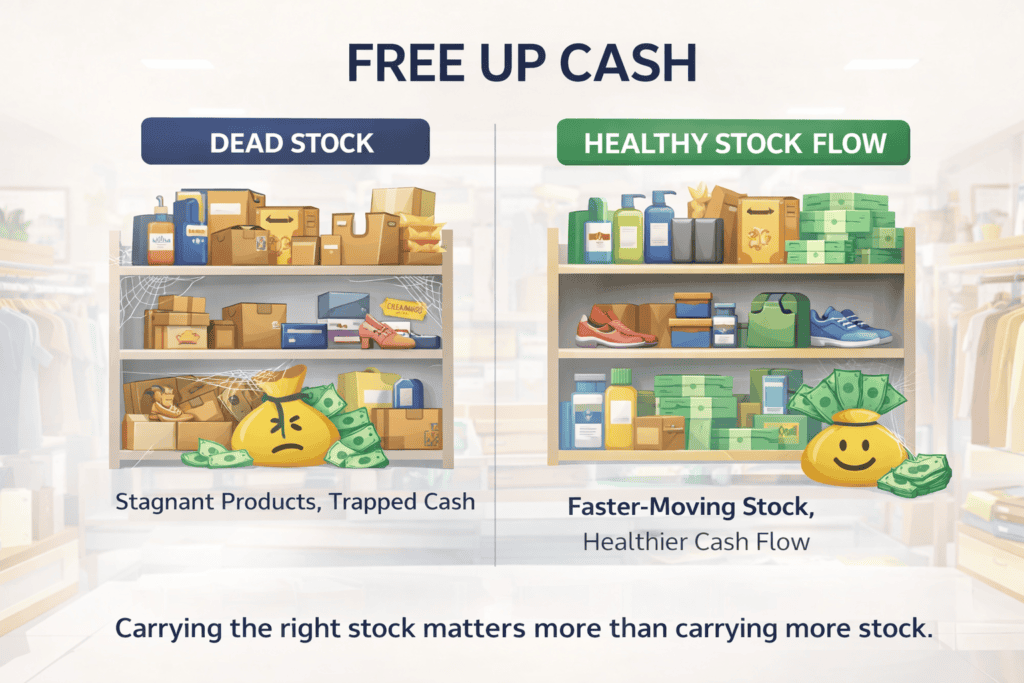
Dead stock and overstocking can quietly damage a small retail business. Products that sit unsold for too long take up shelf space, tie up cash, and make it harder to invest in faster-moving items. This creates pressure on cash flow because money stays trapped in stock instead of supporting marketing, reordering, or daily operating costs.
The best way to reduce this problem is to buy more carefully and review stock more often. Small retailers should not only focus on what sells well. They should also pay attention to what is slowing down, what has not sold for weeks, and which products are being reordered out of habit rather than demand. That helps prevent stock from building up without a clear reason.
A practical approach usually includes:
-
reviewing slow-moving products every month
-
reducing repeat orders on items with weak sales history
-
separating old stock from active best sellers
-
using bundles, discounts, or promotions to clear stagnant products
-
buying smaller quantities when demand is uncertain
-
checking sales trends before placing larger supplier orders
Good inventory control protects cash flow by keeping stock lean and purposeful. For small retailers, success often comes from carrying the right amount of stock, not the biggest amount. The more disciplined the buying process becomes, the easier it is to reduce waste, free up cash, and keep the business flexible.
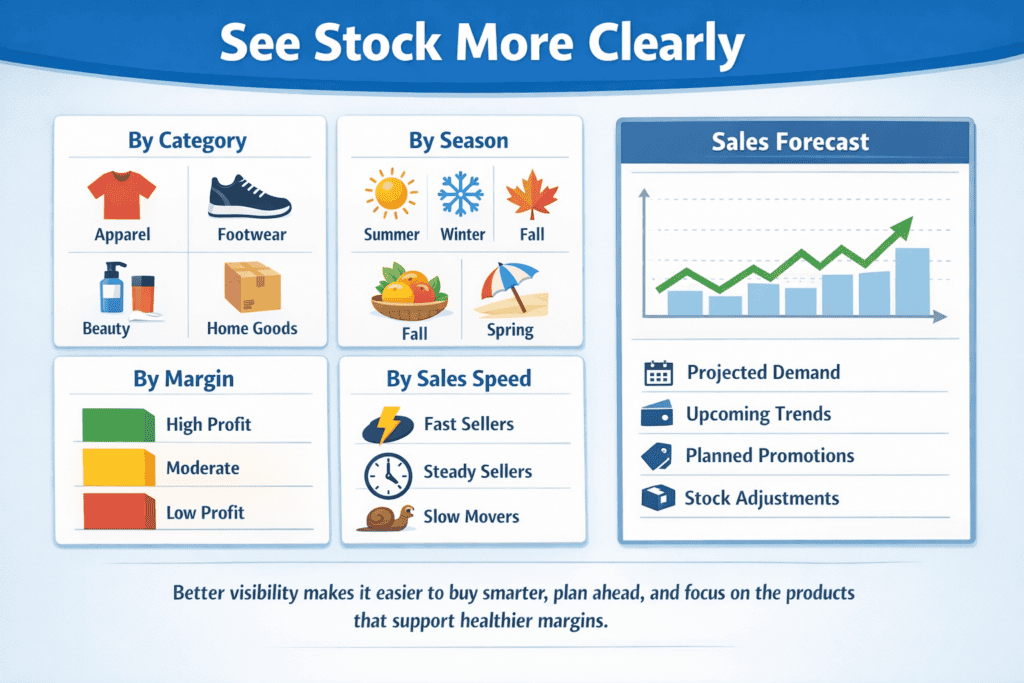
stock data into something more useful. Instead of seeing inventory as one large list of products, the business can group items by type, brand, season, margin, supplier, or sales speed. This makes it easier to understand which products deserve more attention and which ones may be draining space and cash.
Categorisation brings structure to inventory management. It helps retailers spot patterns, compare similar items, and manage stock with more confidence. Forecasting adds another layer by helping the business estimate future demand based on past sales, seasonal trends, and buying behaviour. Together, they improve planning and reduce guesswork.
A stronger process often includes:
-
grouping products by category, supplier, or sales performance
-
separating fast-moving, seasonal, and slow-moving items
-
reviewing sales history before placing new orders
-
identifying which categories bring steady demand and better margins
-
forecasting around busy periods, promotions, or seasonal shifts
-
adjusting stock plans when buying patterns start to change
For small retailers, better decisions usually come from better visibility. When products are organised clearly and future demand is reviewed with care, the business can buy more wisely, reduce stock pressure, and focus on the items that support stronger sales and healthier margins.
How the right inventory tools and reporting systems support long-term retail growth
The right inventory tools and reporting systems help small retailers grow by giving them better control, clearer visibility, and faster decision-making. As a business expands, manual stock tracking becomes harder to manage. More products, more sales, and more suppliers create more chances for mistakes. A simple but reliable inventory system helps reduce that risk and keeps the business organised as operations become more demanding.
Good tools do more than show stock levels. They help retailers track product movement, monitor low-stock items, review sales patterns, and understand which products are helping or hurting performance. Reporting systems make this even more useful by turning daily activity into practical insight. Instead of relying on guesswork, the business can see what needs restocking, what is slowing down, and where stock investment is creating the best return.
For long-term growth, small retailers need systems that support consistency. The goal is not to add complexity for the sake of looking advanced. It is to use tools that make inventory easier to manage, easier to review, and easier to improve over time. When stock data is clear and reporting is part of regular decision-making, the business is better prepared to grow with stability and confidence.