Boost Ecommerce Store’s Google Rankings with These SEO Strategies
Managing an online store involves more than listing products and waiting for buyers to arrive. Search visibility plays a major role in whether people find your category pages, product listings, and brand before they discover a competitor. That is where ecommerce SEO matters. It helps online stores improve how pages are crawled, indexed, understood, and ranked so the right shoppers can reach the right products at the right stage of the buying journey.
This guide explains how ecommerce SEO works in practical terms and what store owners need to do to build stronger rankings, attract better traffic, and turn search demand into sales. It covers the full picture, from keyword research and store structure to technical fixes, category page strategy, product page content, internal linking, and performance tracking. The goal is to bring in visitors who are more likely to buy, return, and support long-term store growth, rather than traffic for its own sake.
What Is Ecommerce SEO and Why Does It Matter?
Ecommerce SEO is the process of improving an online store so search engines can find, understand, and rank its pages more easily. That includes category pages, product pages, brand pages, blog content, and key technical elements that shape how the site performs in search. The goal is to attract people who are already looking for the products you sell, not simply bring in more visitors.
This matters because online stores usually have many pages, similar products, changing stock, filters, and duplicate content risks. Without a clear SEO plan, search engines may miss important pages, waste time crawling weak ones, or rank competitors above you for high-value searches. A store can have strong products and still struggle if its pages are poorly structured or hard to understand.
Good ecommerce SEO helps a store in several ways:
-
It brings in traffic from shoppers with real buying intent
-
It helps category and product pages appear for relevant searches
-
It reduces reliance on paid ads alone
-
It supports long-term growth instead of short-term spikes
-
It improves how users move from search result to sale
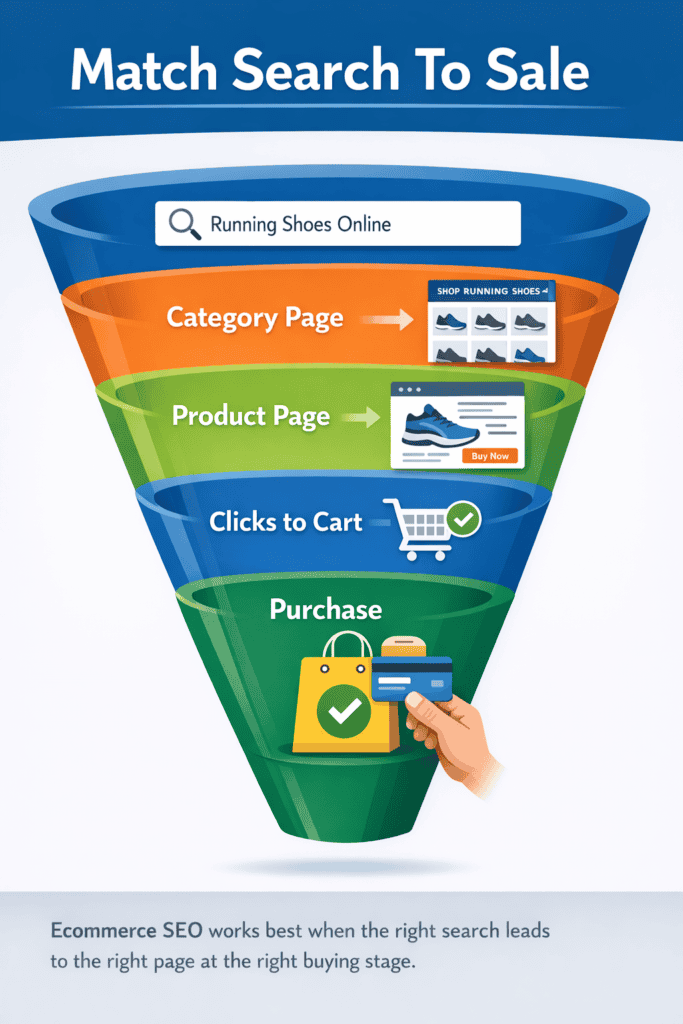
For example, a person searching for “black leather office chair with headrest” is much closer to buying than someone searching for “office furniture ideas.” Ecommerce SEO helps match the right page to the right type of search. That means using category pages for broader commercial terms, product pages for specific buying searches, and supporting content for informational queries that build trust earlier in the journey.
It also matters because search visibility affects more than rankings. It shapes discovery, click-through rate, trust, and conversion. If your store shows up with useful page titles, clear descriptions, relevant content, and strong site structure, you have a better chance of earning both the click and the sale.
In simple terms, ecommerce SEO helps your store get found by the people most likely to buy. Done well, it turns search into one of the most reliable sources of qualified traffic and revenue.
How to Get Your Ecommerce Store Found on Google with Google Merchant & Google Merchant Center
If you want your ecommerce store to show up on Google, setting up a Google Merchant Center account is one of the most powerful steps you can take. By connecting your product feed to Google Merchant Center, your items can appear in Google Shopping ads results, Search, and Images putting your products directly in front of shoppers who are ready to buy. Don’t just rely on organic SEO alone; let Google Merchant work alongside it to maximise your store’s visibility and drive more qualified traffic to your site.
Ecommerce Site Shopping Ads: Meta Tags & Product Listings Information Tips for Google Free Listings
If you want to make sure your website shows up in Google’s free listings, one of the most important steps you can take is optimising your meta tags and product information directly within your Shopify store. Shopify makes it easy to edit your meta tags for each product page, allowing you to add targeted keywords that tell Google exactly what your products are about. When your product information is accurate, detailed, and well-structured, Google is far more likely to pull your listings into its free listings results, giving your ecommerce site valuable visibility without spending a penny on ads.
How Search Engines Crawl and Index Online Stores
Search engines discover online stores by crawling links and reading site signals that help them understand what each page is about. When a page is crawled, the search engine reviews its content, internal links, metadata, canonical signals, and technical setup. If the page is considered useful and accessible, it may be added to the index and become eligible to appear in search results.
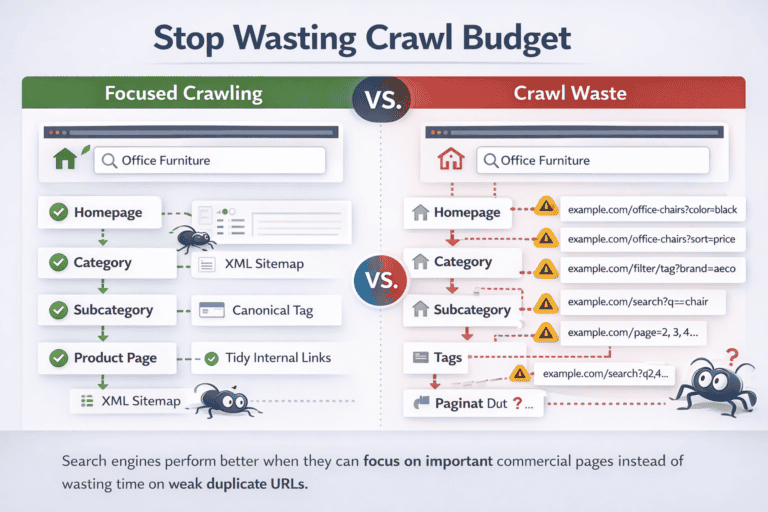
For ecommerce stores, this process can become more complicated than it looks. A typical store may contain category pages, product pages, filtered URLs, search result pages, pagination, tags, and duplicate variations created by sorting and faceted navigation. If the site is not well controlled, search engines can spend too much time crawling low-value pages while important commercial pages receive less attention.
That is why crawl efficiency matters. A store should make it easy for search engines to reach its most important pages quickly and understand which URLs deserve to be indexed. Clear navigation, strong internal linking, clean URL structures, XML sitemaps, and proper canonical tags all help guide this process.
A few core ideas matter here:
-
Crawling is when search engines discover and access pages
-
Indexing is when those pages are stored and made eligible to rank
-
Rendering is when search engines process the page layout and content
-
Canonical signals help show which version of a page should be treated as the main one
For example, if one product can be accessed through multiple URLs because of filters, sort parameters, or collection paths, search engines may see those as separate pages unless the store gives clear signals. That can lead to duplicate content issues, wasted crawl budget, and weaker visibility for the main version of the page.
The best ecommerce sites do not leave crawling and indexing to chance. They build a structure that helps search engines focus on high-value pages, avoid unnecessary duplication, and understand the relationship between products, categories, and supporting content. When that foundation is strong, the rest of the SEO work becomes far more effective.
Ecommerce Keyword Research: Finding the Terms That Drive Sales
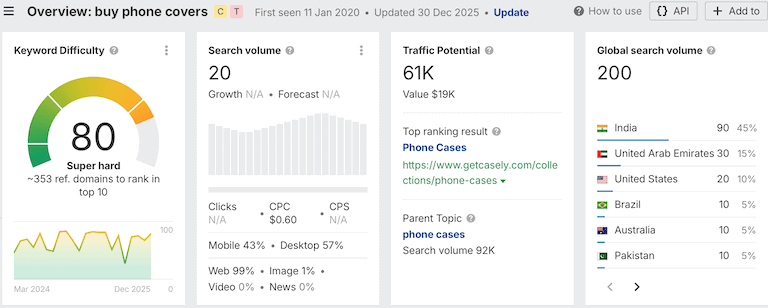
Keyword research for ecommerce goes beyond finding high-volume phrases. It is about understanding how people search when they are comparing options, narrowing choices, or getting ready to buy. The best keywords are the ones that match buyer intent and lead the shopper to the right page on your store.
That matters because not every search should point to a product page. A broad phrase like “running shoes” may suit a category page. A more specific search like “women’s black trail running shoes size 6” is better matched to a product or filtered product set. When the keyword and page type do not match, rankings and conversions often suffer.
A strong ecommerce keyword process usually starts with these areas:
-
Core product terms that describe what you sell
-
Category phrases used by shoppers comparing options
-
Long-tail searches with clear buying intent
-
Brand-led terms if customers already know what they want
-
Problem-led searches that support content and buying guides
It also helps to look beyond search volume alone. Some lower-volume phrases are far more valuable because they show stronger intent. A person searching for “best office chair” may still be researching. Someone searching for “ergonomic office chair with lumbar support under £200” is usually much closer to making a purchase.
Good keyword research also reveals how shoppers describe products in real life. They may search by colour, size, material, use case, compatibility, or audience. For example, they might look for “oak dining table for small flat” instead of just “dining table.” That difference matters because it shows what details influence the decision.
When building your keyword list, focus on:
-
Relevance to the products or categories you actually offer
-
Search intent behind the phrase
-
Commercial value rather than raw traffic alone
-
Clear mapping between keyword and landing page
-
Gaps where competitors rank and your store does not
The goal is to build a keyword map that supports the whole store. Category pages should target broader commercial phrases. Product pages should target precise item-level searches. Blog content and guides should support informational searches that help buyers earlier in the journey.
Done properly, ecommerce keyword research gives your store direction. It helps you decide what pages to build, what content to improve, and where search demand is most likely to turn into revenue.
Site Architecture: How to Structure Your Store for SEO
Site architecture is the way your store is organised so users and search engines can move through it easily. In ecommerce, this matters because a store often has hundreds or thousands of pages. If the structure is messy, important pages become harder to find, weaker URLs get indexed, and ranking signals spread too thin.
A good structure helps search engines understand which pages matter most and how products relate to categories, subcategories, and supporting content. It also helps shoppers reach what they want faster. That improves both visibility and usability.
The best ecommerce structures are usually simple and predictable. A visitor should be able to move from the homepage to a category, then to a subcategory or product, without hitting confusing dead ends. Search engines prefer that too because clear paths make crawling easier.
A strong store structure usually includes:
-
Main categories built around core product groups
-
Subcategories for logical product splits, not minor variations
-
Product pages placed within relevant category paths
-
Internal links that connect related collections and products
-
Clean URLs that reflect the page hierarchy
For example, a furniture store may organise pages like this:
-
Home
-
Office Furniture
-
Office Chairs
-
Ergonomic Office Chairs
-
Product page
This tells both users and search engines how the store is arranged. It also gives category pages a better chance to rank for broader commercial terms while product pages target more specific searches.
A weak structure often creates the opposite problem. Products may sit in too many categories, filters may generate indexable URLs, or pages may be buried too deep. That makes it harder for search engines to understand page priority and easier for crawl waste to build up.
When planning store architecture, keep these points in mind:
-
Group products by how people shop, not just by internal stock logic
-
Keep important pages within a few clicks of the homepage
-
Use category names that reflect real search behaviour
-
Avoid creating thin subcategories with little value
-
Make sure navigation supports both browsing and indexing
The goal is to create a store that feels easy to follow from top to bottom. When the structure is clear, category pages become stronger, product discovery improves, and the rest of the SEO work has a much better foundation.
Category Page Optimisation: The Most Underrated SEO Opportunity
Category pages are often the strongest SEO assets in an online store, yet many businesses give them far less attention than product pages. That is a mistake. In most ecommerce stores, category pages are better suited to rank for high-intent searches because they match the way people browse when they are still comparing options.
A shopper rarely starts with a product name unless they already know exactly what they want. More often, they search for broader terms like “men’s running shoes,” “wooden dining tables,” or “wireless security cameras.” These searches are usually best matched to category pages, not individual products. That is why category page optimisation deserves far more attention.
A strong category page does more than list products. It helps search engines understand the topic of the page and helps shoppers narrow down their options without feeling lost. The page should make the product group clear, support browsing, and include useful signals that explain what the category covers.
Good category page optimisation usually includes:
-
A clear page title that matches the main search intent
-
A short introduction that explains what the shopper will find
-
Helpful subcategory links where relevant
-
Filter options that improve usability without creating SEO problems
-
Internal links to related collections, brands, or buying guides
The written content matters too, but it should not feel forced. A category page does not need long blocks of filler text. It needs enough useful copy to explain the product range, show relevance, and support the page theme naturally. For example, a page for ergonomic office chairs might mention adjustable lumbar support, seat materials, headrests, and use cases such as home offices or long workdays. That gives both users and search engines more context.
It also helps to improve the page beyond text alone. Strong category pages often include:
-
Clear headings and subheadings
-
Well-organised product grids
-
Useful sorting options for users
-
Introductory copy placed high enough to set context
-
FAQ content or buying guidance where it adds value
Many stores ignore category pages because they focus too heavily on products. But product pages come and go. Stock changes. URLs expire. Category pages usually stay active for longer and collect more authority over time. That makes them one of the best places to build stable search visibility.
If an online store wants stronger rankings for commercial terms, category pages should not be treated as an afterthought. They should be treated as high-value landing pages that deserve proper structure, content, and internal support.
Product Page SEO: Writing Descriptions That Rank and Convert
Product pages do more than display an item. They help search engines understand what you sell and help shoppers decide whether the product is right for them. If the page is thin, copied from a supplier, or missing key details, it becomes much harder to rank and much easier to lose the sale.
That is why product page SEO needs to balance search visibility with buying intent. A strong page should answer practical questions, describe the product clearly, and show why it fits a specific need. It should not rely on vague sales language or generic text that could apply to anything.
Good product descriptions usually do three jobs at once:
-
Explain what the product is
-
Show who it is for
-
Help the shopper feel confident enough to act
For example, a weak description might say a chair is comfortable and stylish. A stronger one explains the material, seat support, adjustability, dimensions, and where it works best, such as a home office or shared workspace. That gives the page more search relevance and gives the buyer more useful information.
A well-written product page should include:
-
A clear product title that reflects how people search
-
Original description copy written for the store, not copied from the manufacturer
-
Useful details such as size, material, compatibility, colour, features, or use case
-
Natural mentions of important search terms without stuffing
-
Supporting content like delivery details, FAQs, care instructions, or returns information
It also helps to think about how people buy. Some shoppers want specifications. Others want reassurance. A good page speaks to both. For example, a skincare product page may include ingredients, skin type guidance, texture, size, and how often to apply it. That improves the page for both rankings and conversions because the content answers real buying questions.
When writing product descriptions, keep these points in mind:
-
Write for the customer first, then shape the copy for search
-
Use plain language instead of filler or exaggerated claims
-
Focus on real product details that support the buying decision
-
Avoid repeating the same sentence pattern across every page
-
Make each description distinct enough to prevent duplication
Product page SEO works best when the copy feels useful rather than forced. Search engines want unique, relevant content. Shoppers want clarity. A page that delivers both has a much better chance of attracting traffic and turning that traffic into sales.
Technical SEO for Ecommerce: Speed, Crawlability, and Core Web Vitals
Technical SEO helps search engines access your store properly and helps shoppers use it without friction. If pages load slowly, break on mobile, or create crawling problems, rankings can weaken even when the products and content are strong. For ecommerce sites, technical health matters because stores often have large catalogues, layered navigation, and many URLs competing for attention.
Speed is one of the first things to get right. A slow store can frustrate visitors before they even view a product. It can also reduce crawl efficiency if search engines struggle to load pages cleanly. Product images, scripts, apps, sliders, and bloated themes often create the biggest issues. The goal is to make the important parts load quickly and work well on real devices, without removing features shoppers need.
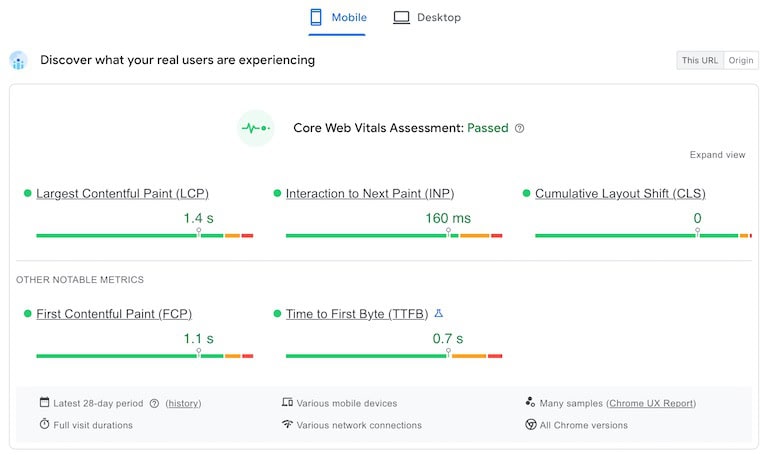
Core Web Vitals sit inside this wider picture. They focus on how the page feels to the user, not just how fast it appears in a test. In simple terms, they look at:
-
how quickly the main content becomes visible
-
how responsive the page feels when someone clicks or taps
-
how stable the layout stays while the page loads
These signals matter because poor page experience can hurt both usability and conversions. A shopper trying to tap a size option or add a product to the basket should not have to fight the page.
Crawlability is just as important. Search engines need clear paths to your main categories, products, and supporting content. If your store creates too many weak URLs through filters, search pages, tags, or sort options, crawlers can waste time on pages that bring little value. That leaves less attention for the URLs you actually want to rank.
A strong technical setup usually includes:
-
fast-loading templates for category and product pages
-
compressed images that still look sharp
-
mobile-friendly layouts that work across screen sizes
-
internal links that help crawlers reach key pages
-
XML sitemaps that list important indexable URLs
-
clean canonical signals to reduce confusion between similar pages
For example, if a category page loads large banners, multiple tracking scripts, and uncompressed product images, it may look fine on a fast office connection but perform badly on a phone. That affects both search visibility and sales because slower pages often lose users before they engage.
Technical SEO works best when it supports the whole store rather than acting as a one-off fix. A faster, cleaner, more crawlable site gives category pages, product pages, and internal links a better chance to do their job. That makes technical SEO one of the most practical parts of ecommerce growth, not just a background task for developers.
Handling Duplicate Content, Pagination, and Faceted Navigation
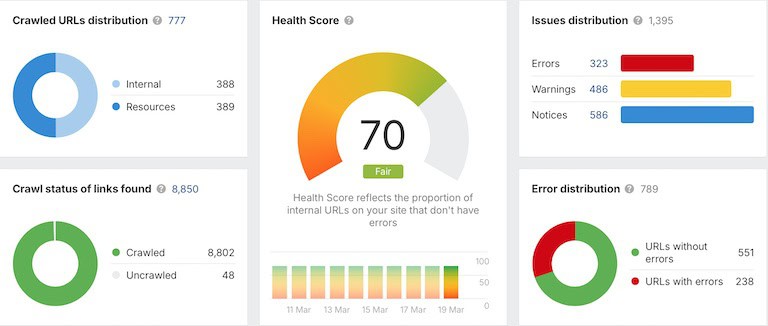
Online stores often create more URLs than they realise. The problem is not always the main category or product pages. It is the extra versions created by filters, sorting options, tags, page numbers, search results, and repeated product placements across the store. If these pages are not controlled properly, search engines can waste time crawling low-value URLs and struggle to understand which version matters most.
Duplicate content in ecommerce usually happens when similar or identical content appears across multiple addresses. A product may sit in different categories. A filtered page may create a new URL. A sorted version of the same collection may be crawlable even though it adds no unique search value. None of this is unusual, but it does need careful handling.
The aim is to help search engines tell the difference between useful indexable pages and duplicate or thin versions that should not compete for visibility.
A few common sources of duplication include:
-
product URLs that appear under more than one path
-
filtered category pages with separate indexable addresses
-
sort and parameter URLs that create endless variations
-
manufacturer descriptions reused across many stores
-
pagination pages that look too similar from one page to the next
Faceted navigation is one of the biggest causes. Filters help shoppers narrow results by size, price, colour, brand, material, or other attributes. This is useful for users, but it can create a large number of crawlable combinations. For example, one category can quickly turn into dozens or hundreds of URLs if every filter selection creates a new address. Most of those pages do not need to rank.
A cleaner approach is to decide which filtered views deserve search visibility and which should stay available for users without becoming index targets. In many cases, the main category page should remain the priority, while filtered combinations are controlled through canonical signals, internal linking choices, and indexation rules.
Pagination needs care too. Large categories often span multiple pages, and that is normal. Search engines need to move through those sequences to discover products deeper in the collection. The key is to keep paginated pages accessible, linked clearly, and free from unnecessary duplication. They should support crawling without confusing search engines about the primary topic page.
A practical ecommerce setup usually involves:
-
one preferred URL for each important product and category page
-
canonical tags that point similar versions back to the main page where appropriate
-
filtered URLs reviewed carefully before allowing them into the index
-
internal links that prioritise valuable collection and product pages
-
thin or repetitive pages kept from competing with stronger commercial pages
For example, a store selling trainers may have one core category for women’s running shoes. If colour, size, brand, and price filters all create separate indexable URLs, the store can end up with a cluttered search footprint. A better setup keeps the main category strong while only allowing a small number of high-value filtered pages to stand on their own, if they truly match useful search demand.
This part of ecommerce SEO is often overlooked because the site still appears to work on the surface. But underneath, duplicate URLs and uncontrolled filters can weaken crawling, split ranking signals, and reduce visibility across the store. A cleaner structure gives search engines fewer distractions and gives important pages a better chance to perform.
On-Page SEO: Title Tags, Meta Descriptions, and Schema Markup
On-page SEO helps search engines understand what each ecommerce page is about before they decide where it should appear in results. For online stores, this matters because category pages, product pages, and brand pages often compete in crowded search spaces. Small page signals can make a real difference in how clearly a page is understood and how often people choose to click it.
Title tags are one of the clearest signals on the page. They tell search engines and users what the page covers. A strong title should describe the page accurately, include the main search term naturally, and still read like something a person would want to click. For example, a title such as “Women’s Leather Ankle Boots | Free UK Delivery” is much clearer than a vague title stuffed with repeated keywords.
Meta descriptions do not directly decide rankings, but they do influence click-through rate. They act like a short preview in search results. A good description should explain what the shopper will find, give a reason to click, and match the page content. It should feel useful, not overloaded. If the page is about a category, the description can highlight range, style, or use case. If it is a product page, it can focus on the item’s main benefit or feature.
Schema markup adds another layer of meaning. It helps search engines read structured details about the page, such as product name, price, availability, rating, or breadcrumb path. This does not guarantee rich results, but it gives search engines cleaner information to work with and can improve how your listing appears in search.
For ecommerce pages, the most useful on-page elements often include:
-
title tags that match the page topic and search intent
-
meta descriptions that encourage the right click
-
heading structure that keeps the page easy to read
-
schema markup for products, reviews, and breadcrumbs
-
page copy that supports the main keyword naturally
These pieces work best when they match the purpose of the page. A category page should target a broader commercial phrase, while a product page should be more specific. For example, a category title might target “men’s waterproof jackets,” while a product title focuses on the exact item, size, or material. The supporting description should follow that same logic.
It also helps to avoid common mistakes. Many stores leave auto-generated titles in place, reuse the same meta description across large parts of the catalogue, or forget to add structured data to product pages. That creates weaker signals and makes listings less useful in search results. On-page SEO should make each important page clearer, more relevant, and easier to trust.
When these elements are written well, they do not just support rankings. They improve how the page is presented before the visit even starts. That is why title tags, meta descriptions, and schema markup remain some of the most practical on-page tools in ecommerce SEO.
Internal Linking Strategy for Ecommerce Stores
Internal linking helps search engines move through your store and understand which pages matter most. It also helps shoppers discover related categories, products, and supporting content without having to search again. For ecommerce SEO, this is one of the clearest ways to strengthen important pages using the assets you already control.
Many stores rely too heavily on main navigation alone. That is not enough. Search engines need more context than a top menu can provide, especially on large sites with many categories, subcategories, and product pages. A stronger internal linking setup shows how pages connect and which ones deserve more attention.
A good ecommerce linking strategy usually supports three goals:
-
guide crawlers towards key commercial pages
-
spread authority across the store more evenly
-
help users move from browsing to buying
Category pages should sit near the centre of this structure. They often target broader buying terms and can pass relevance to subcategories and products below them. Product pages then benefit from links back to their parent category, nearby collections, and related items that make sense for the shopper.
A practical internal linking setup often includes:
-
category pages linking to subcategories and featured products
-
product pages linking back to their main category
-
related product blocks based on real relevance, not random items
-
blog content linking to categories, product types, or buying pages
-
breadcrumb trails that show the page path clearly
For example, a page about ergonomic office chairs might link to a broader office chairs category, a nearby home office furniture collection, and a buying guide on choosing the right chair for back support. That gives search engines more context and gives the shopper useful next steps.
Anchor text matters too. The clickable words should describe the destination naturally. A link that says “view ergonomic office chairs” is clearer than “click here.” It tells both the user and the search engine what to expect on the next page.
It also helps to avoid weak linking habits. Too many repeated links, irrelevant product suggestions, or orphan pages can dilute the value of the structure. Every important page should be reachable through clear paths, and links should serve a purpose rather than fill space.
When internal linking is planned properly, it strengthens the whole store. It supports crawling, reinforces page relationships, and gives your top categories and products a better chance to rank. Just as importantly, it makes the shopping journey easier to follow, which can help turn search traffic into sales.
Image SEO: Optimising Product Photos for Search
Product images help shoppers assess quality, compare options, and decide whether a product feels worth buying. They help shoppers judge quality, compare options, and decide whether a product feels worth buying. They also create another way for search engines to understand your store. When image SEO is handled properly, product photos can support page relevance, improve load speed, and bring extra visibility through image search.
A common mistake is to treat images as decoration only. In ecommerce, they are part of the content. Search engines cannot view a product photo the way a person does, so they rely on surrounding signals such as file names, alt text, page context, structured data, and image placement. If those signals are weak, the image contributes far less to search performance.
A strong image SEO process usually starts with the basics:
-
use clear file names that describe the product
-
add alt text that explains the image in plain language
-
compress files so pages load faster
-
choose the right dimensions for the layout
-
place images on pages with relevant product copy
For example, a file called img1234.jpg tells search engines almost nothing. A name like black-leather-office-chair-front-view.jpg gives far more context. The same applies to alt text. It should describe the image naturally, such as “black leather office chair with padded headrest and chrome base,” rather than stuffing in repeated keywords.
Image quality matters too. Shoppers want to zoom in, check finishes, and see the product from different angles. That means the photos should be sharp and useful, but not so heavy that they slow the page down. A good ecommerce setup balances image clarity with performance. Large uncompressed files can damage page speed, especially on mobile, which then affects both usability and SEO.
It also helps to think beyond the main product image. Search-friendly product galleries often include:
-
front, side, and detail views
-
lifestyle images showing the product in use
-
close-ups of texture, finish, or features
-
variant images when colour or style changes matter
This gives the shopper better information and gives the page more useful visual depth. For example, a handbag page becomes stronger when the gallery shows the strap, inside compartments, zip details, and how the bag looks when carried. That supports trust and reduces uncertainty before purchase.
Good image SEO is not separate from product page SEO. It works alongside it. When the file naming, alt text, page content, and technical setup all match the product clearly, images become another useful signal that supports rankings and conversions. For ecommerce stores with large catalogues, that can make a meaningful difference across hundreds of pages.
Link Building for Ecommerce: How to Earn Authority at Scale
Link building helps ecommerce stores earn trust in the eyes of search engines. When relevant websites link to your store, they send signals that your pages are worth noticing. This can strengthen category pages, improve overall domain authority, and support rankings for competitive commercial terms. But for ecommerce, link building works best when it is approached as a long-term authority strategy rather than a quick numbers game.
Many stores struggle here because product pages are not naturally easy to promote. Most people do not link to a standard product listing unless there is a strong reason. That is why ecommerce link building usually works better when the store creates linkable assets around the commercial pages it wants to support.
A scalable approach often includes:
-
category pages strong enough to deserve links over time
-
useful guides, comparisons, or resources related to the products
-
digital PR angles tied to trends, data, or expert commentary
-
supplier, manufacturer, or partner links where relevant
-
brand mentions that can be turned into proper backlinks
For example, a store selling fitness equipment may find it hard to earn links directly to a dumbbell product page. But it may earn links to a buying guide on setting up a home gym, a data-led article on workout habits, or a resource comparing equipment for small spaces. Those pages can then pass authority through internal links to the key categories and products.
Relevance matters more than raw volume. A smaller number of good links from trusted sites in related sectors is usually more valuable than a large number of weak or unrelated links. For ecommerce brands, that means focusing on quality placements that support the store’s topic, products, or audience.
Some of the most practical link opportunities include:
-
gift guides and product roundups
-
expert quotes in media coverage
-
partnerships with suppliers or industry associations
-
useful blog content with a clear reason to reference it
-
unlinked brand mentions that can be reclaimed
It is also important to avoid shortcuts. Low-quality directory links, mass outreach with no relevance, and paid links placed only for SEO can create risk without building real authority. A better approach is to earn coverage, publish genuinely useful assets, and support them with smart outreach.
Link building at scale means building a repeatable system that earns trust and supports the right pages. It means creating a repeatable system that earns trust around the store, strengthens high-value categories, and supports long-term visibility. For ecommerce brands that want stronger rankings in competitive markets, authority building is not optional. It is one of the foundations that helps good content and good technical SEO perform properly.
Keep reading: see our full guide to ecommerce SEO, or read about GA4 ecommerce event tracking and site architecture and crawl budget.