





Warehouse Automation in Integrated Supply Chain Management: Benefits, Challenges, and Best Practices

Why Warehouse Automation Is Essential for Efficient, Accurate, and Scalable Supply Chain Operations
- Warehouse automation facilitates efficient, accurate, and safe operations through the use of robotics, software, and automated vehicles in core processes including receiving, storage, picking, sorting, and shipping.
- Automating the warehouse cuts costs, boosts throughput and preserves data fidelity, enabling swifter and more precise fulfillment.
- Transitioning to automation is not something you can just do. You must first evaluate your current processes, data maturity, financial feasibility, and team skills before you implement it successfully.
- Warehouse automation: In integrated supply chain management, technologies like robotics, conveyors, sensors, and management software need to be chosen and integrated carefully to solve specific warehouse challenges and streamline workflows.
- Collaboration between human staff and automation is key, with upskilling and role redefinition fostering an efficient, flexible workplace.
- Tackling issues like system interoperability, investment planning, and change management encourages smooth integration and helps optimize the long-term value of warehouse automation.
Warehouse automation in integrated supply chain management refers to the use of machinery, robotics, and software to transport, store, and monitor products with minimal human labor.
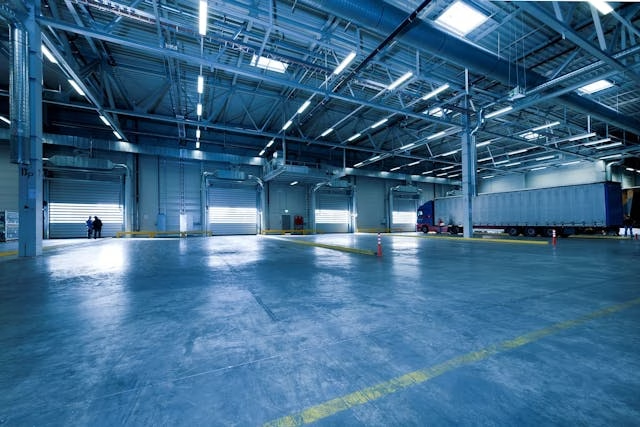
Automation aids with speedier order picking, reduces mistakes, and improves inventory management. Most companies implement warehouse automation to reduce expenses, increase speed, and cope with demand.
To put in perspective how automation connects with other pieces of supply chain management, the following sections dissect tools, trends, and primary benefits.
What Is Warehouse Automation?
Warehouse automation involves the use of warehouse robots, machines, sensors, and software to automate and enhance repetitive tasks within the warehousing industry. These advanced warehouse automation technologies can handle numerous functions such as picking, packing, sorting, and even data entry with minimal human intervention. This not only accelerates work processes but also reduces errors and optimizes space utilization.
Warehouses can integrate various warehouse automation solutions at different levels. Basic systems might only use barcodes and conveyor belts, while advanced systems incorporate robotics and comprehensive software platforms, transforming traditional warehouse operations into smart warehousing environments where every action is monitored in real time.
1. Receiving
Automation accelerates receiving via barcode scanners, automated conveyor belts, and RFID readers. These tools enable workers to process incoming inventory more quickly and with fewer errors. Systems read labels and record information directly into warehouse software, so there is less need for manual entry.
This reduces mistakes and signifies fewer discrepancies in logs. Immediate inventory tracking updates inventory counts the moment products are received. This translates to less downtime and more accurate inventory counts. Once receiving is integrated with warehouse management systems, the entire process flows seamlessly.
It aids planning and maintains team alignment.
2. Storage
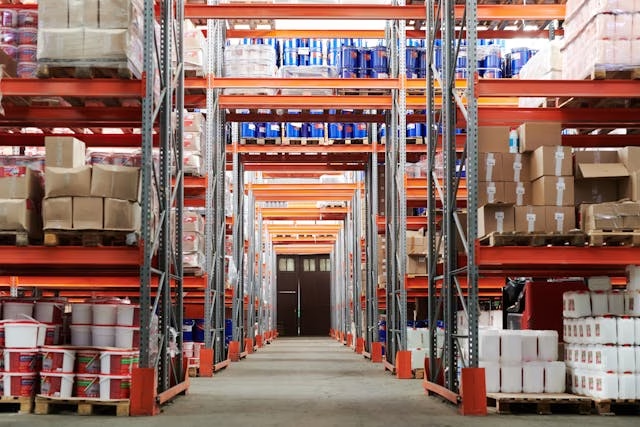
Storage is one area where automated solutions such as AS/RS help you use every little bit of warehouse space. These systems deploy machines like shuttles and mini-loaders to transport goods vertically and horizontally across racks. This allows more to be crammed into the same space.
Automated guided vehicles (AGVs) move items from receiving to optimal locations. This minimizes strenuous lifting for employees and maintains throughput. With automated tooling, discovering and extracting items from storage is faster and more structured.
Smart tech such as sensors and real-time software gives employees a clear picture of what is stored and where. This increases control and reduces lost or misplaced inventory.
3. Picking
Picking receives a huge shot in the arm from automation. Robots and pick-to-light systems illuminate employees on the correct items to collect, reducing errors and streamlining operations. Mobile robots can deliver shelves or products directly to picking stations.
Robotic picking requires fewer human and automated picker units to accomplish the same amount of work, saving costs. Automation solutions map the most optimal picking routes, so employees spend less time walking and more time prepping orders quickly.
4. Sorting
Automated sorting employs conveyor belts, sensors, and software to direct items to their correct location. It verifies every product against configurable criteria such as dimension or order category and automatically diverts items accordingly.
Sensors reduce sorting mistakes, and software records every action. This renders the process rapid and precise. Sorting systems integrated with warehouse management solutions track each package and update the records.
5. Shipping
It’s shipping is smoother with automation. Machines do the labeling, scanning, and packing. This reduces errors and keeps orders flowing out on time.
Real-time tracking allows employees and customers to track where shipments are. Automated workflows ensure nothing is overlooked and all steps are recorded. This results in quicker shipping and greater satisfaction.

Why Automate Your Warehouse?
Warehouse automation has become an integral component of supply chain management across the globe, especially with the rise of warehouse robotics. The trend is clear: businesses want to lower costs, speed up operations, and meet rising customer needs. Automation technology transforms every aspect of warehouse processes, from tracking inventory to delivering orders while enhancing employee safety.
Cost Reduction
There are many ways that automating warehouse tasks slashes costs. Machines take over repetitive jobs, so there is less human error and waste. Automated tools help sidestep costly downtime, which can exceed $100,000 per hour if not addressed. Over time, these savings compound and go a long way toward justifying purchasing new automation tech.
- Lower labor costs by reducing manual work
- Less waste from errors or damaged goods
- Fewer costs from equipment downtime
- Smarter space utilization means you spend less on additional storage.
- Savings on energy bills by using smarter systems
- Less spent on training for basic tasks
Over time, the labor savings, reduced mistakes and increased space utilization keep businesses competitive and more resilient to shifting markets. Picking orders, which is the most costly warehouse activity, can save both time and money. Travel time can consume half of working hours. Automatic systems keep quality high by carefully managing fragile or small products.
Throughput Improvement
Automation accelerates the flow of products in your warehouse. Machines can sort, pick, and pack orders much faster than people. That translates to more orders packed and shipped in less time. Speedy order fulfillment gets you closer to satisfying customer demands that keep increasing year after year.
With automated workflows, work is accomplished in the optimal sequence, so nothing gets bottlenecked. Its data analytics locate bottlenecks in the process and indicate where to speed things up. This results in increased efficiency and ease of operations. Automating bin tracking and cycle counting means inventory flows more smoothly and stockouts or overstocks are unlikely.
Data Integrity
Maintaining accurate data is a priority in any warehouse. It minimizes errors through the use of scanners, sensors, and real-time systems for stock tracking. This implies that workers do not have to count or input data by hand, which is prone to mistakes.
Real-time data capture maintains inventory accuracy. If a pallet shifts, the system notes it immediately. Integrated systems propagate this data throughout all elements of the warehouse, so everyone operates off the same figures. Such data accuracy aids planning, restocking, and meeting audits or regulations.
Worker Safety
Automated warehouses are safer, too. Machines do the heavy lifting and risky jobs. This translates into less lifting or moving loads and subsequently fewer injuries. Robots can handle toxic, sharp, or difficult-to-reach items, so humans are kept out of harm’s way.
It’s safety rules in automated spaces are stringent. Sensors halt machinery if someone is at risk. Training teaches associates how to collaborate with robotics and stay safe. When employees interact with automation on a daily basis, they concentrate on more skilled or less risky activities.
The Automation Readiness Check
The automation readiness check serves as a structured assessment to gauge how well a warehouse is equipped for automation technology. This involves examining warehouse processes, systems, and people, aiming to spot gaps and build a solid base before bringing in advanced warehouse automation technologies. The readiness check helps prioritize automation projects and avoid wasted resources in successful warehouse automation.
Process Audit
Where a process audit takes a deep look at existing warehouse operations. By examining each stage receiving, picking, packing, and shipping teams can identify vulnerabilities such as bottlenecks, inaccuracies, or manual processes that hinder progress.
Process mapping is key here, as it provides a concrete view of workflows, enabling teams to identify which tasks would gain the most from automation. Bringing in folks from other departments like ops, IT, and logistics catches all the vital information. Their input underscores pain points and gives you a reality check on what automation should accomplish.
When a process audit combines hands-on experience and technical expertise, it tends to uncover unseen issues and surface pragmatic transformation ideas.
Data Maturity
Data maturity is a measure of how well a warehouse handles and utilizes its data. High data maturity drives smart automation decisions. If data is fragmented, insufficient, or not well tracked, automation will falter.
By evaluating data quality, teams understand whether the metrics they rely on for decisions, such as inventory counts or order cycle time, can be trusted. As we’ll see, good data practices, including regular checks and clear data standards, are essential for automation to run smoothly.
Uniting information from every source, warehouse management systems, pen and paper, and even supplier data, provides a comprehensive perspective of the operation. This wide perspective enables more effective planning and helps identify where automation can play the biggest role.
Financial Modeling
Doing the financial modeling is crucial to see if automation makes sense for a specific warehouse. It considers all expenses, such as purchasing machinery, overhauling systems, and employee training.
ROI calculation allows leaders to understand whether automation will pay off, now and over time. These short term costs, such as setup and training, must be balanced against long term benefits of increased speed, reduced labor costs, and reduced errors.
Scenario analysis helps teams envision what could happen under different conditions, like shifts in order volume or labor prices, which means they can plan for risks and set realistic targets for savings and growth.
Team Skills
Automation only works with the right skills. Employees need to know how to operate new equipment, software, and tools. Upskilling the team, either via training or workshops, helps everyone adjust to the new way of working.
A culture of learning, where people are receptive to new skills and constant change, simplifies adding more automation down the line. Cross-functional teams, with members from operations, IT, and finance, make sure every angle is covered.
They facilitate the transition from manual to automated labor through knowledge exchange and mutual support.
Key Automation Technologies
Warehouse automation is a cornerstone of end-to-end integrated supply chain management. It integrates robotics, software, and sensors to increase speed, precision, and adaptability while reducing human labor. Selecting the appropriate solution hinges on warehouse objectives, scale, and what you’ve already got in place.
Below is a quick look at core technologies, their benefits, and what’s needed to set them up:
|
Technology |
Benefits |
Integration Needs |
|---|---|---|
|
Robotics |
Faster picking, less manual strain |
Network, power, software, safety protocols |
|
Conveyors |
Steady material flow, less walking |
Space planning, controls, safety guards |
|
Software |
Real-time tracking, order accuracy |
Data links, user training, APIs |
|
Sensors/IoT |
Live status, predictive maintenance |
Connectivity, calibration, data storage |
|
AS/RS |
Space savings, high-density storage |
Structural support, integration middleware |
Robotics
Warehouse robots span many types, each playing a critical role. Automated guided vehicles (AGVs) deliver pallets across floors. Autonomous mobile robots (AMRs) get small items and navigate around humans and obstructions.
Shelf loader robots raise racks for human miners to pluck, accelerating harvesting and sorting. Mini-loaders and tote shuttles deliver bins or trays with precision.
Cobots – Collaborative robots work alongside humans. They assist with heavy lifting, repetition, or even quality inspection. This combination reduces stress and injury potential for employees.
Robots excel at picking, packing, and moving stuff from one location to another. They don’t take breaks, which increases throughput.
AI allows robots to identify trends, adapt to new environments, and make rapid decisions. It enables them to pick more rapidly, sort more efficiently, and process a broader variety of products.
Conveyors
Conveyor belts and rollers keep products moving, reducing walking and accelerating the distance from storage to shipping. They save big in busy warehouses.
Automatic conveyors minimize manual handling. That translates into less bruising and more acceleration since goods can roll endlessly.
Connecting conveyors with robots and sensors provides a seamless flow. Packages can be rerouted or sorted with little human intervention.
State-of-the-art conveyors conform to irregular spaces and allow warehouses to maximize their footprint. Others can switch directions or speeds as demands transform.
Software
Warehouse management software (WMS) is the control tower for automation. It connects all the dots and tracks inventory.
Smart software monitors inventory, verifies orders, and minimizes mistakes. It makes locating what’s needed quicker and inventory levels just right.
Simple, intuitive dashboards and mobile apps keep workers focused and reduce training time.
WMS connects with robots, sensors, and other systems. This ensures easier handoffs and data sharing.
Sensors
Sensors monitor where items are, how equipment operates, or if a container is full. They’re the warehouse’s eyes and ears.
IoT devices provide real-time information on inventory, order status, or machine condition. This allows teams to detect bottlenecks or hazards in advance.
Sensors monitor wear and notify teams ahead of failure. With downtime costing over $100,000 an hour, this slashes major losses.
All the sensor information is fed back into software. It assists in finding bottlenecks to either plan routes or change settings for better flow.
The Human-Robot Partnership
The partnership between humans and automated warehouse robots combines the accuracy of machines with human ingenuity, making warehouse processes faster, safer, and more flexible. By integrating warehouse robotics into daily operations, humans and bots can seamlessly split tasks, resulting in a more error-free environment.
This human-robot alliance enhances safety and speed in logistics. By merging expertise, they tackle complex problems that neither can solve alone. Effective communication and teamwork are essential for maintaining uncluttered workflows, ensuring that adapting to new automation technology keeps everyone productive and satisfied in their roles.
Redefined Roles
Warehouse workers now have less repetitive work. Automation allows them to leave the heavy lifting and spend more time running, fixing, and optimizing systems. The transition indicates work is less physical and more about managing robotic swarms, auditing statistics, and making rapid decisions.
As jobs evolve, employees have larger roles to play. Not just picking and packing, but planning workflows and helping robots run well. Adjusting work to match new tools, such as autonomous mobile robots, is crucial for sustained success. This shift tends to increase job satisfaction, as individuals are transferred from monotonous work to more meaningful activities that require human judgment and expertise.
Upskilling
Teams have to learn new skills to keep up with automation. Training usually begins with the fundamentals, such as how robots move or use the software that controls them. Eventually, more advanced lessons address troubleshooting or adjusting systems for optimal output.
Leadership has a lot to do with it. When managers support training, employees are more likely to accept because they feel less threatened and more prepared to learn. Continuous learning keeps teams current and fosters a culture where individuals experiment, collaborate, and pivot quickly.
Collaboration
Paired with robots, humans can tackle planning, quality checks, or exceptions that machines can’t solve. This collaboration enhances productivity and security. Robots are now equipped with sensors and AI, allowing them to safely avoid humans and adapt to dynamic warehouse environments.
Shared dashboards, mobile alerts, and other communication tools let people monitor what the robots are working on in real time. When problems arise, rapid staff-robot huddles (via displays or notifications) streamline resolutions. The squads that combine tech talent and boots-on-the-ground can detect issues more quickly and identify more effective solutions.
This collaborative model is not only about velocity; it is about establishing rapport and enriching work for all parties.
Challenges in Implementation
Warehouse automation in integrated supply chain management presents an array of challenges that impact immediate momentum and sustained benefit. Tackling these problems up front prevents expensive troubles down the road, enhances effectiveness, and makes the solution more custom to the business.
The table below describes some typical implementation challenges, along with their effect and strategies to address them.
|
Challenge |
Impact |
Potential Solution |
|---|---|---|
|
System incompatibility |
Data loss, communication delays |
Choose systems with open standards |
|
High upfront costs |
Budget strain, delayed ROI |
Careful investment planning, phased rollouts |
|
Resistance to change |
Slow adoption, lower productivity |
Strong change management, staff training |
|
Data security risks |
Breach of sensitive info, downtime |
Robust cybersecurity protocols |
|
Lack of skilled workers |
Poor system use, frequent errors |
Ongoing training, upskilling programs |
System Interoperability
Warehouses have tons of systems from dozens of vendors, so integrating them is an enormous challenge. Machines, warehouse management software, and other tech need to be able to share data seamlessly.
When these systems don’t talk to each other, it can hold up the entire supply chain. Selecting tech that plays nice with others is essential. Embracing open standards and APIs makes certain that new tools are compatible with existing ones.
If a warehouse implements picking robots and smart shelves for inventory tracking, they both have to communicate seamlessly. Well-integrated means real-time data flows seamlessly between inventory, order, and shipping systems.
Interoperability translates to less errors and quicker response if things go awry. A warehouse with one system can detect bottlenecks, resupply quicker and prevent mix-ups. Teams can correct issues prior to them impeding orders.
It’s an approach that keeps silos out of the way and ensures that all of the supply chain operates as a unit.
Investment & ROI
Tangible benefits include lower labor costs, faster order fulfillment, and reduced errors. Intangible benefits include better data for decisions, improved worker safety, and higher customer satisfaction.
Weigh both when planning to invest. When computing the ROI for warehouse automation initiatives, this includes the cost of all hardware, software, training, and support. Then offset these against labor savings, accelerated cycle times, and greater accuracy as the years progress.
Periodic reviews aid in determining whether the technology continues to pay off as the business expands or evolves. Continuous tests enable businesses to adjust setups, detect issues early, and anticipate changes in demand or emerging technologies.
Change Management
Change management aids employees and executives in embracing and adopting new technology. Absent this, automation projects are subject to resistance and sluggish diffusion.
Hands-on training, strong leadership, and clearly set goals can make the transition easier. Others shop floor staff fear job loss or new work. Having them help plan and provide feedback, along with transparent updates, makes change less scary.
Workshops and open forums allow employees to raise questions and express concerns. Open discussions help keep us aligned. When workers understand what is changing and why and have a voice in the rollout, automation integrates quicker.
Conclusion
About warehouse automation in integrated supply chain management Warehouse automation shapes supply chains today in big ways. Smart tools accelerate pick, pack, and ship tasks. Fewer errors arise, and work becomes safer for floor personnel. Robots and staff each do what they do best together. A few bumps can stall the transition, such as steep initial investments or installation hiccups, but the benefits usually exceed the discomfort. Real-world results include improved inventory velocity, reduced spoilage, and accelerated order fills. For companies that need to remain nimble, see where tech suits your stream. Experience what’s effective, map out your next moves, and connect with expert teams. To get ahead, keep learning and discover new ways to enhance your supply chain.
Frequently Asked Questions
What is warehouse automation in integrated supply chain management?
Warehouse automation employs advanced technologies and machinery, such as warehouse robots, to perform storage, picking, packing, and shipping of goods, enhancing supply chain operations to be faster and more efficient.
Why should a business automate its warehouse?
Automation technology eliminates errors, accelerates warehouse processes, and reduces labor costs, enabling businesses to satisfy customer expectations rapidly and remain competitive in the logistics industry.
Which technologies are most common in warehouse automation?
Common technologies in modern warehouse operations include automated storage and retrieval systems (AS/RS), conveyor belts, warehouse robots, barcode scanners, and warehouse management systems (WMS).
How do humans and robots work together in automated warehouses?
Humans manage exceptions and complex processes, while warehouse robots perform repetitive or heavy labor. This collaboration enhances safety, precision, and efficiency in warehouse operations.
What challenges can occur during warehouse automation?
Typical obstacles are capital-intensive, management change, technology integration, and training. With some forethought, you can overcome these problems.
How can a business check its readiness for warehouse automation?
A company should evaluate existing workflows and employee capabilities to enhance warehouse productivity and ensure readiness for advanced warehouse automation technologies.
Is warehouse automation suitable for all types of warehouses?
Not all warehouses fare equally; successful warehouse automation is most effective with high-volume or repetitive activities, enhancing warehouse productivity and optimizing warehouse processes.
Author Bio:
Ben Ajenoui is the Founder of SEO HERO LTD, a Hong Kong–based SEO agency helping startups and established businesses improve search visibility, drive organic growth, and build sustainable online performance. He specialises in SEO strategy, technical optimisation, and content-led growth.