






Warehouse layout optimization: 10 essential strategies for efficiency

How strategic warehouse layout design boosts efficiency, supports smart technology, improves employee well-being, and adapts to changing operational needs
- Optimizing your warehouse layout can greatly increase your efficiency, safety, and employee morale while decreasing costs and fueling growth.
- Thoughtful operational flow, featuring intuitive pathways and visual cues, keeps process bottlenecks to a minimum and facilitates efficient picking, packing and shipping.
- Smart space utilization from vertical storage solutions to clearly defined zones capitalizes on your available cubic footage and agilely scales to evolving inventory needs.
- Typically, this involves integrating technology such as warehouse management systems, automation, and advanced analytics, which increase inventory accuracy, streamline workflows, and support data-driven decision making.
- Human-centric design such as ergonomic workstations and dedicated training spaces promotes employee well-being, satisfaction, and productivity while minimizing injury risks.
- Continuous evaluation using key performance metrics and regular employee feedback enables iterative improvements and ensures the warehouse layout remains aligned with operational objectives and future needs.
Warehouse layout optimization is arranging space within a warehouse to facilitate rapid flow of goods and minimize effort of work. A great layout cuts down on the time it takes to pick, pack, and move stuff.
It can help a business save on costs and keep things safe for staff. Intelligent layout selections accommodate new technologies and tools.
To understand how this informs warehouse work, the following sections dissect essential strategies and advice.
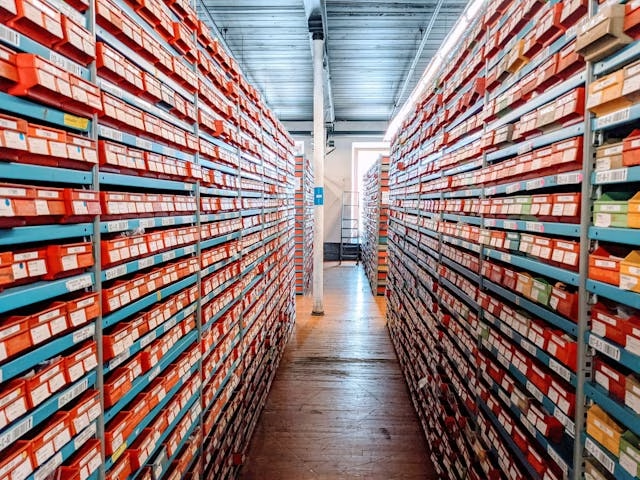
Why Warehouse Layout Matters
Why warehouse layout matters is crucial for efficient warehouse operations. It influences how products flow, how quickly orders ship, and even how secure folks feel on the floor. A robust layout strategy can enhance storage space and optimize warehouse processes, increasing storage density, reducing waste, and ensuring the warehouse accommodates both man and machine.
1. Operational Flow
This flowmake is the backbone of warehouse performance. As items flow from receiving to storage and then on to shipping, every stage should be defined and unobstructed. Pathways need to be wide enough for forklifts and people to pass safely. Efficient transitions between zones accelerate picking and packing, which keeps the flow.
With floor markings and signs to direct staff, no one has to wonder where to go. Little things, be it color-coded storage or arrows painted on the floor, save minutes and reduce frustration, which counts when those orders start piling up.
2. Cost Reduction
A layout that saves money by making sure every square meter counts. Shelves at just the right height, racks that take advantage of every vertical inch, lean aisles that still allow equipment to pass these little decisions make a difference. No wasted space leads to lower rent and energy bills.
When you organize tasks by zone, fewer folks walk long distances, so your labor costs fall. Adding barcode scanners and conveyors helps automate jobs, which cuts errors and speeds up work. Each increment that boosts inventory turnover signifies less capital locked in inventory and more cash for expansion.
3. Safety Culture
Safety begins with layout. Main walkways should pop, scribed with bright lines. Signs have to be clear in whatever language so no one flubs a regulation. Strategically located emergency exits in proximity to high-traffic areas, combined with accessibility, can be life-saving during an emergency.
Ergonomic workstations minimize strain when lifting or twisting. Safety checks should occur anytime the layout is modified. When visitors walk into a warehouse and notice good order, they realize safety is important here.
4. Employee Morale
Why your warehouse layout matters. Wide aisles and good light translate to less stress and fewer accidents. A clean, organized space gives staff pride and makes it easy to find what they need. Small break rooms close to the action allow workers to rest without long walks.
Seeking input on layout demonstrates respect and engages staff as partners. Training everyone on why layout matters connects daily work to big-picture goals and builds team spirit.
5. Future-Proofing
Growth requires room, so saving 20 to 30 percent additional space allows a warehouse to flex for new SKUs or automation. Racks on wheels, sliding shelves and no-floor spaces all assist a company in transitioning quickly as seasons transform or technological advancements show up.
Incorporating systems such as intelligent conveyors or automated picking leads to decreased labor requirements and a defined potential expansion route. Reviews every few months keep the layout in sync with business goals and market shifts.
Core Layout Principles
Core layout principles are the bones of warehouse design, determining how efficiently a facility utilizes warehouse space and how effectively it supports business demands. A smart layout facilitates efficient product flow, reduces labor, and can increase productivity by as much as 30 percent. The best layouts optimize space and accessibility, safety and adaptability, technology and tradition, all with an eye toward minimizing wasted steps and maintaining warehouse optimization.
Product Flow
One of the core principles of warehouse optimization is to map out the product flow to minimize handling and travel time. In warehouses, where more than half of labor time is spent walking, reducing travel distances directly saves money and enhances warehouse efficiency. Smart zoning, which involves grouping by product type or activity, simplifies both picking and storing processes.
For example, storing high-turnover goods near shipping docks or entrances reduces unnecessary back-and-forth travel. FIFO is frequently hardwired into layout to avoid stock obsolescence in industries such as food or pharmaceuticals. Historical data can inform these decisions, demonstrating which items require fast access or which areas of the warehouse are prone to congestion.
Leveraging data for warehouse flow planning not only prevents congestion but also enables real-time reconfigurations as business demands evolve, ensuring optimal use of available space.
Space Utility
Space efficiency begins with a serious consideration of how you’re currently using your warehouse space. At a minimum, effective warehouse layout planning optimizes floor area and vertical cubic meters. Vertical storage, such as multi-level shelving or mezzanines, can significantly enhance storage capacity without adding to your building footprint.
Setting aside a few zones for high-turnover products within organized warehouse areas keeps them within easy reach and accelerates order picking. It’s common to maintain 15 to 20 percent of storage positions free to facilitate efficient warehouse operations, which keeps inventory flow moving and avoids pileups.
Regular reviews of warehouse optimization efforts in space planning are key as your types and volumes of inventory shift to keep facilities lean and responsive.
Accessibility
Each area of the warehouse should be accessible, not only for day-to-day functions but for maintenance and emergency situations as well. Wide aisles are a must; they enable material handling equipment, whether it be forklifts or pallet jacks, to flow freely and avoid jams.
Good labeling and signage makes everyone faster and decreases picking errors. Accessibility isn’t only about shifting items around either; it means employees can easily access emergency exits or tools to fix a malfunction, both of which are critical in terms of safety and operational continuity.
A clever layout anticipates these requirements from the beginning, seamlessly weaving workflow and safety without compromising your space.
Designing Your Optimal Layout
Designing a warehouse layout is about fitting the space and workflows to the bigger ambitions of your business. The best layout makes the flow of merchandise seamless from receiving to shipping, with optimal utilization of every square meter.
You need clearly delineated zones: receiving, storage, packing, shipping, and office. The shape of the warehouse U, I, L determines paths for people and product. Every choice is a trade-off. Ceiling heights, floor strength, and what equipment you use all inform what is possible.
Be sure to design for change and growth, as needs will evolve as your business expands.
Data Analysis
Data always precedes a strong layout plan. Operations analysis lets you identify bottlenecks in your workflow. You should know your inventory turnover rates, how fast orders are fulfilled, and which spaces become cluttered or bog down work.
These metrics let you identify wasted space or steps that are non-value adding. Simulation software lets you test new layouts before you move a single shelf. Visual models demonstrate how adjustments affect flow and efficiency.
You can experiment with shifting the picking zone closer to shipping or adding an additional packing station. Make data refresh. As your product mix or order volume shifts, refresh your analysis. This keeps your layout in touch with actual needs instead of a plan on paper.
Zone Definition
Set up clear zones: receiving, storage, picking, and shipping. This skeleton helps workers stay on task and reduces unnecessary wandering. Each type of product might require its own area, with quick turnaround items nearer to packing and bulkier items in deeper storage.
Color-coded zones or big signs can help staff, particularly new hires or temps, navigate quickly. These visual indicators clarify safety rules. Zone definitions don’t have to be permanent.
Review them every few months to keep up with business process changes, product, or order shifts.
Storage Selection
Select your storage solutions according to what you store and how frequently you shift things around. Static shelving accommodates slow-moving parts, and dynamic racking or flow racks assist high-turnover products.
Ensure that shelving and racks suit the weight and size of your products and your floors’ load capacity. Modular storage provides you with flexibility, allowing you to adapt as the product mix or volume changes.
Thanks to modular options, you can scale up or down without a complete redesign.
Technology Integration
Warehouse management systems (WMS) provide real-time inventory information. RFID and barcode tools guarantee that counting and tracking mistakes decrease. Automation, such as conveyor belts or robotic pickers, can accelerate picking, packing, and shipping while reducing manual labor.
Advanced analytics tools reveal what spaces perform best and where you waste time. Armed with these insights, you can make layout adjustments that optimize flow and enhance safety.
Common Layout Pitfalls
Warehouse layout optimization is crucial for enhancing operational efficiency and avoiding common warehouse problems that can hurt productivity. By implementing effective warehouse optimization strategies, organizations can navigate layout-related pitfalls, drive down costs, and improve workflow efficiency, ensuring that every resource is utilized effectively in a dynamic business environment.
Ignoring Data
A lot of teams make the mistake of creating layouts based on instinct or habit instead of hard numbers. Layout decisions that discount warehouse management system data, tracking, and historical throughput run the risk of overlooking consistent bottlenecks or not identifying sluggish inventory that clogs precious space.
For instance, some warehouses skip measuring how frequently specific SKUs are picked and instead rely on hunches about where items should be stored. Everything from pick rates to travel time to density of storage is empirical and can be used to make smarter decisions.
Teams should refer to past seasons to discover which zones get the most traffic or which products are most in demand. This method helps prevent that old layout error of placing fast movers too distant from shipping docks.
Data-driven decisions don’t come from one department. Operators, inventory planners, and IT staff contribute different perspectives. Putting them side by side typically results in both more precise analytics and smarter layouts.
Frequent reviews of critical metrics enable teams to identify changes in product flow and layout before minor problems become major.
Neglecting Growth
A lot of warehouses are constructed for today but not for the future. When layouts neglect future growth, scaling gets difficult, costly, or even non-feasible. Teams need to consider scalability from day one.
If the business anticipates order volume doubling, the layout should accommodate that without significant redesign. They go for changes in product mix. For example, a warehouse that begins processing more large-sized inventory or introduces new SKUs may discover its aisles and shelving collection no longer accommodate real-world workflows.
Smart design decisions like modular shelving and moveable partitions help spaces shift with business needs. Looking over our growth projections once a year helps keep the layout in line with business goals.
These teams avoid being stuck in obsolete, hard-to-change layouts that lead to bottlenecks and lost opportunities.
Underutilizing Verticality
One of the dumbest mistakes is accidentally neglecting vertical space. Rather than simply expanding, taller racks or mezzanines open up additional storage without expanding the footprint.
Pallet racking going higher, for example, can store bulk goods up top and hand-level fast moving SKUs. It keeps the floor uncluttered. Safety has to be prioritized. Personnel require adequate training and equipment to work at heights.
Periodic inspections of vertical storage minimize accidents and optimize efficiency.
Prioritizing Space Over Flow
Designing for maximum storage often means layouts overlook the reality of how people and goods truly flow. Narrow aisles, poor signage, or blocked pathways result in congestion and inefficiency. Smooth, logical traffic patterns speed picking and reduce errors.
Clear separation between staging, receiving, and shipping areas stops cross-traffic. Don’t fill racks with too much stock. Be sure to review and test the layout often, looking for new bottlenecks or workflow snags as operations change.
The Human-Centric Warehouse
The human-centric warehouse of the future puts people first, designing spaces and processes that enhance both well-being and productivity. Workers’ needs drive every design decision, from layout to lighting. This is more than compliance; thoughtfully crafted spaces aid in fatigue reduction, mood optimization, and mitigating the risk of injuries.
When humans flourish, productivity follows. Research demonstrates an 11% rise in work and a 7% increase in material efficiency when human considerations are prioritized. Digital twin technology and AI-driven models provide fresh methods to map, test, and hone these people-first layouts. The goal is to keep workers safe, engaged, and at their best.
Ergonomic Design
Ergonomic is the name of the game in any warehouse that depends on humans. It begins with workstations customized to the job of packing, picking, sorting, or shipping. Every zone requires the appropriate height, spacing, and reach to perfectly fit the task and the worker.
Adjustable tables and shelves allow workers to configure their workspace according to their height and preference, reducing back strain and repetitive motion injuries. Routine lighting, temperature, and layout checks can identify emerging hazards before they become serious.
Employing mats to soften hard floors or providing anti-fatigue stools for long tasks can make a big difference. Supplying implements with simple grips or lighter weights prevents pressure, particularly for monotonous tasks. Even minor enhancements, such as improved handles on carts, reinforce to your workforce that management prioritizes safety.
Not just once, but often. When workers tell us a station is hard on their body, managers can use digital twins to simulate and test modifications before relocating actual shelves or equipment. This keeps safety top of mind even as the warehouse evolves.
Workflow Intuition
A workflow that matches how humans move is simpler to learn and quicker to use, making it a key aspect of effective warehouse optimization strategies. Layouts should locate most-used items near main aisles to enhance warehouse efficiency, allowing associates to take fewer steps per order. Visual cues, such as signs, floor markings, or color-coded bins, assist new hires and prevent errors in the organized warehouse space.
Workers know best where bottlenecks or confusion bog things down, making their input crucial in improving warehouse processes. Collecting their feedback, face-to-face or via rapid surveys, ensures designs get better with actual use. For instance, a few warehouses discovered that reordering picking zones accelerated processing by 5 to 10 percent, showcasing the importance of proper warehouse layout.
AI and ML can map worker movements and identify bottlenecks or unnecessary detours, contributing to improved efficiency in warehouse operations. These tools don’t replace people; they assist managers in making adjustments based on real data. Over the course of weeks, teams observe fewer mistakes, less wasted movement, and more first-time-right orders, ultimately enhancing warehouse productivity.
Training Spaces
Training is continuous, not one-and-done. Carving out space for this near work areas but removed allows folks to get hands-on practice without bogging down the primary stream. In-person demos with real tools help workers build skills quickly and remember steps more than just reading manuals.
Convenience is king. If training rooms are out of the way, active teams avoid them. Spaces should be open, well-lit, and adaptable for group or solo study. Current materials keep up with new technology and new work, from AI systems to new safety regulations.
Others employ digital twins or VR setups to allow workers to rehearse new paths, experiment with picking strategies, or learn how to recognize hazards. This turns training into safer and more engaging experiences, particularly for newcomers or staff encountering new workflows.
Measuring Layout Success
Measuring layout success in a warehouse is more than just seeing how things appear on a floor plan. For me, this implies monitoring concrete metrics, paying attention to employees and ensuring that the layout stays in step with the work. A good layout may increase productivity by as much as 40 percent and reduce costs by 30 percent.
It’s an active process, with constant tweaks and adjustments to ensure the space suits evolving needs.
Key Metrics
KPIs are the foundation for determining if a warehouse layout functions. Order fulfillment rates indicate the speed and accuracy with which orders are shipped, and inventory accuracy verifies that inventory records are aligned with actual stock. These figures assist in identifying flow voids.
Employee productivity is another tip. If employees can pick, pack, and ship more in less time, the layout is probably working. Logging area usage reveals whether each square foot is earning its keep or just harboring junk. Space that remains empty or stands in the way of movement indicates issues.
A warehouse management system (WMS) provides real-time numbers, monitoring inventory and identifying bottlenecks, simplifying the process of identifying necessary changes. Frequent checks of these KPIs identify patterns that allow teams to repair minor problems before they become major.
Continuous Feedback
Employee input is vital. Employees who box shift and stock shelves encounter actual issues earlier than supervisors or external schedulers. Organized avenues such as feedback forms, suggestion boxes, or online surveys assist in gathering these ideas.
Frequent surveys give employees a chance to report whether new configurations are facilitating or complicating their tasks. Feedback loops mean these tips don’t languish in a file; they are reviewed and implemented.
When employees believe their input counts, they’re more inclined to embrace change. Getting employees involved in layout planning can push adoption rates as high as 70 percent. Open discussions and workshops assist employees in adapting and collaborating more effectively within new layouts, preventing transitions from hindering productivity.
Iterative Improvement
Warehouse layout is not a one-time project. It should evolve with changing products, demand, or workflows. Teams need to measure layout success frequently, using the metrics and employee feedback to inform adjustments.
Small moves, like shifting racks or swapping zones, can be tried before you make the big moves. This incremental strategy allows teams to observe what succeeds and what fails without creating major disruptions.
Flexibility is crucial. As product lines expand or customer orders evolve, the warehouse has to keep up. Data-driven slotting, reorganizing products according to velocity and demand, can speed up picking and keep the layout new.
Conclusion
Good layout determines how a warehouse operates on a daily basis. Excellent flow allows teams to move quickly and safely. Easy routes trim excess. Optimal shelf height and intelligent technology make your team’s work a breeze. Well laid plans result in lower stress and quicker tasks. Missing steps bog things down and lead to errors. Obvious signs, free space, and hands easy to reach are a huge change for guys on the floor. Little tricks can make pick and pack times go much faster. Every warehouse will be different, so keep testing what works and what doesn’t. To configure your space for actual profit, consult with your crew, analyze your data, and experiment. Drop your thoughts or questions below to join the discussion.
Frequently Asked Questions
What is warehouse layout optimization?
Warehouse layout optimization is the art of intelligently organizing storage areas, equipment, and paths in your warehouse to maximize warehouse efficiency, safety, and space utilization. It saves money and enhances order fulfillment speed.
Why does warehouse layout matter for businesses?
An organized warehouse layout cuts travel time, reduces errors, and enhances worker safety, translating to improved efficiency, reduced expenses, and happier customers.
What are the core principles of an efficient warehouse layout?
The key concepts of efficient warehouse operations are flow, accessibility, flexibility, and safety, ensuring that products move smoothly, are easily reachable, adapt to changes, and maintain a safe workspace.
How can technology help in optimizing warehouse layout?
Technology like warehouse management systems and automation tools enhances warehouse optimization by allowing you to analyze movement patterns, track inventory, and identify bottlenecks. This data informs smarter layout decisions for improved efficiency.
What are common mistakes to avoid in warehouse layout design?
Common issues include poor warehouse layout, neglecting safety codes, and inadequate planning for expansion, which can lead to congestion, errors, and costly redesigns.
How does warehouse layout affect worker productivity?
A smart warehouse layout minimizes extraneous motion and facilitates efficient warehouse operations. Employees waste less time hunting for products, enhancing workflow efficiency and boosting productivity.
How do you measure the success of a warehouse layout?
Success is tracked with key metrics like order accuracy, pick times, and space utilization, which are crucial for warehouse optimization. Gains in these areas indicate a highly optimized warehouse layout.