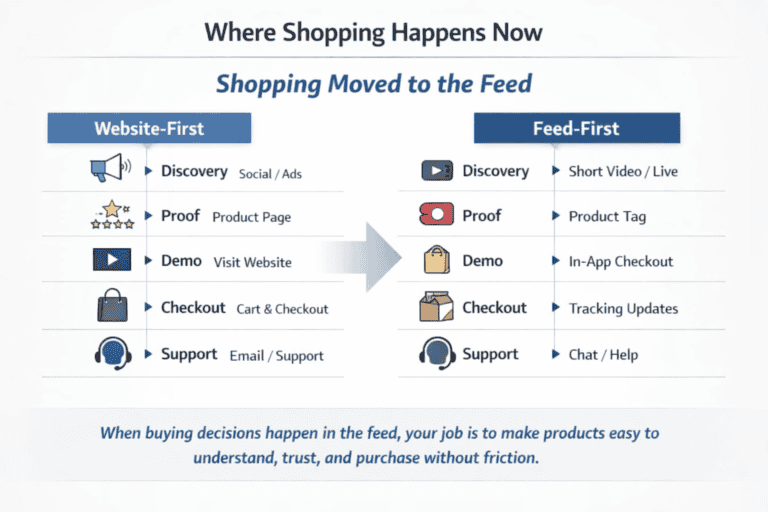
Not long ago, a brand’s website was the center of everything. You ran ads to drive traffic there, you optimized the homepage, you A/B tested the checkout button color. The website was the store.
That’s still true for a lot of purchases. But for a growing number of shoppers particularly younger ones the store is now TikTok. Or Instagram. Or a live auction on Whatnot. And the shift isn’t subtle anymore.
Livestream Shopping Is No Longer an Experiment
There was a period where livestream shopping felt like something happening in China that Western brands would “eventually” need to think about. That period is over.
US livestreaming ecommerce sales are projected to hit $68 billion in 2026. That’s not a niche number. That’s a channel. And brands that are still treating it as a novelty are behind.
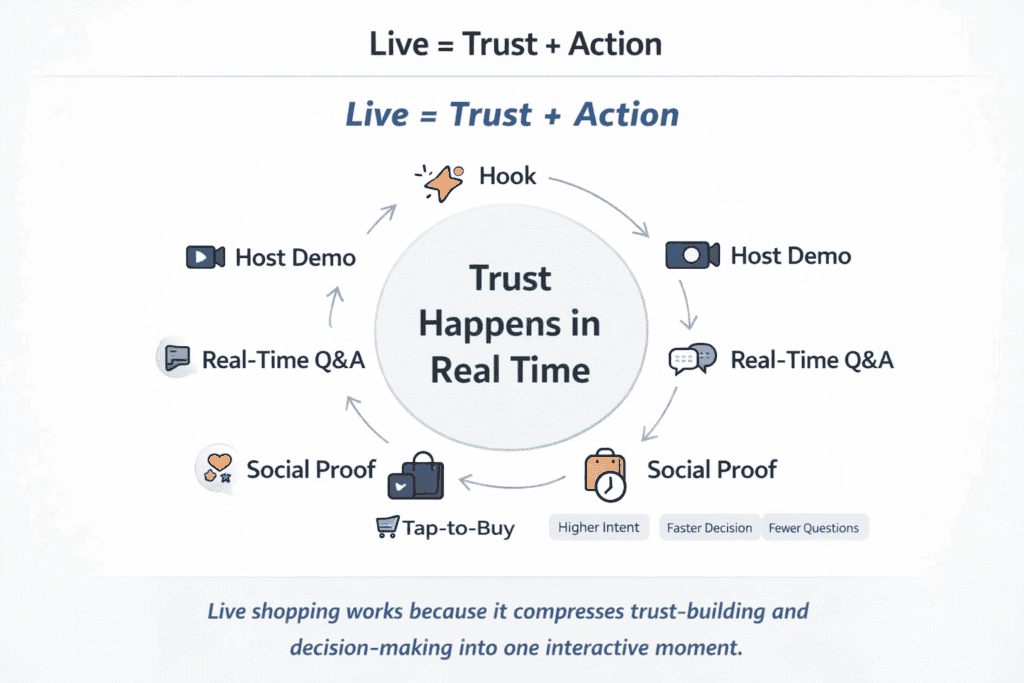
The reason livestream shopping works is straightforward. It takes two things that have always driven purchases trust and urgency and delivers both at the same time, in a format people are already spending hours inside.
Why Conversion Rates Are So Much Higher
Traditional ecommerce conversion rates hover around 2-3%. Livestream shopping regularly hits 20-30%.
The gap exists because of how differently a person behaves when they’re watching something versus browsing a static product page. On a product page, the customer is alone with their doubts. They’re wondering if the color looks different in person, whether the sizing runs small, whether it’s worth the price. They click away and forget about it.
In a live shopping event, someone is demonstrating the product right now. They’re answering questions in real time. Other viewers are commenting that they already bought it and love it. There’s a discount that expires when the stream ends. Every one of those elements removes a reason not to buy.
It’s closer to the experience of shopping with a knowledgeable friend than anything a product page has ever managed to replicate.
TikTok Live and Whatnot Are Running Different Playbooks
TikTok Live and Whatnot are both livestream commerce platforms, but they’re going after different behaviors.
TikTok Live works because it meets people inside content they’re already consuming. A creator is showing their morning routine and they’re wearing a foundation. They drop a link. The viewer doesn’t have to go looking for it. The product meets them where they are.
Whatnot runs on a different engine entirely. It’s built around live auctions, and it draws heavily from collector communities trading cards, sneakers, vintage clothing, comics. The bidding format creates competitive urgency that has nothing to do with discounts. Buyers push prices up because they want to win, not because something is cheap.
Two different models, both working, for different reasons.
TikTok Has Become a Search Engine and Brands Need to Take That Seriously
Here’s the stat that should change how brands think about their marketing budget: 43% of Gen Z consumers now start their product searches on TikTok. Not Google. Not Amazon. TikTok.
TikTok alone is projected to have nearly 40 million buyers in the US in 2026. That’s not just viewers. That’s people who have connected a payment method and purchased something inside the app.
The Discovery Model Is Fundamentally Different
Google search is intent-based. Someone already knows what they want and they’re looking for where to get it. Amazon is similar you go there with a product in mind.
TikTok is none of that. Discovery on TikTok is passive and algorithm-driven. You weren’t looking for a Stanley cup or a specific lip liner. You were watching a video and now you want one. That’s a completely different purchase psychology, and it’s one that favors brands that can create content over brands that can only optimize listings.
The brands winning on TikTok aren’t the ones with the biggest ad spend. They’re the ones that figured out how to make content that doesn’t look like an ad. Product demos, honest reviews, behind-the-scenes looks at how something is made content that earns a viewer’s time rather than interrupting it.
User-Generated Content Is Doing the Selling
One of the cleaner truths in social commerce right now is that a customer’s video often outsells anything a brand produces. An unboxing with no script, shot on a phone, by someone with 3,000 followers who genuinely liked a product will convert better than a polished brand campaign.
“TikTok made me buy it” became a phrase because it kept being true for enough people that it needed a name. That phrase reflects a purchase journey that looks nothing like what most marketing funnels were built to handle.
Brands that are leaning into this making it easy for customers to create content, reposting it, building genuine communities rather than broadcast channels are seeing returns that paid media rarely delivers anymore.
What Social Commerce Demands From Brands
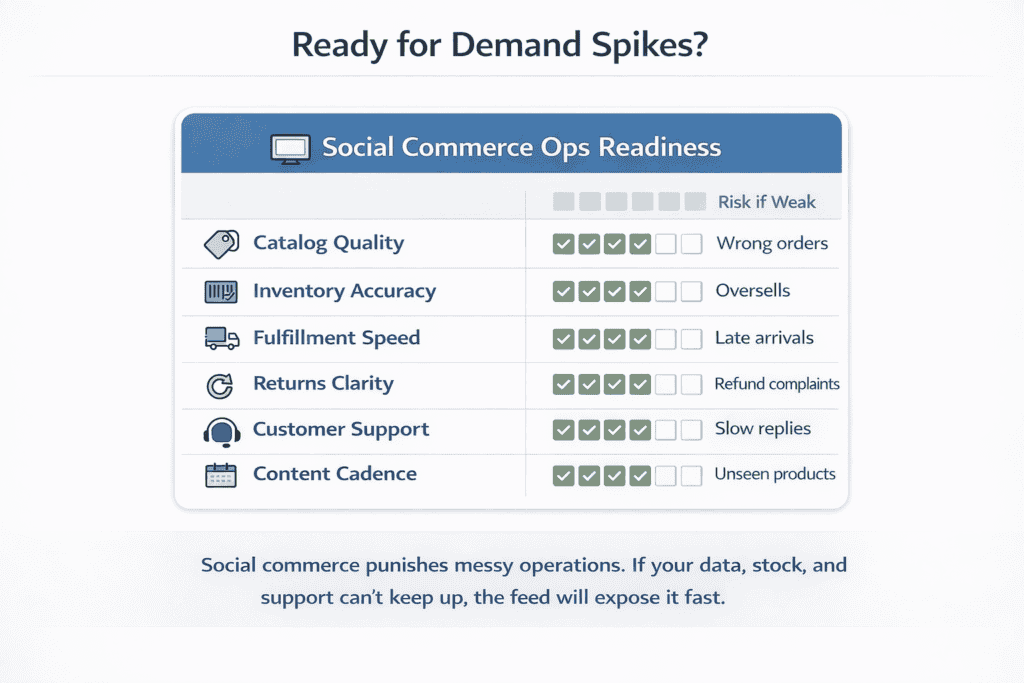
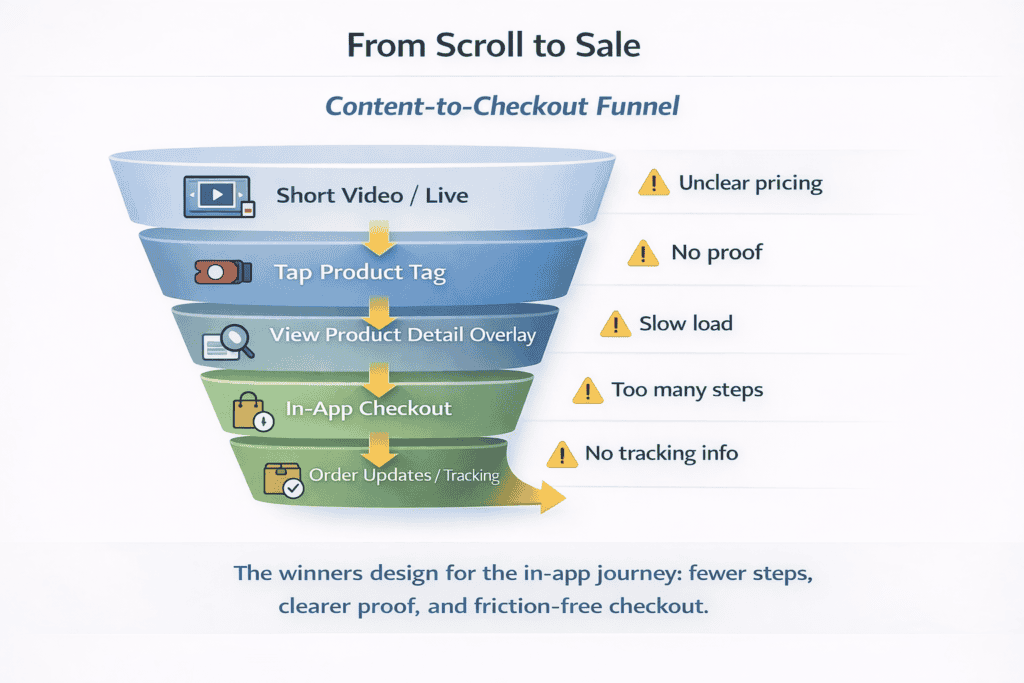
Showing up on TikTok or running a livestream isn’t the hard part. The hard part is building the infrastructure to support the purchase journey that social commerce creates.
Checkout Has to Happen Inside the Platform
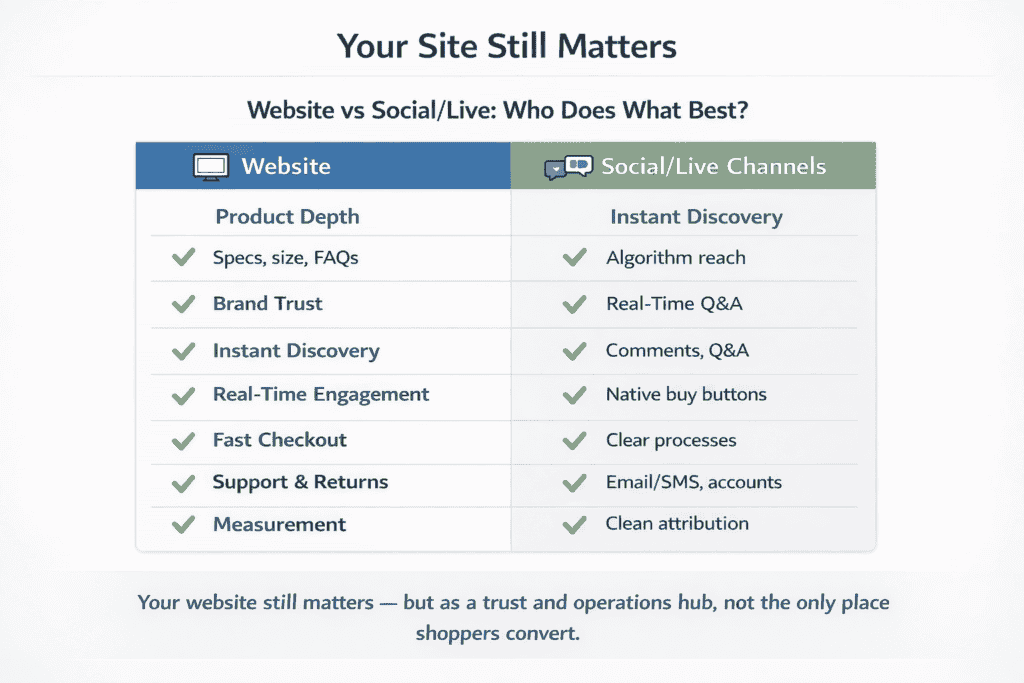
The moment you redirect a TikTok viewer to your website to complete a purchase, you lose a significant portion of them. The checkout has to happen without them leaving the app. TikTok Shop exists for exactly this reason, and brands that haven’t set it up are creating an unnecessary gap between interest and purchase.
Inventory and Fulfillment Have to Move Fast
Livestream shopping creates demand spikes. A 30-minute stream can move more units than a normal day of web traffic. If your inventory isn’t synced in real time and your fulfillment operation can’t handle the volume, you’ll either oversell or ship late both of which create the kind of customer experience that ends up as its own TikTok, and not the kind you want.
The Creator Relationship Is a Business Relationship
Influencer marketing used to mean sending someone free product and hoping they posted about it. That model still exists, but it’s not what’s driving social commerce results. The brands doing this well are treating creators as actual sales partners with revenue sharing, early product access, genuine input on what to feature, and real relationships that go beyond a one-time post.
A creator who genuinely uses and believes in a product is apparent on screen. So is one who doesn’t.
Where This Goes From Here
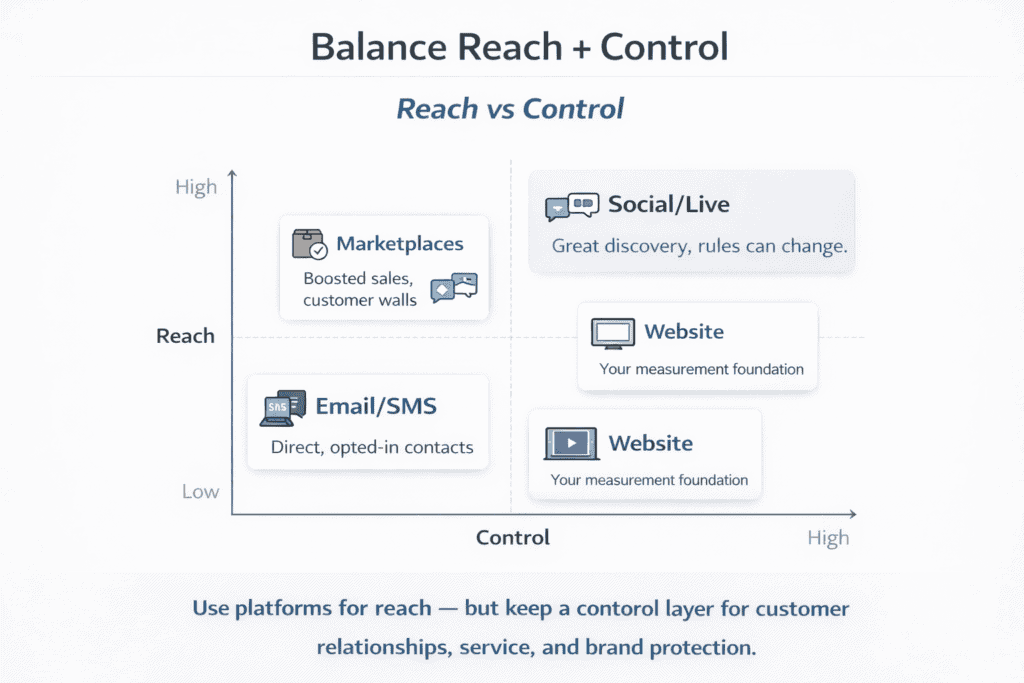
Social commerce is not a trend that’s waiting to see if it sticks. For a specific and growing segment of consumers, it’s already the default. The question isn’t whether brands should be paying attention. It’s whether they can catch up to where their customers already are.
The brands that figure out social and livestream commerce in the next 12-18 months are going to have a meaningful head start. The ones waiting for it to “mature” are going to find it already matured without them.