Reach more customers outside your local area
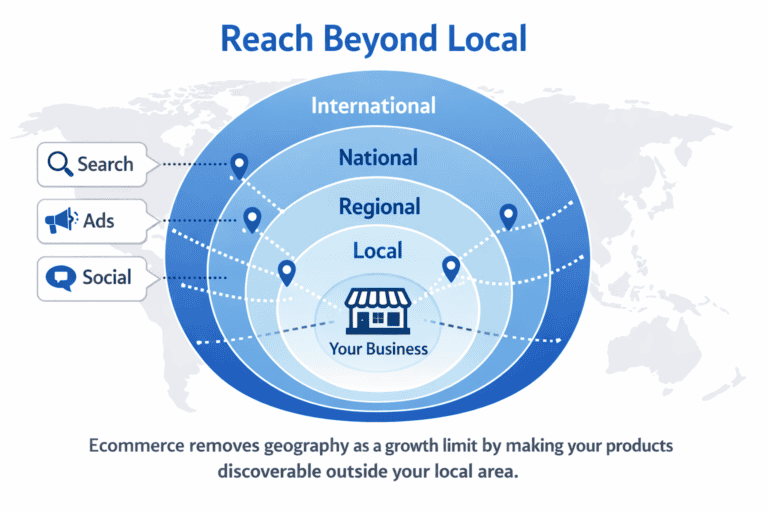
Reaching new buyers is hard when your shop depends on foot traffic, local word of mouth, or one sales rep’s network. Ecommerce changes that. A store that sits online can be found by people in other towns, other regions, and even other countries without you opening a second location.
One of the biggest wins is search visibility. When you list clear product names, sizes, and use cases, shoppers who have never heard of your business can still find you through Google and marketplace search bars. A local kitchen showroom, for example, can sell accessories nationwide because buyers search for exact items like “pull-out bin system” or “soft-close hinge,” not “shop near me.”
You also gain reach through paid ads and social content, because you can target by interest, job role, or buying signals instead of postcode alone. That matters for B2B and niche retail. A small supplier can run ads aimed at “restaurant owners” or “home renovators,” then send clicks to a product page that answers common questions, shows delivery options, and gives a clear next step.
To turn wider reach into real sales, focus on the parts that remove doubt for someone who cannot visit in person:
-
Add delivery areas, shipping costs, and delivery times on every product page (not hidden in a footer).
-
Show proof that orders arrive as expected: reviews, photos from buyers, and clear return rules.
-
Offer customer support options that fit different time zones, such as email and a contact form with promised reply times.
-
Write product descriptions that match how people search: use materials, dimensions, and compatibility notes.
The main point is simple: ecommerce lets you sell to people who would never pass your door. If your pages answer questions clearly and your delivery terms are easy to understand, distance stops being a barrier.
Sell 24/7 without adding extra staff
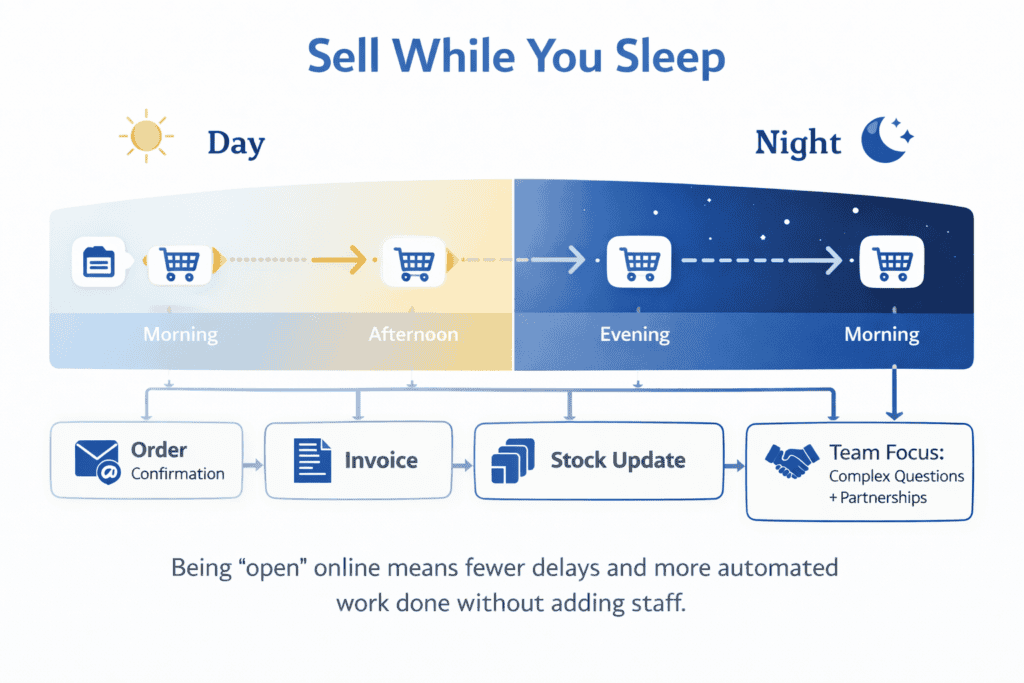
Ecommerce lets your business take orders while you sleep, travel, or focus on client work. A physical shop has opening hours. A sales team has working hours. An online store does not. Customers can browse, compare, and buy at the moment they are ready late at night, early morning, or during a lunch break without you needing someone on a till or on the phone.
The bigger benefit is not just being “open.” It is removing delays that block sales. When a buyer has to wait for a quote, wait for a callback, or wait until Monday, many simply move on. With ecommerce, pricing, stock status, product details, and checkout are available immediately. That speed matters for both B2C and B2B. Even if you still handle some orders manually, you can automate the most time-consuming parts: order confirmation emails, invoices, payment capture, stock updates, and shipping labels.
You can also use simple automation to reduce support load without hiring:
-
Put answers where buyers get stuck: delivery times, returns, sizing, warranty, and compatibility.
-
Use saved carts, wishlists, and “back in stock” alerts to bring buyers back without a staff follow-up.
-
Offer self-serve options like order tracking, address updates, and downloadable receipts.
-
Route common questions through a form with clear categories so your team replies faster.
Selling 24/7 does not mean working 24/7. It means your store continues to earn while your team does higher-value work: improving products, handling complex questions, and building partnerships. That is how ecommerce scales revenue without scaling headcount at the same pace.
Lower overhead compared with running a physical shop
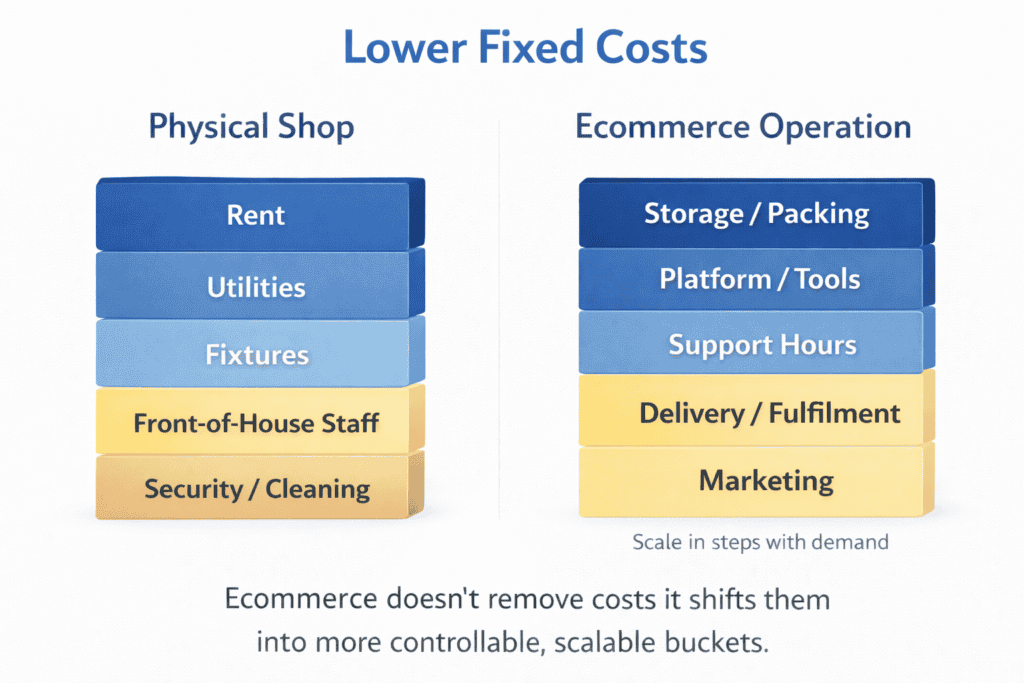
Running a physical shop is expensive before you make your first sale. Rent, utilities, fixtures, insurance, cleaning, security, and staff costs show up every month whether footfall is high or low. Ecommerce can reduce those fixed costs because you do not need a prime location, large front-of-house space, or in-store staffing just to stay open. Your costs shift from “keep the doors open” to “run the operation well.”
Lower overhead does not mean “no costs.” It means more control. You can start with a smaller setup: a home office, a small warehouse unit, or a shared fulfilment partner. You can also scale in steps. If demand grows, you add storage, packing capacity, and support hours based on real order volume, not guesses. Many ecommerce businesses also reduce waste by using better stock planning, listing only what they can supply reliably, and avoiding slow-moving stock that would sit on shelves.
Where ecommerce often saves money compared with physical retail:
-
No high-street rent and fewer utilities.
-
Smaller space needs because you prioritise storage and packing, not displays.
-
Less staffing required for basic transactions because checkout is self-serve.
-
Marketing spend is easier to track, so you can cut what does not convert.
-
Inventory can be centralised in one location instead of split across stores.
The result is a cost base that can be lighter and more flexible. When your overhead is lower, you can price more competitively, invest more in customer experience, or keep healthier margins without relying on constant foot traffic to break even.
Use data from orders to spot what customers want
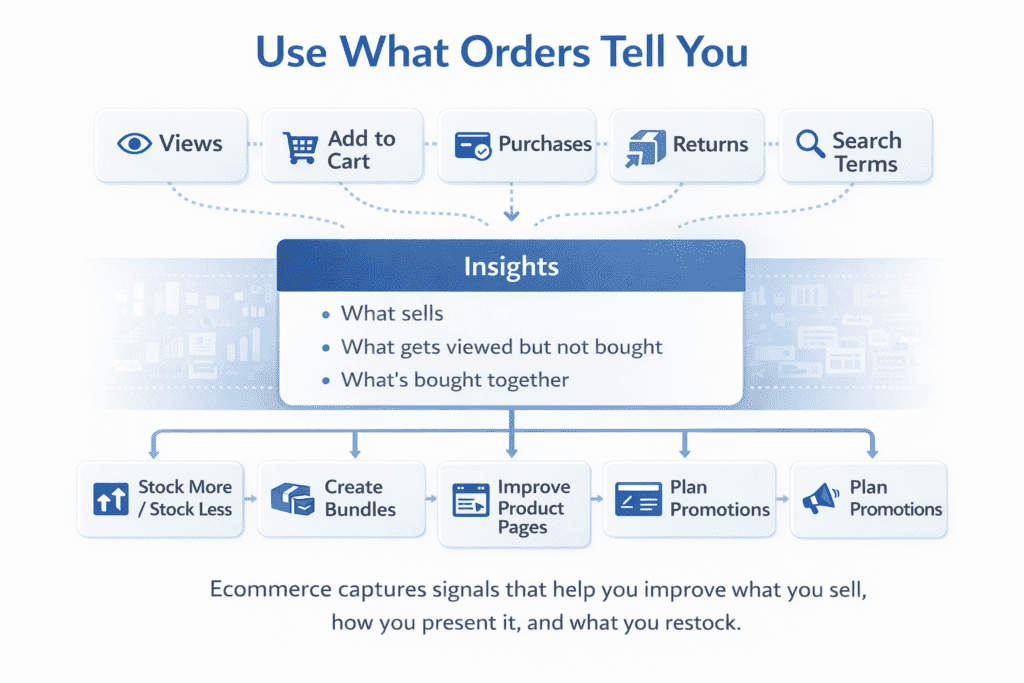
Every order is a clue. Ecommerce turns those clues into usable data because purchases, refunds, search terms, and cart behaviour are recorded in one place. Instead of guessing what customers like based on what people ask in-store, you can see what sells, what gets viewed but not bought, and what products are often purchased together. That makes it easier to stock the right items, improve your product pages, and plan promotions that match real demand.
Start with the basics: top sellers, repeat purchases, and seasonality. Then look for patterns that change decisions. For example, if a product gets lots of views but few purchases, the issue is often price, shipping cost, unclear sizing, weak photos, or missing trust signals like reviews. If customers keep buying two items together, that is a bundling opportunity. If a certain size or colour sells out first, you know where to increase reorder quantities. Over time, this data also helps you identify your most valuable customers by average order value and repeat rate, so you can focus retention efforts where they pay back.
Practical ways to use order data without overcomplicating it:
-
Review your top 20 products each month and check which ones drive most revenue.
-
Track reasons for returns and update product descriptions to prevent the same problems.
-
Use “frequently bought together” insights to create bundles and increase average order value.
-
Find the most common search terms on your site and make sure those products are easy to find.
-
Compare conversion rates by traffic source so you invest in marketing that brings buyers, not just visitors.
Data does not replace judgement, but it makes your decisions less risky. When you use order data to guide product selection, pricing, and messaging, you spend less time guessing and more time building what customers already show they want.
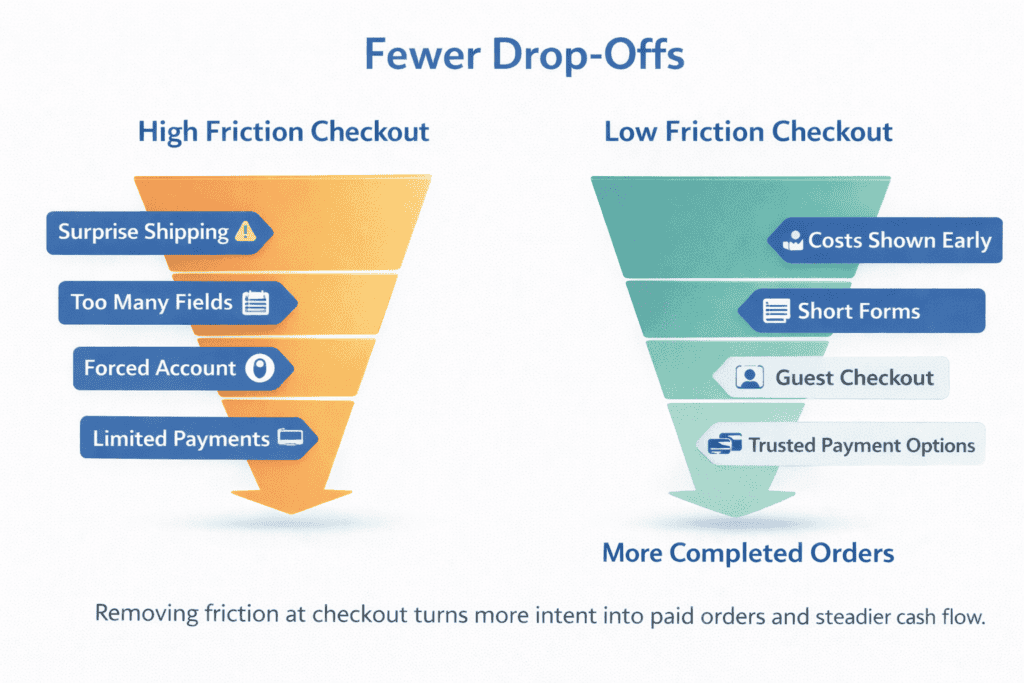
Improve cash flow with faster payments and simpler checkout
Cash flow improves when you get paid quickly and reduce the number of sales that stall before payment. Ecommerce helps on both sides. Most online stores collect payment at the time of order, which means you are not waiting for a customer to visit again, send a bank transfer, or approve an invoice days later. Even for businesses that offer trade terms, ecommerce can still speed up cash collection by automating invoices, reminders, and payment links that make it easy to pay right away.
A simpler checkout also protects cash flow by reducing abandoned carts. Many customers leave because the process feels slow, confusing, or risky: too many fields, surprise shipping costs, forced account creation, or limited payment options. When you remove friction, more buyers finish the purchase and your revenue becomes more predictable. That predictability matters when you need to pay suppliers, manage payroll, or plan stock replenishment.
Ways ecommerce improves payment speed and reduces drop-off:
-
Offer payment methods customers already trust, such as cards, digital wallets, and local options.
-
Show full costs early: shipping, taxes, and delivery timeframes before the last step.
-
Allow guest checkout and save accounts as an option, not a requirement.
-
Keep forms short and use address lookup where possible to reduce errors.
-
Use clear error messages and let customers retry payments without starting again.
The goal is simple: fewer delays, fewer failed checkouts, and money arriving closer to the moment the customer commits. When payments are faster and checkout is easier, your business spends less time chasing money and more time using it to grow.
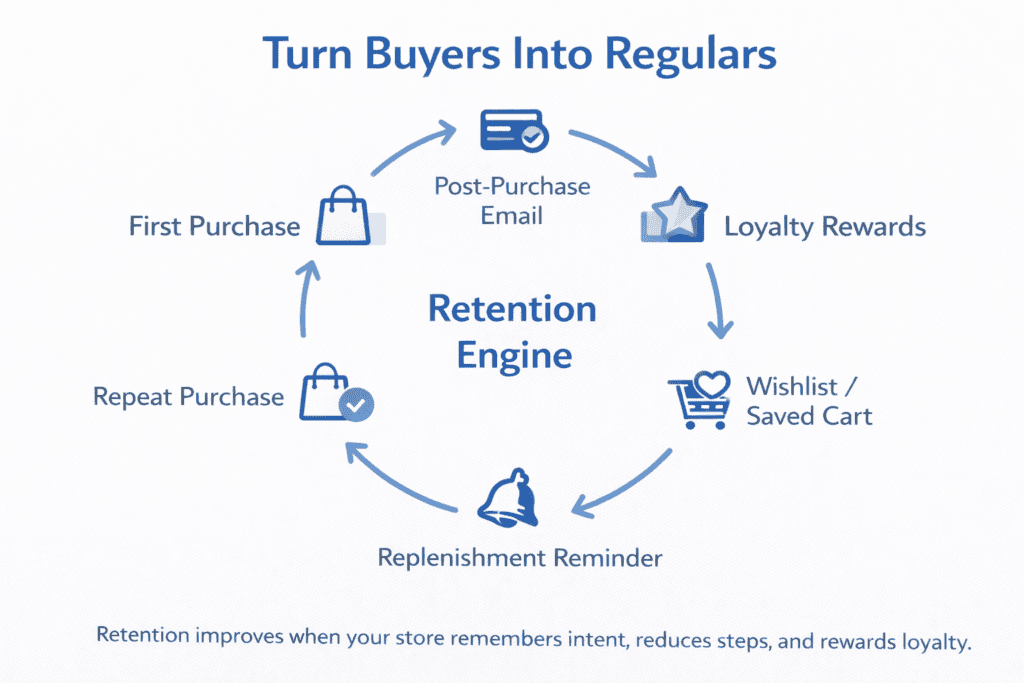
Make repeat buying easier with email, loyalty, and saved carts
Winning a new customer usually costs more than keeping an existing one. Ecommerce makes retention easier because you can stay in touch, reward repeat buying, and remove effort from the next purchase. Instead of relying on customers to remember your shop, you can use email, loyalty tools, and saved carts to bring them back at the right time with a clear reason to buy again.
Email works best when it matches what the customer actually did. A welcome series can guide a first-time buyer to your best sellers and support pages. Post-purchase emails can answer common questions, reduce returns, and suggest compatible add-ons. Replenishment reminders help when products run out, like filters, skincare, or consumables. Loyalty programs then give customers a reason to stick with you, even if a competitor is cheaper: points, tier benefits, early access, or free shipping thresholds. Saved carts and wishlists handle the timing problem customers often want to buy but get interrupted. When their cart is still there, and the link brings them straight back to checkout, you recover sales that would have been lost.
Retention tactics that are simple and effective:
-
Send a short post-purchase email with delivery expectations, care instructions, and a support contact.
-
Set up replenishment reminders based on typical usage cycles for your products.
-
Offer loyalty points that are easy to understand and easy to redeem.
-
Use wishlists and “back in stock” alerts to capture intent without discounting.
-
Send cart reminders that focus on convenience and clarity, not pressure.
Repeat buying becomes easier when customers do not have to start from zero each time. When your store remembers what they liked, reduces steps, and rewards loyalty, you build steady revenue that is less dependent on constant new customer acquisition.
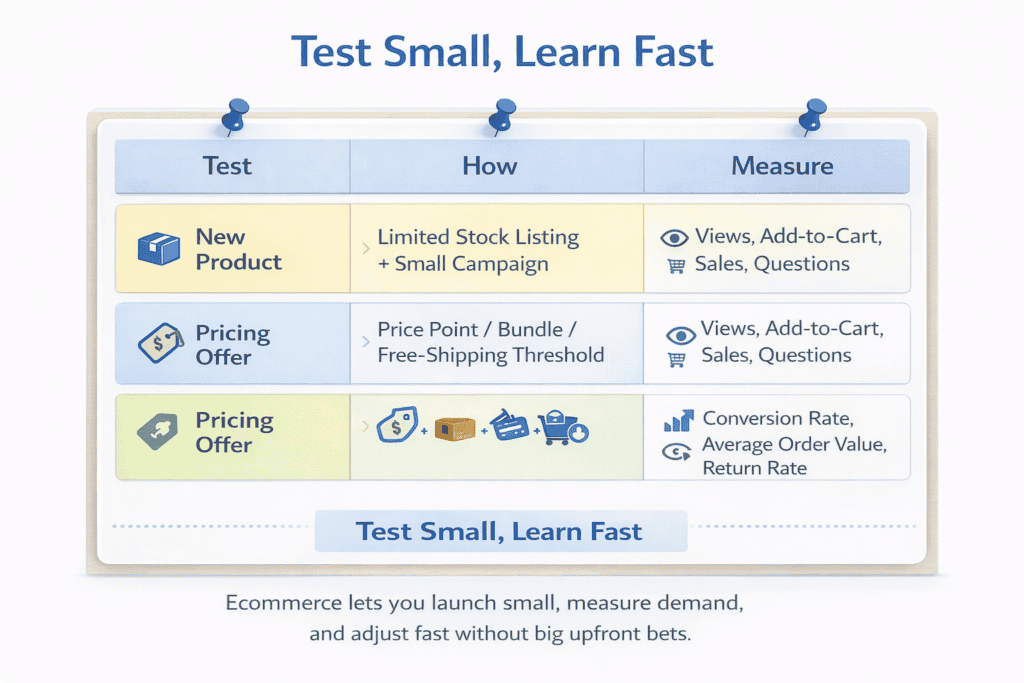
Test new products and prices with less risk
Ecommerce lets you test new products and pricing without committing to a big upfront bet, because you can launch small, measure demand, and adjust quickly. Instead of ordering large quantities for shelf space, you can list limited stock, run a short campaign, and see what converts, what gets added to cart, and what customers ask about.
Pricing tests are also easier online: you can try different price points, bundles, or free-shipping thresholds and compare outcomes like conversion rate, average order value, and return rate. If something does not perform, you can change the offer, improve the product page, or stop selling it without being stuck with expensive in-store displays or long-term leases.
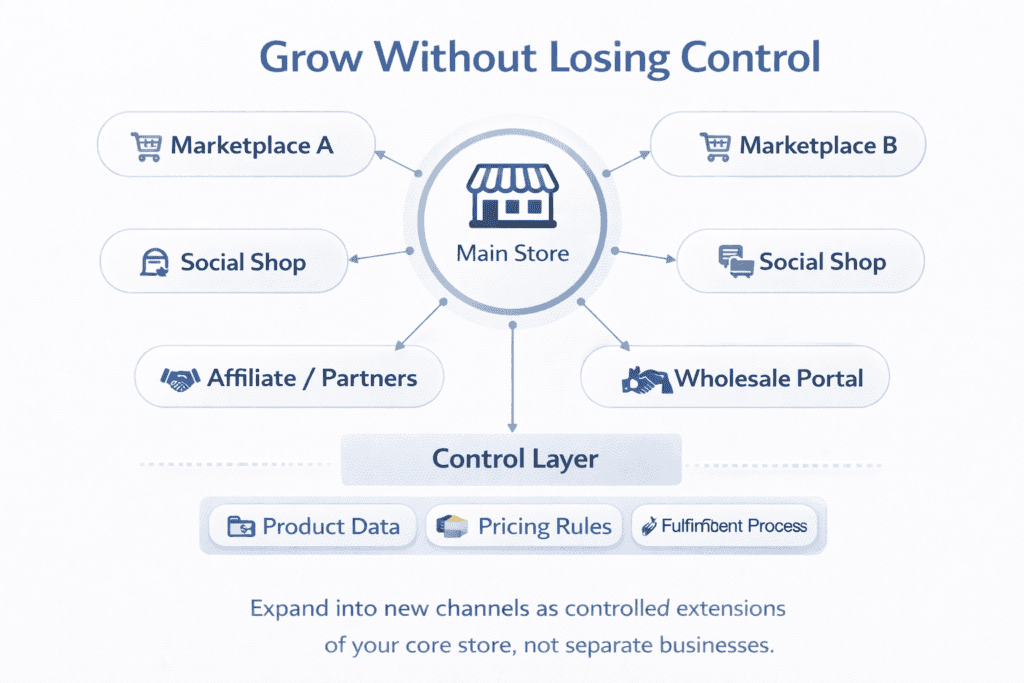
Add new sales channels like marketplaces and social shops
Adding new sales channels helps you reach buyers where they already spend time and money. Marketplaces can put your products in front of high-intent shoppers who are searching with a credit card in hand, while social shops turn discovery into purchase without forcing people to leave the app. The key is to treat each channel as a controlled extension of your main store, not a separate business. Keep product data consistent, use clear pricing rules, and choose a small set of items that are easy to fulfil and support. When a channel performs, you expand; when it does not, you pause without damaging your core operation.
Conclusion: Ecommerce benefits businesses because it makes growth more practical. You can reach more customers, sell around the clock, reduce fixed costs, and use real order data to make smarter decisions. Faster payments and simpler checkout support cash flow, while email, loyalty, and saved carts help turn first-time buyers into repeat customers. When you add marketplaces and social selling in a structured way, you build a wider sales engine without losing control of your brand, margins, or customer experience.