How Last-Mile Delivery Is Redefining Logistics Inside the Race to Master Last Mile Deliveries and the Modern Delivery Landscape
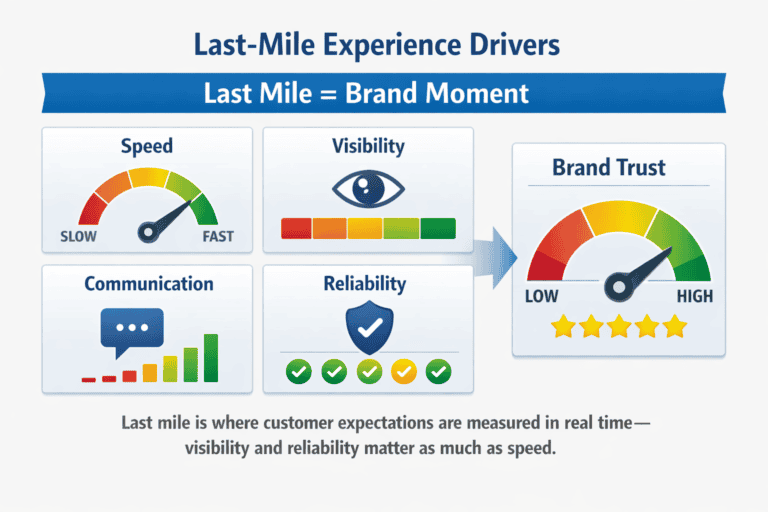
For logistics and supply chain professionals, the final leg of the delivery journey has never demanded more attention or more investment. Last-mile deliveries the last leg of the supply chain responsible for moving goods from a distribution hub to the customer’s door have transformed from an operational afterthought into one of the most strategically critical functions in modern commerce. The quality of a delivery service, from speed of dispatch to real-time communication, now directly shapes brand perception and customer loyalty.
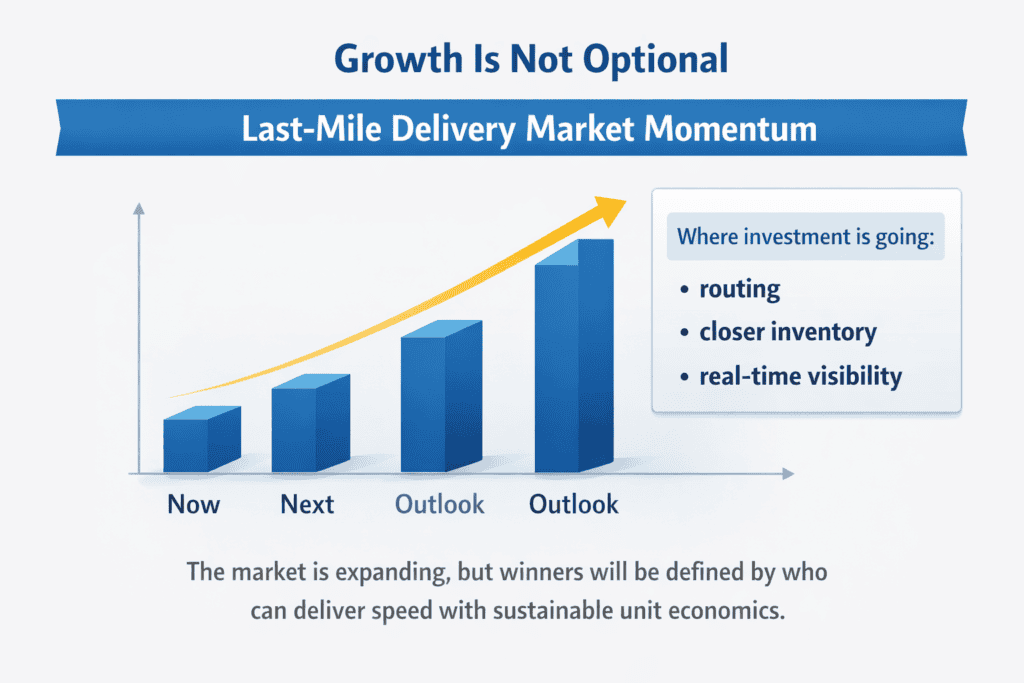
As e-commerce volumes swell and consumer expectations for speed and transparency tighten, the pressure on final mile networks is intensifying at every level. Shrinking delivery time windows driven by the Amazon effect and the rise of same-day fulfillment have forced operators to rethink routing, inventory positioning, and carrier strategy from the ground up. Understanding where the market stands today and where it is heading is essential for any professional operating within or adjacent to the logistics sector.
A Market in Full Stride: The Rise of Last Mile Deliveries
The scale of the opportunity is hard to overstate. The global last mile deliveries market was valued at approximately $184 billion in 2025 and is projected to reach nearly $200 billion in 2026, growing at a compound annual rate of around 8–10% through the decade. The last mile delivery process encompassing everything from route planning and carrier dispatch to proof of delivery has become a focal point of investment as operators race to stay ahead of demand. By 2030, analysts anticipate the final mile market will approach or exceed $280 billion, driven by continued e-commerce expansion and rising B2B fulfillment demands.
North America commands the largest regional share of last mile logistics spend upwards of 35–40% of global revenue underpinned by high parcel volumes, dense carrier networks, and aggressive investment from retail giants. Americans shipped more than 22 billion parcels in 2024, and Amazon alone delivered over 9 billion items same-day or next-day that year. The delivery process from fulfillment center to front door has never moved faster or at greater scale. Meanwhile, Asia-Pacific continues to gain ground rapidly as digital retail penetration deepens across emerging markets.
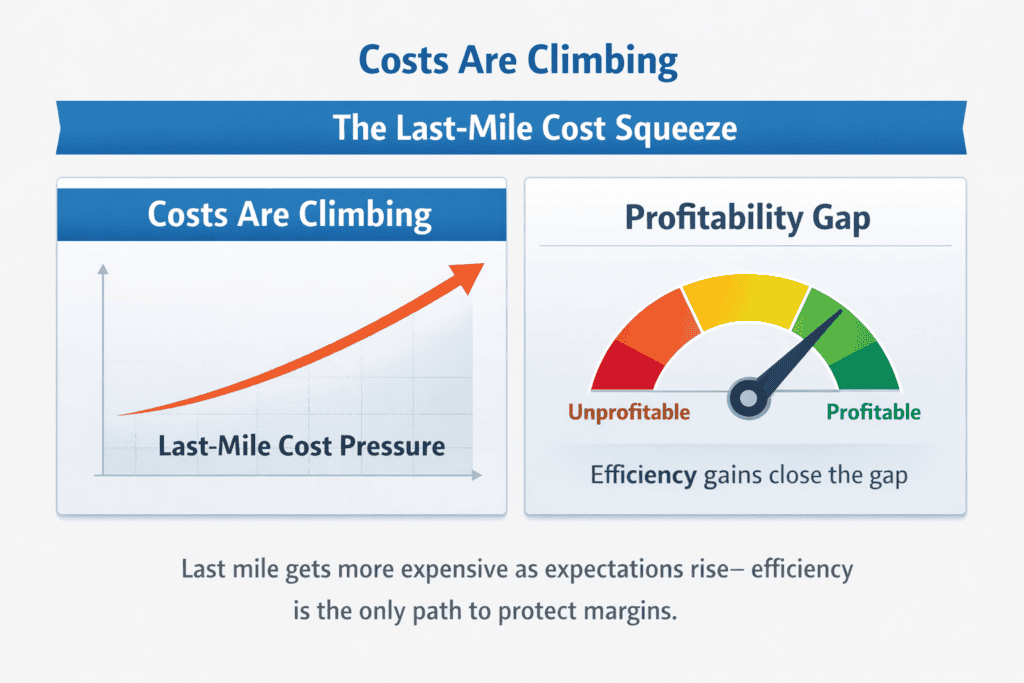
The growth is not frictionless, however. The last mile problem the persistent challenge of making final-leg delivery to a home or business both fast and cost-effective remains one of the industry’s most stubborn structural issues. A full 76% of retailers report that last-mile costs have risen year over year, with the average US delivery cost up approximately 12% between 2024 and 2025. For many operators, home or business delivery remains structurally unprofitable without significant efficiency gains a challenge that is now spurring a wave of technological and operational transformation.
AI Becomes Infrastructure: Solving the Last Mile Problem in Last-Mile Delivery Logistics
Artificial intelligence has moved from an optional enhancement to core operating infrastructure within last-mile networks. A 2025 survey of global transportation professionals found that 96% are already using AI within their operations a figure that would have been unthinkable just five years ago.
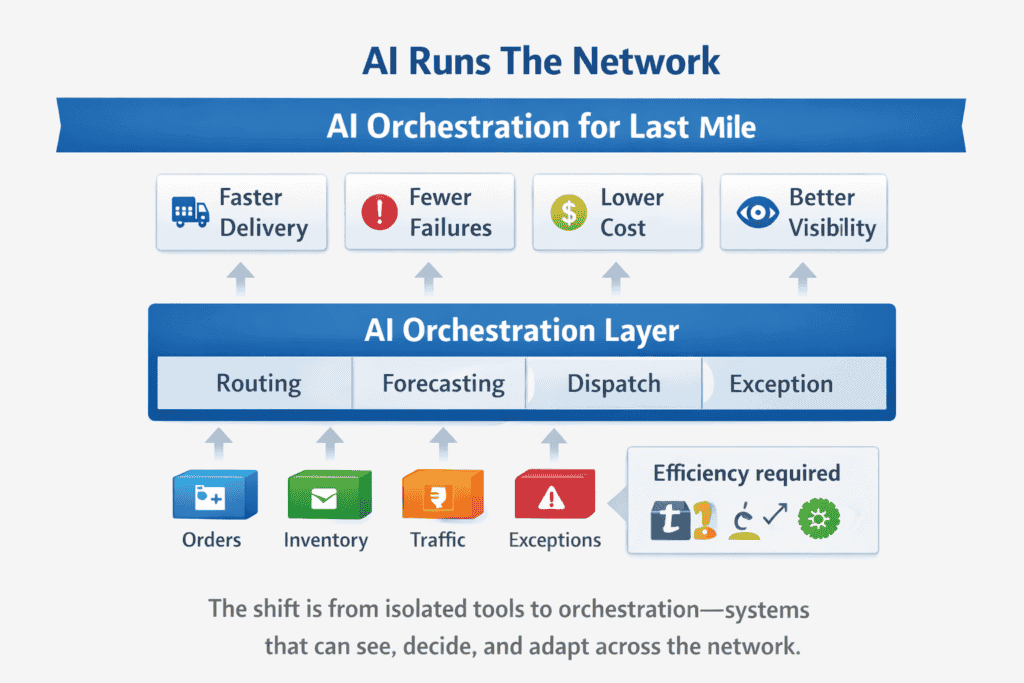
The most common applications include route and load optimization (39%), AI-driven freight forecasting (35%), and automated load matching and capacity sourcing (35%). But the trajectory for 2026 points toward something more ambitious: end-to-end operational intelligence that integrates order data, vehicle utilization, traffic patterns, customer behavior, and real-time exceptions into a single decision-making layer.
Major retailers are investing heavily. In 2025, IKEA acquired Locus an AI-powered logistics platform to bring advanced route optimization and real-time tracking capabilities in-house as part of a $2.2 billion omnichannel strategy. Amazon, meanwhile, deployed three new AI-powered tools to improve delivery location accuracy, driver navigation in complex urban environments, and parking access at large residential complexes. For professionals evaluating their own tech stacks, the message is clear: isolated AI tools are giving way to unified orchestration platforms that can see and act across the entire delivery network.
Autonomous Delivery: Transforming the Last Mile Delivery Process From Pilots to a Scalable Delivery Service and Streamlined Delivery Process
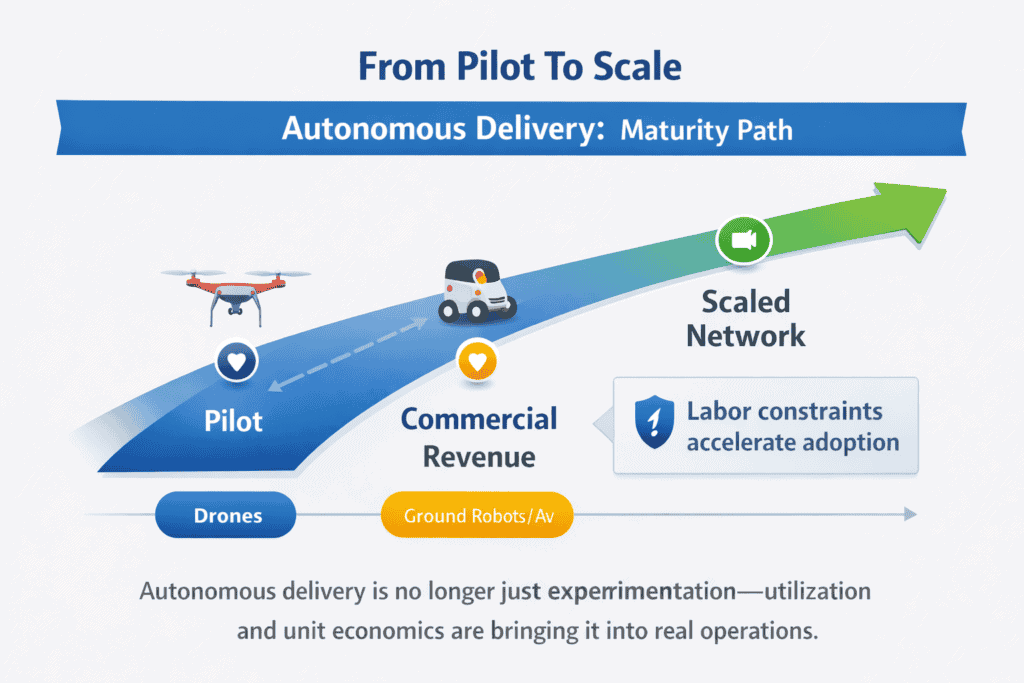
Autonomous delivery technology is crossing a meaningful threshold. What was largely confined to controlled pilots and limited geographies two years ago is now generating commercial revenue in multiple markets.
On the drone side, Walmart has partnered with both Zipline and Wing to offer deliveries within 30 minutes for customers within a six-mile radius of participating stores. In December 2025, Zipline expanded its drone network out of a Walmart Supercenter in McKinney, Texas a signal that retailers are beginning to treat aerial delivery as an operational channel rather than a marketing exercise. The global drone delivery market is expected to grow from $1.1 billion in 2025 to $4.4 billion by 2030.
Ground-based autonomous vehicles are following a similar arc. Companies like Starship Technologies and Serve Robotics are expanding dense robot delivery networks in urban areas, improving unit economics as utilization rates rise. The US autonomous last-mile delivery market while still nascent at roughly $22–24 million in 2025–2026 is forecast to grow at a 13.6% CAGR through 2034 as deployment scales.
Labor dynamics are accelerating this shift. An estimated shortage of 24,000 truck drivers existed in the US in 2025, and with 62% of the trucking workforce comprised of Baby Boomers and Gen X workers approaching retirement, the structural case for automation in delivery has rarely been stronger.
The Rise of Micro-Fulfillment and Last Mile Logistics in Store-Based Distribution
One of the more significant structural shifts reshaping last-mile economics is the movement of inventory closer to the end customer. Micro-fulfillment centers compact, automated warehouses located within or adjacent to urban areas are enabling same-day and even 30-minute delivery without the overhead of expanding traditional distribution infrastructure.
Target accelerated this model aggressively in 2025, converting retail locations into micro-logistics hubs and expanding next-day delivery to 35 major US cities. The strategy exemplifies a broader industry trend: stores are no longer just retail environments they are simultaneously becoming fulfillment nodes in an increasingly distributed delivery network. The global micro-fulfillment center market is forecast to reach $31.6 billion by 2030.
Out-of-home delivery options are complementing this shift. Automated parcel lockers which reduce failed delivery attempts and lower per-stop costs are on a strong growth trajectory, with the market expected to expand from $319 million in 2025 to over $820 million by 2035. For logistics professionals, the combination of closer inventory positioning and flexible pickup options represents one of the clearest near-term paths to improving delivery economics.
Network Resilience as Competitive Strategy
The macro disruptions of recent years from pandemic-era supply chain stress to the October 2025 AWS outage that rippled across third-party logistics providers have reinforced a critical lesson: over-optimized, centralized delivery models carry significant systemic risk.
In response, leading retailers and carriers are deliberately diversifying their last-mile networks. Private fleets, regional carriers, crowdsourced delivery platforms, and postal access are being layered together to reduce dependence on any single provider or infrastructure point. In December 2025, USPS announced it would open its national delivery network comprising more than 18,000 delivery units through a formal bid process, offering shippers a significant new option for network diversification and cost optimization.
At the same time, AI-enabled fraud is adding a new dimension to operational risk, with sophisticated social engineering attacks targeting shippers, brokers, and drivers. Supply chain security professionals are increasingly treating every digital touchpoint from load matching to document verification as a potential attack surface requiring continuous authentication.
The Sustainability Imperative
Electrification of last-mile fleets has moved firmly from aspiration to execution. Major carriers are deploying electric vehicles to reduce fuel costs, meet emissions targets, and comply with tightening urban delivery regulations. Analysts estimate that EV usage in last-mile delivery has grown approximately 42% year over year, and the trend is expected to accelerate as vehicle range improves and charging infrastructure matures.
Sustainability is not solely an environmental proposition for operators it is increasingly a procurement and customer experience consideration. Shippers working with large enterprise clients and public-sector contracts are under growing pressure to demonstrate measurable emissions reductions across their delivery operations.
Outlook for Industry Professionals
The last-mile delivery landscape in 2026 is defined by a clear set of competitive dynamics. Speed and cost remain critical, but they are no longer sufficient differentiators on their own. Reliability, visibility, flexibility, and network resilience have moved to the forefront and the businesses investing in integrated technology platforms, diversified carrier strategies, and closer inventory positioning are pulling ahead.
For logistics and supply chain professionals, the strategic priorities are converging around a common theme: unifying fragmented operations through intelligent orchestration. Whether that means integrating AI across the full delivery stack, deploying autonomous vehicles in select corridors, or leveraging micro-fulfillment to compress delivery windows, the common denominator is connected, data-driven execution.
The last mile is no longer a cost to be managed. It is a capability to be built and increasingly, the clearest proof point of a logistics operator’s competitive fitness.